About the Author


Marketing language often drifts into sameness without anyone really noticing. Don’t worry. It’s not (completely) your fault.
Overused marketing lingo shows up everywhere. It’s on your homepage, your pitch decks, and most of those social media visuals you made in Canva. And you are not alone. We’ve all been there. You run out of coffee and reach for a phrase that feels safe and voilá: you are in “industry-leading,” “cutting-edge,” “best-in-class” territory. It sounds professional. The make-believe boardroom nods. The page ships.
The problem here is that readers have seen this language thousands of times before. And when everything claims to be the absolute best, suddenly nothing is. Claims blur together, meaning gets diluted, and trust quietly dies down. This is not a creativity problem. It is a clarity problem.
This is vague language, and vague language makes your audience work harder. They have to interpret meaning, turn your buzzwords into outcomes, and decide in 0.3 seconds whether to believe you are “world-class” or not. Language filled with jargon and big claims like these slows understanding, weakens recall, and increases hesitation—especially when people are looking at new products or services.
Contents
- The most overused marketing phrases (and what to say instead)
- Why overused phrases hurt performance
- The simplest rule for fixing any buzzword
- How to find overused marketing phrases in your copy
- A practical way to edit your own copy
The most overused marketing phrases (and what to say instead)
Chances are you have used at least a few of the phrases below. Most marketers have. They sound confident, but they rarely explain anything at all. The examples that follow show how to say the same thing more clearly and more specifically.
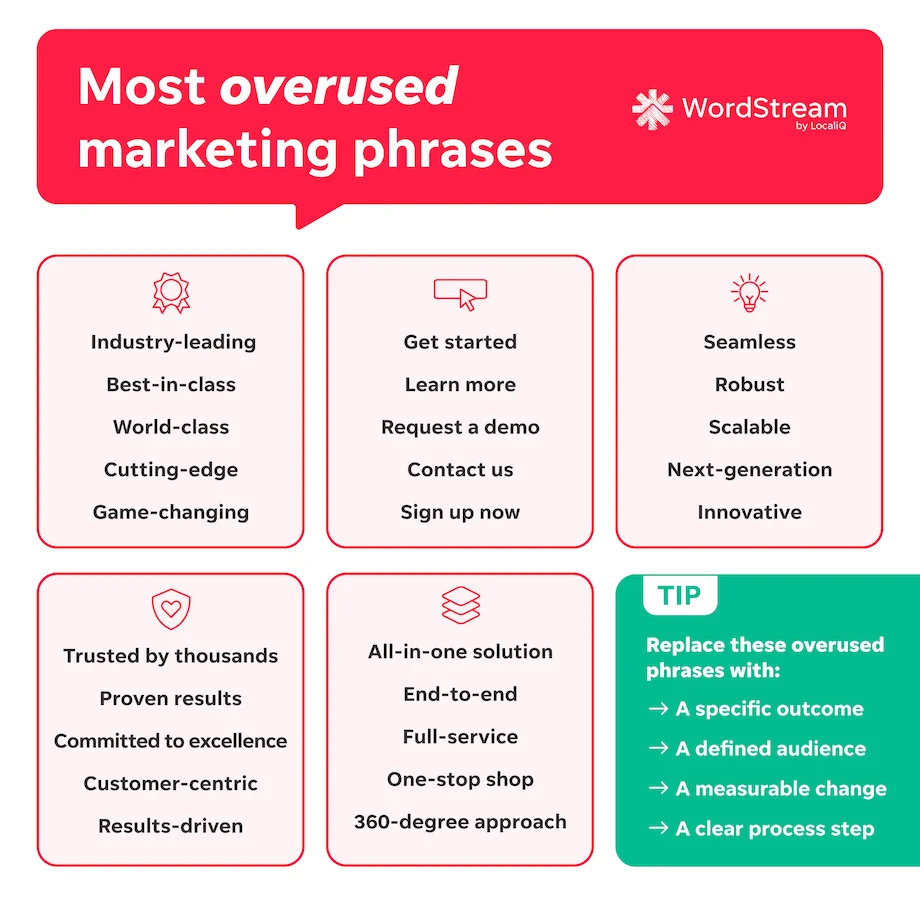
(1–5) Vague claims that sound impressive but say nothing
These kinds of phrases usually appear in headlines and hero sections. They sound bold, but they leave your readers guessing what actually makes the product or service different.
1. “Industry-leading”
This phrase signals status without evidence. Readers have no way to evaluate the claim, so it often gets ignored.
Example rewrite
“Industry-leading analytics platform.”
“Track ROAS, CAC, and pipeline by channel in one dashboard.”
🧠 Want to find out what really captures your customers’ attention? Get our free guide >> 26 Brilliant Ways to Use Psychology in Your Copywriting (with Examples)
2. “Best-in-class”
This phrase creates competition in theory, but not in reality. Without context, it blends into the noise.
Example rewrite
“Best-in-class email marketing software.”
“Rated 4.8 by 3,000+ email marketers.”
3. “World-class”
This phrase relies on scale instead of substance. It suggests excellence without defining what excellence looks like.
What to say instead
Anchor the claim in a concrete standard or experience.
Example rewrite
“World-class customer support.”
“Support tickets answered in under two hours, seven days a week.”
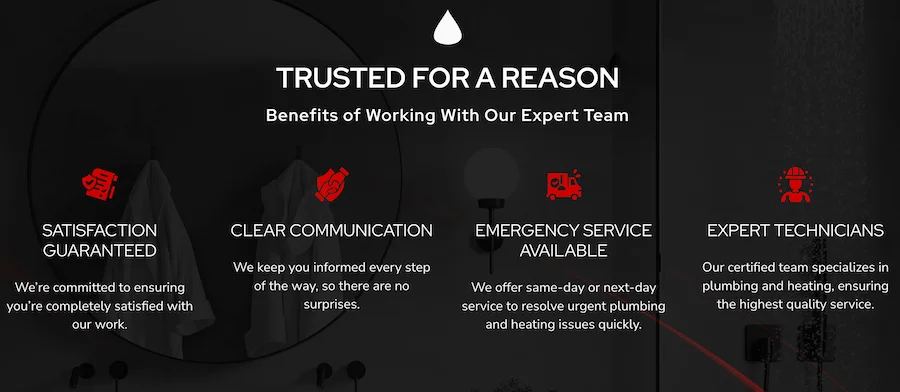
This plumber details what customers can expect from them.
4. “Cutting-edge”
This overused marketing phrase implies innovation without explaining any impact. Readers want to know what changes for them.
What to say instead
Highlight the practical benefit of the innovation.
Example rewrite
“Cutting-edge automation tools.”
“Automate weekly reporting in under five minutes.”
5. “Game-changing”
This phrase promises transformation. It never defines what actually changes.
What to say instead
Describe the outcome that improves.
Example rewrite
“Game-changing marketing insights.”
“See which campaigns drive revenue instead of just clicks.”

(6–10) Trust-building phrases that ironically reduce trust
These phrases are meant to reassure readers, but they rely on assertion instead of evidence. Without specifics, they often create skepticism rather than confidence.
6. “Trusted by thousands”
This phrase sounds impressive. It never explains who those thousands are.
What to say instead
Name recognizable audiences or industries.
Example rewrite
“Trusted by thousands of businesses.”
“Used by SaaS and ecommerce marketing teams worldwide.”
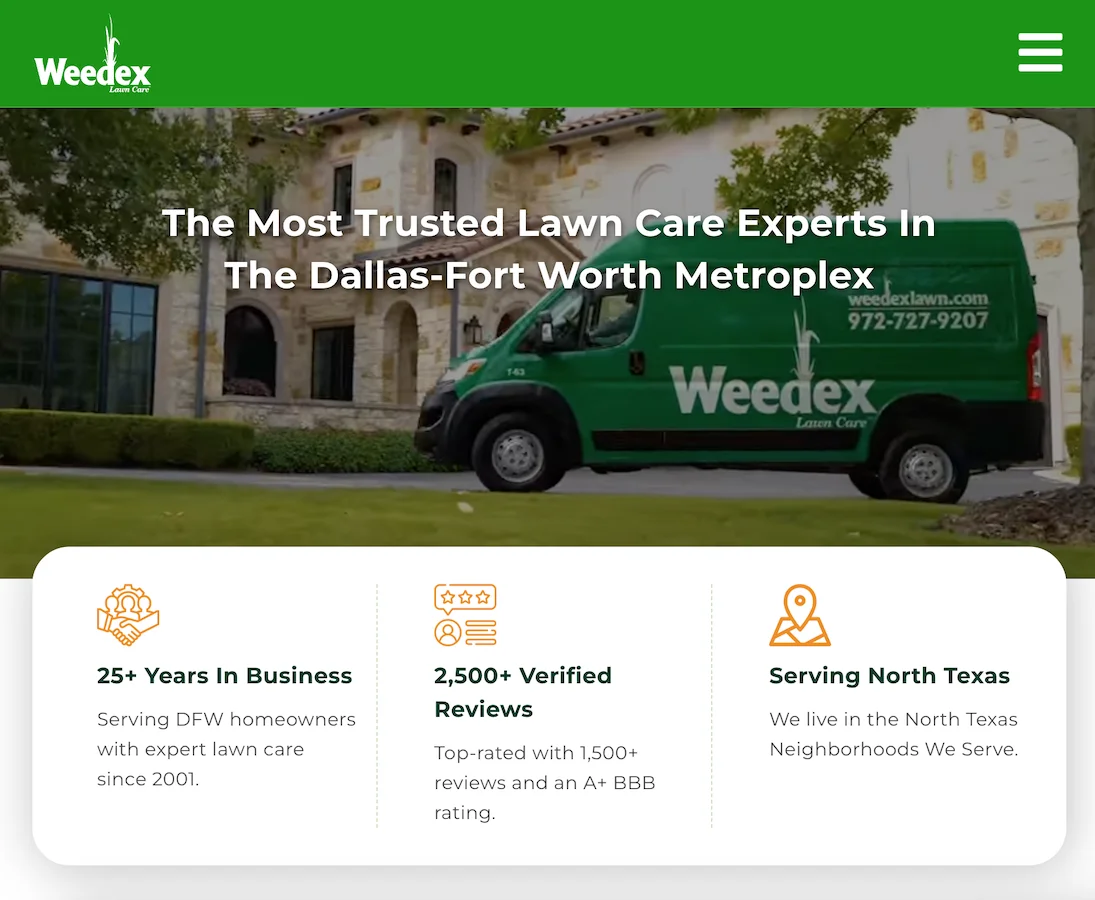
This lawn care company shares who trusts their business.
7. “Proven results”
This phrase claims success. It avoids showing the proof.
What to say instead
Share a specific result or timeframe.
Example rewrite
“Proven results.”
“Customer X increased lead volume by 32% in three months.”
📚 Free guide download >> 135 of the Best Words & Phrases for Marketing with Emotion
8. “Results-driven”
This phrase signals intent. It does not describe action.
What to say instead
Show what the strategy actually optimizes for.
Example rewrite
“Results-driven strategy.”
“Focused on lowering cost per lead and improving conversion rates.”
9. “Customer-centric”
This phrase has become a default value statement. Readers expect it rather than notice it.
What to say instead
Show how customer input shapes decisions.
Example rewrite
“Customer-centric approach.”
“Built using weekly feedback from active users.”
10. “Committed to excellence”
This phrase expresses values. It shows no behavior.
What to say instead
State a concrete commitment or action.
Example rewrite
“Committed to excellence.”
“Continuously improving onboarding based on user data.”
(11–15) Overused phrases that hide what you actually do
These phrases are often used to sound flexible or comprehensive. But in reality, they blur what a product or service actually delivers.
11. “All-in-one solution”
This phrase suggests convenience. It leaves readers wondering what is actually included.
What to say instead
Name the core jobs the product performs.
Example rewrite
“All-in-one marketing platform.”
“Manage search ads, landing pages, and lead tracking in one place.”
12. “End-to-end”
This phrase sounds complete. It never defines the boundaries.
What to say instead
Call out the specific stages covered.
Example rewrite
“End-to-end campaign management.”
“From keyword research to reporting and optimization.”
13. “Full-service”
This phrase appears on a lot of agency sites. On its own, though, it means very little.
What to say instead
List key services without overloading.
Example rewrite
“Full-service digital marketing agency.”
“SEO, paid search, and conversion-focused landing page optimization.”
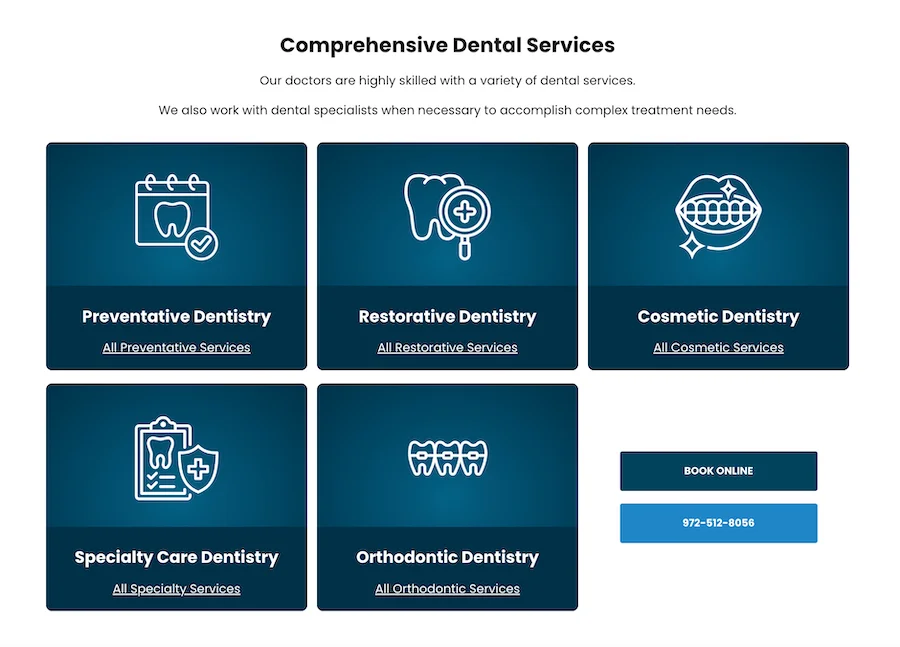
This dentist lists their comprehensive set of services.
14. “One-stop shop”
This phrase emphasizes convenience. It does not explain outcomes.
What to say instead
Reframe around partnership or results.
Example rewrite
“One-stop shop for marketing.”
“One partner for strategy, execution, and performance tracking.”
15. “360-degree approach”
This phrase implies completeness. It stays very much abstract.
What to say instead
Name the channels or perspectives involved.
Example rewrite
“360-degree marketing strategy.”
“Strategy across search, social, and on-site conversion.”
(16–20) Modern marketing buzzwords that slow down understanding
These phrases sound polished and professional, which is probably why they are used so frequently. The downside is that readers have to pause to decipher what the words really mean.
16. “Seamless”
This word promises ease. It never explains where the friction was removed.
What to say instead
Describe the actual experience.
Example rewrite
“Seamless integration.”
“Connects to Google Ads in three clicks.”
🛑 Speaking of Google Ads… Want to know how you’re doing? Find out with a free, instant audit >> Google Ads Performance Grader
17. “Robust”
This word signals strength. It offers no detail.
What to say instead
Call out specific features or outputs.
Example rewrite
“Robust reporting features.”
“Custom reports for ROAS, CPL, and conversion volume.”
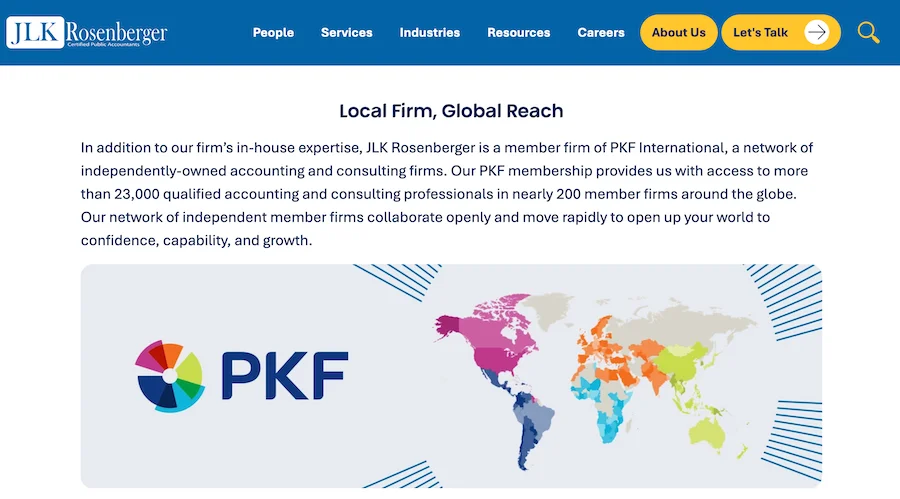
This accounting firm shares a specific feature that would signal it has “robust” offerings.
18. “Scalable”
This word raises a silent question: Scalable from what to what?
What to say instead
Define the range or growth stage.
Example rewrite
“Scalable solution.”
“Works for teams from 5 to 500 marketers.”
19. “Next-generation”
This phrase points forward. It does not explain why it matters now.
What to say instead
Emphasize present-day benefits.
Example rewrite
“Next-generation analytics.”
“Real-time performance insights updated daily.”
20. “Innovative”
This word is overused. It rarely explains what is actually new.
What to say instead
Tie innovation to behavior or outcomes.
Example rewrite
“Innovative marketing tools.”
“Tools that adapt automatically as campaigns scale.”
(21–25) CTA phrases that offload thinking onto your reader
Many common calls to action fail because they hide the value of the next step. Instead of setting expectations, they force readers to decide for themselves whether clicking is worth the effort.
21. “Get started”
This phrase is vague. It does not explain what happens next.
What to say instead
Clarify what actually happens next.
Example rewrite
“Get started”
“Start your free 7-day trial”
☎️ Find out what CTAs you should be using in our free guide >> The 42 Best Call to Action Phrases Ever (& Why They Work)
22. “Learn more”
This phrase signals uncertainty. It sets zero expectations.
What to say instead
Set a clear expectation.
Example rewrite
“Learn more”
“See pricing and features”
23. “Request a demo”
This phrase feels formal. It implies a high level of commitment.
What to say instead
Lower friction and time commitment.
Example rewrite
“Request a demo”
“Watch a 5-minute product walkthrough”
24. “Contact us”
This phrase shifts effort to the reader. It does not describe the outcome.
What to say instead
Describe the value of the conversation.
Example rewrite
“Contact us”
“Talk to a PPC specialist about your goals”
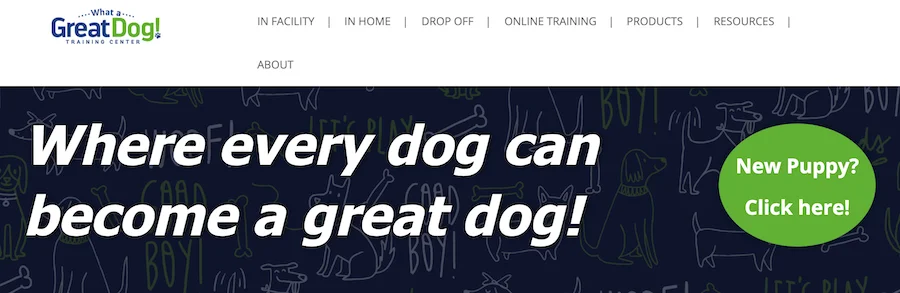
This dog trainer’s CTA specifically targets new puppy owners.
25. “Sign up now”
This phrase emphasizes urgency. It offers no value.
What to say instead
Highlight ease or benefit.
Example rewrite
Sign up now”
“Create your free account in minutes”
Why overused phrases hurt performance
Overused marketing language signals safety (to you). It feels approved and familiar (again, to you). That familiarity is the problem. Language that your readers see for the millionth time fades into the background and triggers skepticism instead.
Abstract language weakens even the strongest ideas. Clear writing, on the other hand, respects attention. When copy explains what something does and who it is for, readers stay focused and willing to act.
The simplest rule for fixing any buzzword
Most overused phrases fail one test: specificity.
If a phrase could describe almost any company, product, brand, or service, something concrete is missing. Strong marketing language answers basic questions. Who is this for? What does it actually do? What changes after someone uses it?
The phrases above fail simply because they avoid looking for those answers.
How to find overused marketing phrases in your copy
To help you identify the buzzwords in your marketing copy, we created a special free tool: You Sound Like Everyone Else! This marketing copy grader scans your content and flags the phrases that will bore your customers and gives you practical tips to rewrite your copy.
Simply copy and paste your content into the box (think: landing pages, social media posts, emails, and more!), hit Analyze Copy, and see your score. Then, click through the phrase insights to see exactly how to rewrite your copy so you can bump your score up to 100!

Try the tool for yourself here!
A practical way to edit your own copy
When reviewing your own words, look for phrases that could be swapped with minimal effort. Ask whether a sentence explains something concrete or simply signals quality. Replace abstract claims with something real.
- A specific outcome
- A defined audience
- A measurable change
- A clear process step
You do not need to remove every buzzword. You do need to balance them with substance. But a page full of generalities forces readers to work too hard.
Strong marketing copy sounds confident because it is clear. It does not rely on inflated language to create authority. It earns attention by explaining what matters, how it works, and why that is relevant.
If your homepage, ad, or landing page could belong to almost any company in your space, language is often the reason. Start by replacing just a few overused phrases. The difference compounds quickly.
Clearer language leads to better decisions
Replacing overused phrases is not about sounding clever. It is about making decisions easier.
Clear writing improves understanding and confidence. When people get what they are being offered, they move forward with less friction. Even small changes in wording and sentence structure affect how information is processed and remembered.
The same applies to trust. Communication research consistently shows that unclear or inflated language reduces confidence, even when the actual offer is strong. When people cannot tell what is concrete or real, hesitation replaces action. Marketing fails when people cannot tell what is real.
About the WordStream Blog
We've been a trusted source of data, news, and strategy for over 15 years. All of our content is written and reviewed by real people: a dedicated team of professionals with decades of combined experience in marketing and advertising for businesses of all sizes.


Add us as a preferred source on Google
Are you wasting money in Google Ads?
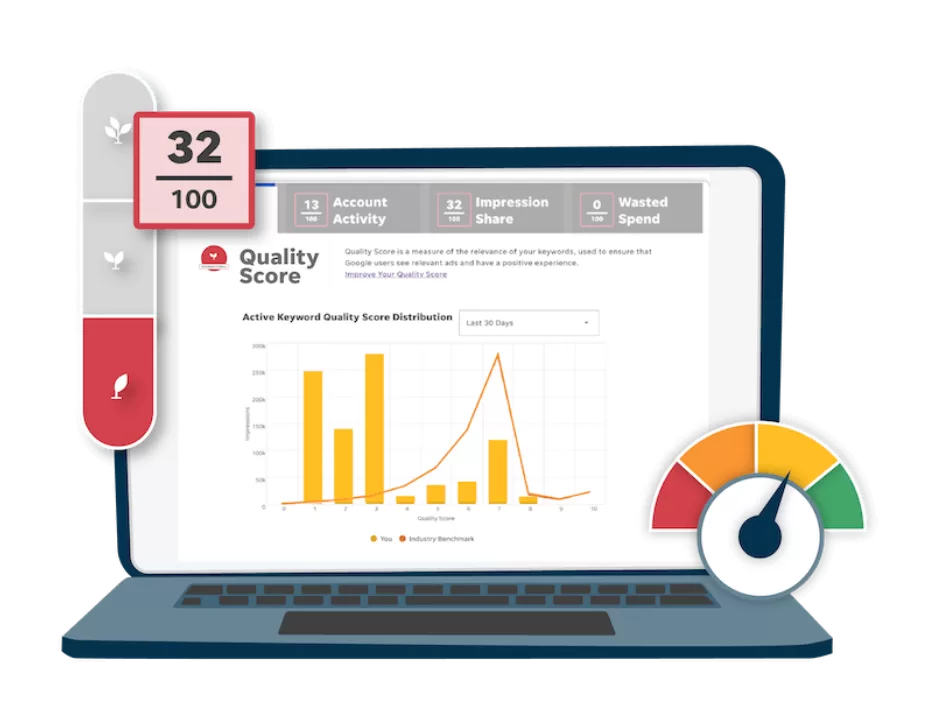

Meet The Author
Oskar Duberg
Oskar is a Swiss-based Swede—a freelance writer, content marketer, and brand consultant who helps B2B tech, agencies, and creative companies communicate with clarity and personality. He’s spent over a decade turning complex ideas into content that connects, creating strategies, stories, and brand identities for global players and respected publications. Above all, he loves writing and believes that every great brand starts with words that sound human.
Recommended for you