Many marketing strategies are about getting the immediate sale. Show the ad, book the call, close the deal.
Brand awareness works differently. It’s designed to create a baseline of trust and affinity with a target consumer that compounds over time. So, when it comes time for them to make a purchase, businesses that consistently show up in feeds, forums, inboxes, and articles aren’t starting from scratch. They stand out as the top choice.
AI search only makes brand awareness more important. All of those references from across the web are authority and trust signals that increase your visibility on platforms like ChatGPT and Claude.
In this comprehensive guide, we’ll cover the basics of brand awareness, provide a list of strategies and examples you can use, and share tips from marketing experts to make sure your brand is known and trusted by both customers and the AI search platforms they use.
Contents
- What is brand awareness?
- What are the types of brand awareness?
- What are the benefits of building brand awareness?
- 13 proven brand awareness techniques
- 6 creative brand awareness strategies
- 4 bold brand awareness examples
- How to create a brand awareness strategy
- How to measure brand awareness
What is brand awareness?
Brand awareness is the level of familiarity your target audience has with your business, brand, products or services, reputation, and what sets you apart from competitors. It’s the starting point of every purchase decision and one of the biggest drivers of customer trust.
When you recognize a letter font, recall an ad jingle, spot your favorite dish soap on the shelf, or remember seeing a helpful video from a local lawn care business, that’s brand awareness.
When a single letter in a particular font and color suggests the smell of fresh fries, that’s brand awareness.
🛑 Want more? Download The Definitive Guide to Brand Awareness: Top Strategies, Examples, & How to Measure Success
What are the types of brand awareness?
Brand awareness exists on a spectrum. It ranges from someone being able to recall your brand when prompted to being the only brand most consumers think of in your category.
The four types of brand awareness include:
- Brand recall: The ability of customers to remember your brand from memory when prompted by a category or need, without seeing your name or logo first.
- Brand recognition: The ability of customers to identify your brand when they see it, including aspects like your logo, colors, tagline, or other visual cues.
- Top-of-mind awareness: When your brand is the first one a customer thinks of in your category, putting you ahead of every competitor before the search even begins.
- Brand dominance: When your brand is the only one a customer can recall in a category, making you the choice by default.
What are the benefits of building brand awareness?
Brand awareness creates a compounding return that can make finding, engaging, and converting customers easier and less expensive over time.
Here are some of the specific ways building brand awareness will help you grow your business.
Builds early trust
81% of consumers say they need to trust a brand before buying from it, making trust a non-negotiable goal for growing a business.
Awareness does a lot of the heavy lifting in building credibility with buyers long before they make first contact with your business. That helps shorten their decision time and keeps you at the top of their list.
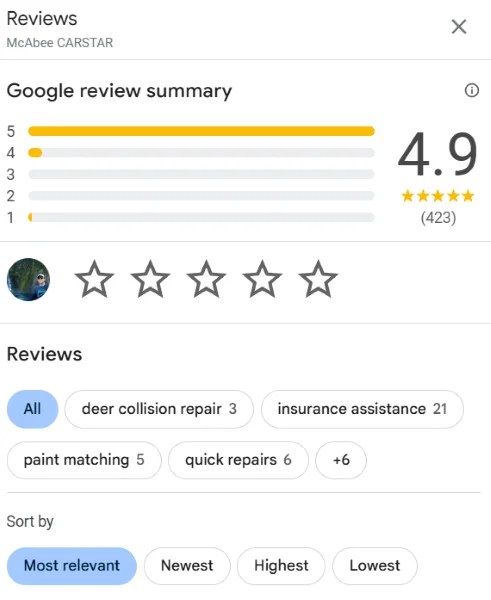
Positive trust signals help build brand awareness.
“Performance without awareness is fragile,” said Andrew Chernoff, Vice President of Sales and Strategy at LocaliQ. “Short‑term performance tactics degrade quickly without awareness upstream. Intentional awareness campaigns build mental availability, so when consumers (or AI agents) need an answer, your brand is already known, trusted, and preferred.”
Increases performance for all marketing channels
Brand awareness is the rising tide that lifts all marketing boats. Whether it’s SEO, paid ads, email, or social, when people already know who you are, they’re more likely to pay attention and click.
For example, when consumers were asked what would make them more likely to open a cold email, company familiarity came in at 46%, nearly tied with promotional offers (46.2%) and well ahead of an attention-grabbing subject line (42.6%).
“Signal loss from privacy changes, AI-driven auction dynamics, crowded feeds—they all create significant barriers to building a brand in the current landscape,” said Stephanie Asrymbetov, a Senior Product Manager for Media Products at LocaliQ. “The brands winning right now built familiarity before the click. Your brand awareness is what makes every downstream dollar work harder.”
Boosts search and AI visibility
Search engines and AI tools favor brands that are frequently mentioned, searched by name, and discussed online. The more people know you, the more the algorithms notice you, too.
These brand mentions are only becoming more important. As we learn about generative engine optimization (GEO), we’re finding that positive discussions of your brand on places like Reddit and social media have a significant impact on the chance your business gets cited by platforms like AI Overviews and ChatGPT.
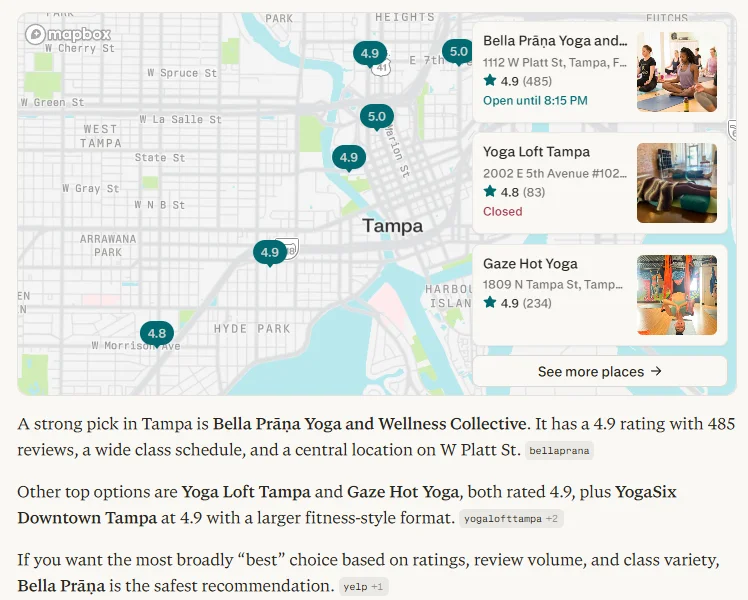
Brand awareness campaigns increase your AI and search visibility.
“Brand awareness matters more today because discovery is changing,” said Dennis Wilson, VP of Product Management at LocaliQ. “Users are getting answers without clicks; AI is summarizing options before people ever visit a website. If your brand isn’t trusted, it may never be considered at all.”
Reduces pricing pressure
A strong awareness campaign that highlights your unique selling proposition and establishes you as a trusted solution can also help position your brand as a premium solution, taking the downward spiral of price competition off the table.
There’s actually lots of data to back this up, like:
- 87% of shoppers will pay more for brands they trust.
- Consumers spend 51% more with retailers they trust.
- The 2025 Edelman Trust Barometer found that trust is now considered equal to price and quality as a purchase consideration.
“Attention is fragmented, and decisions are faster,” said Chadi Irani, Regional Vice President of Advertising at USA TODAY Co. “Whether it’s AI summaries, social feeds, or headlines, people are making quicker choices with less research. If your brand isn’t already familiar, you’re often not even considered. Awareness today is what gets you into the decision set in the first place.”
🚀 Turn awareness into revenue! Get 14 Super-Fast Ways to Boost Conversions
13 proven brand awareness techniques
Brand awareness isn’t new; archeologists found 3,000-year-old decorative signs from shops and taverns that told patrons what to expect from a local merchant. Here we’ve gathered up some proven—and slightly more modern—methods of generating awareness for your brand.
1. Create consistent branding
Before you promote your brand to the world, it’s really important to have a cohesive set of essential elements that make your brand unique. Otherwise, you’ll get attention that doesn’t stick.
A branding exercise is a great start. During the work, you’ll review things like your:
- Target audience: This will guide the rest of your decisions here. (Learn how to find your target audience.)
- Your value proposition: This is what you want to be known for. (Get ideas from these value proposition examples.)
- Your mission and values: This outlines what change you want to create in the world.
- Visual branding: This includes your logo, color scheme, font, etc.
- Voice and tone: This describes the personality of your brand.
Think unique! The more differentiated your brand, the easier it will be to stand out and be remembered.
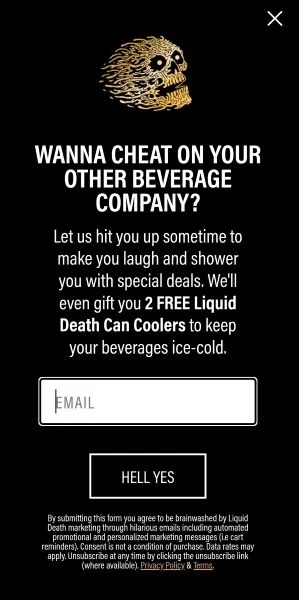
Liquid Death makes its brand memorable with an aggressively funny tone that stands out in its market.
2. Boost your SEO and GEO
Yes, SEO is a brand awareness strategy. It’s actually one of the most powerful awareness plays available because you can do it on a shoestring budget and it’ll provide compounding returns over time.
It works because billions of times each month, people search for information online without yet planning to buy something. When your brand is the one that pops up on the results page, they become aware of it.
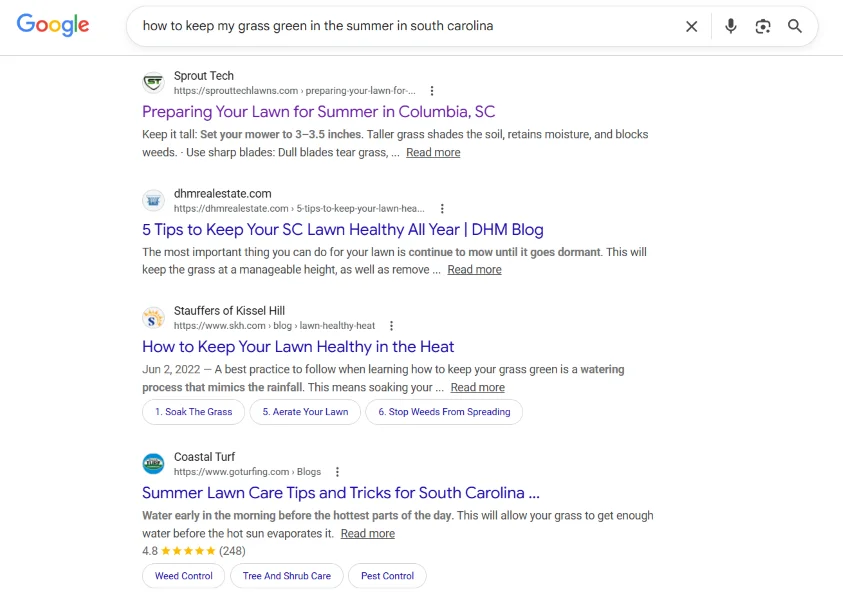
People with lawns in South Carolina will find these brands when they search for help.
While the rules of GEO aren’t 100% the same, the result is similar. If AI tools like ChatGPT cite you as a source, you get a chance at being recognized as the brand that solved a future customer’s problem.
Here are some resources to help with SEO and GEO:
- The New SEO Checklist for Content That Ranks
- SEO Keywords: How Better Keyword Research Gets You Better Results
- GEO for SMBs: What It Is & How to Do It Right
3. Launch a referral program
Customer referral programs are a big win for building brand awareness. Not only do you get to reach new potential customers, but it’s in a way that automatically builds genuine trust.
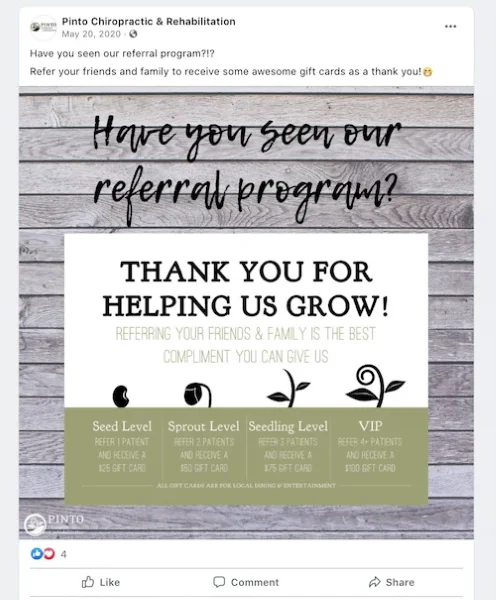
At the very least, make it a habit to ask every customer to leave a review. But you can scale the program quickly by offering incentives and running referral marketing campaigns.
4. Offer something for free
People love free stuff. They also love to show off free stuff and tell others about it.
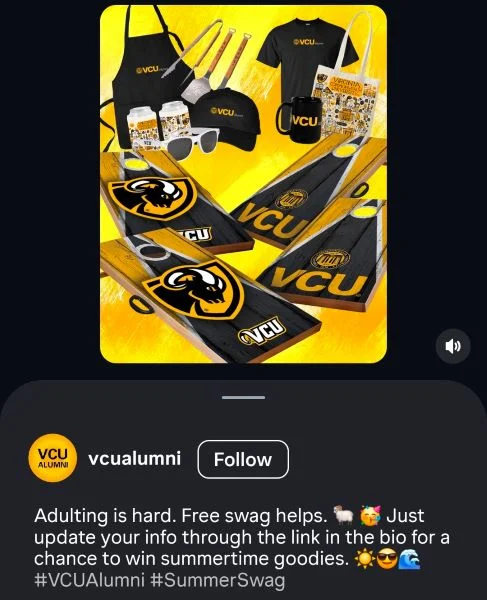
Free stuff is a great way to share your brand.
There are lots of ways to use freebies to gain brand awareness:
- Give out physical branded swag.
- Hand out free samples at an event.
- Give free quotes or estimates for services.
- Offer a BOGO that’s tied to your referral campaign.
- Provide a basic version of your product or service for free.
- Offer free, limited-time trial access to your online tools.
5. Partner with other brands
This brand awareness strategy lets you multiply your audience quickly. To do it, partner with complementary brands and organize co-hosted events, contests, promotions, etc.
Look for brands that don’t sell what you sell, but that sell to the same people. Your holistic yoga studio would be a great complement to the healthy smoothie shop.
A variation of this strategy is to partner with a non-profit to support a cause while building brand awareness. For example, the TAZO tea company partnered with America’s Forests for a campaign to plant trees.
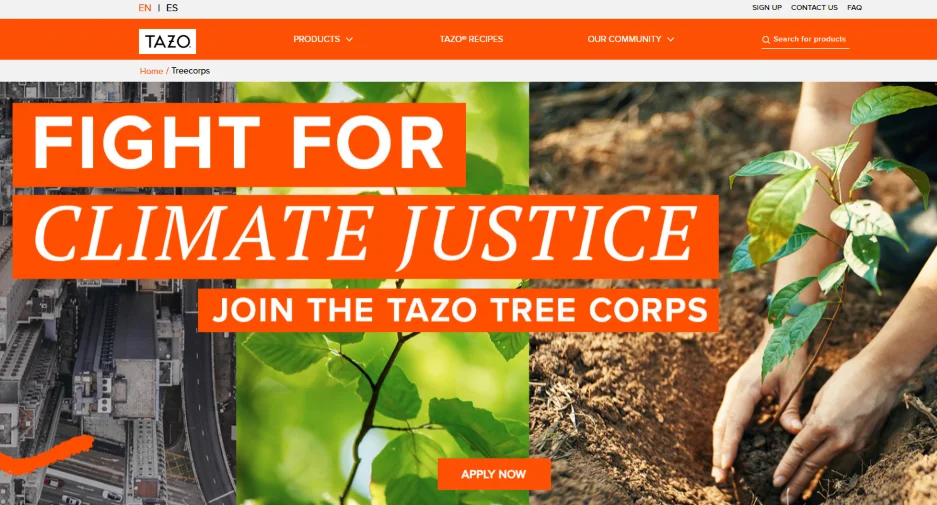
Another easy option is to either trade leads or mention each other’s business on your social feeds.
6. Collaborate with influencers
Influencer marketing is good for direct selling, but it’s also a great way to quickly introduce your brand to an existing audience.

The key is to find the right influencer. You want someone who:
- Matches your brand’s ethos.
- Has an engaged audience (engagement is more important than audience size).
- Speaks to your target audience.
7. Share your brand on social media
Social media marketing has become a key driver of website traffic, leads, and sales. It’s also a perfect platform to get in front of new people and let them know what your brand is all about.
Any positive exposure is good here. But if you’re able to show up with personality, even better.
Take KFC, for example. Their chicken isn’t the only thing with spice.
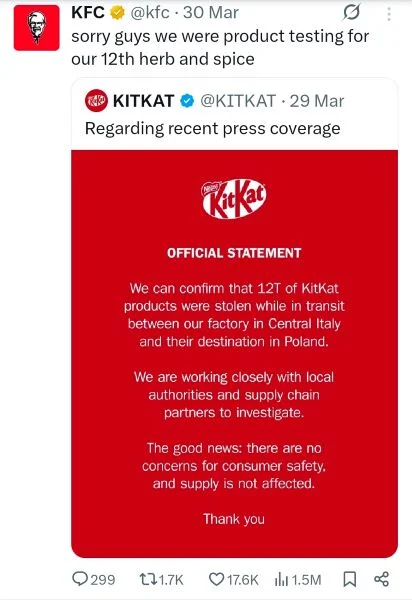
Remember to keep your brand consistent. If you’re aiming for “professional guide,” posting on X like KFC will hurt your brand.
8. Invest in display ads
Display ads are often used as a direct marketing tactic where the goal is to get a click. But they can also be really helpful when you’re trying to build brand awareness with a specific audience.
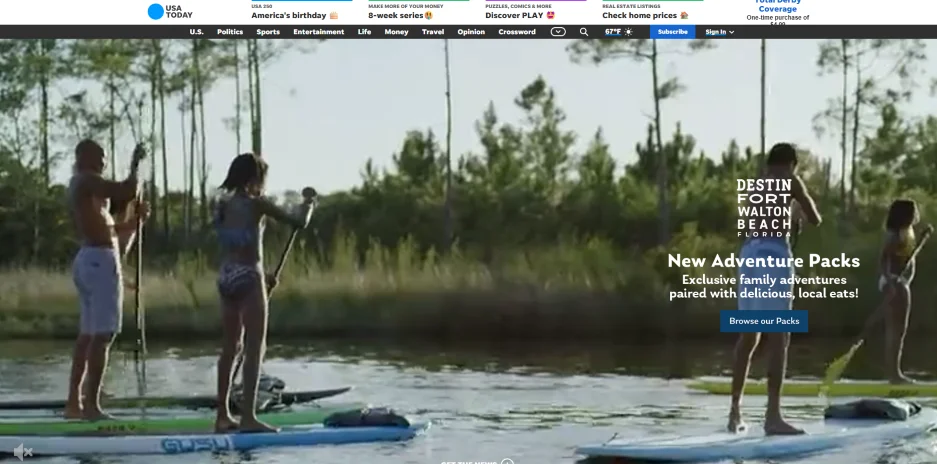
Display ads can put your brand in front of the right people at the right time.
Jeff Book, VP of Sales Operations at USA TODAY Co., explained that display ads can even help grow awareness for your brand with AI search engines.
“Instead of optimizing display design for just CTR [click-through rate], design ads with a clear brand message and business category association,” he said. “Use consistent phrasing, like ‘Brand X, local HVAC expert,’ across all ad units along with matching language on your website. This will allow AI large language models and ranking systems to match brands to business categories and context in relevant queries.”
9. Run social media contests
You can use opt-in social media contests to amplify your brand through network effects. The idea is to ask your followers to tag their friends and like the post as part of the contest.

Not only will you get an instant connection to your followers’ network, but the engagement will motivate the Instagram algorithm to show your post to more people.
10. Share helpful content
Content marketing is a tried-and-true brand awareness strategy. Long before the internet, brands like John Deere published articles helping farmers grow better crops.
The best part of content is that it’s useful for almost any channel, from social media to email to a blog on your website.
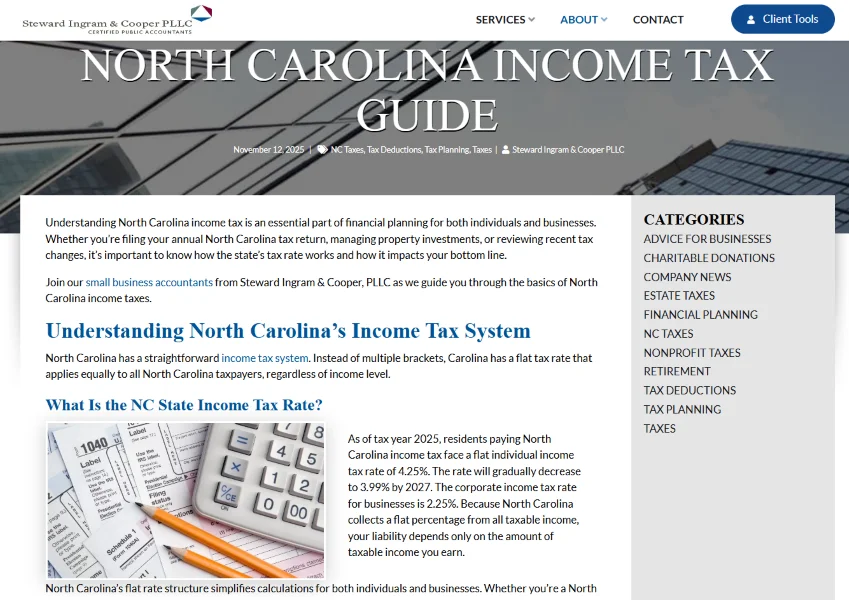
You can localize your content to reach people in your target area.
11. Manage remarketing campaigns
Repetition is an important part of brand awareness. Repetition is an important part of brand awareness. Remarketing lets you remind people about your brand after they’ve engaged with it.
It works by tagging people who have visited your site or engaged with your brand, and then showing them display ads on different websites.
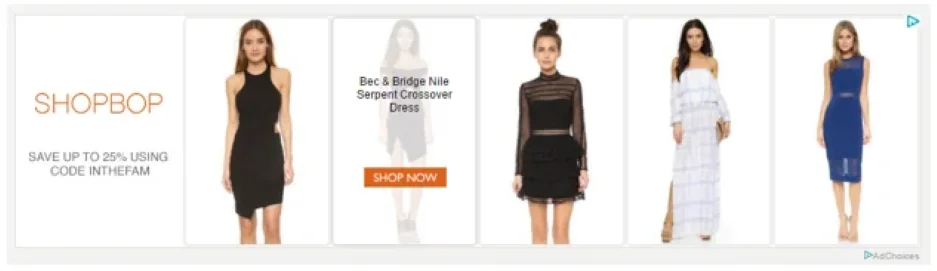
To get the most out of this technique, Stephanie suggests connecting several channels.
“A cross-channel remarketing strategy to your site visitors through social, display, and even email campaigns using your acquired leads with upper-funnel creative can be easily overlooked as a brand play,” she said. “When you serve someone a brand story after they’ve already shown interest, you’re reinforcing recognition without paying to reach a cold audience.”
“You can also use that same data to build lookalike audiences, expanding your brand reach to the people most likely to become customers,” she added.
12. Collect and use user-generated content (UGC)
UGC is content that someone outside of your business creates about your brand or products. It’s often a video or image showing someone using what you sell, but it can be a blog post, too.
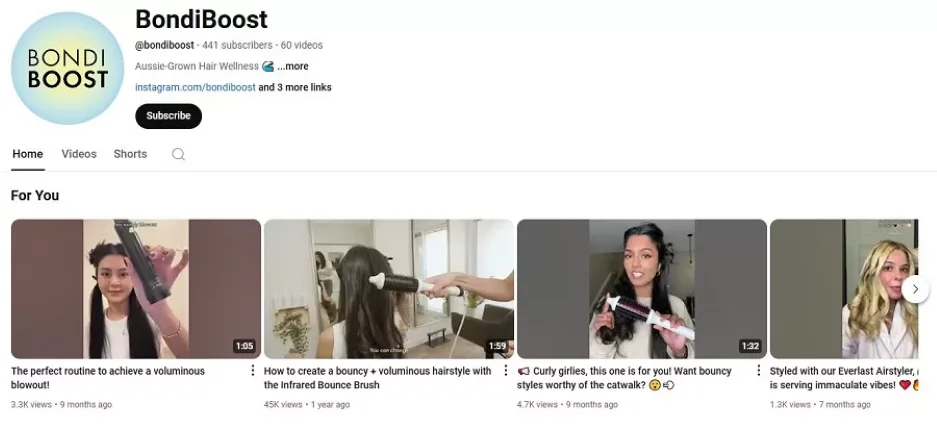
UGC is free, authentic marketing that’s often more convincing than anything you could make yourself.
13. Hand out business cards
Business cards are an inexpensive, versatile brand-awareness tool that’s especially useful for service businesses like real estate agents and massage therapists.
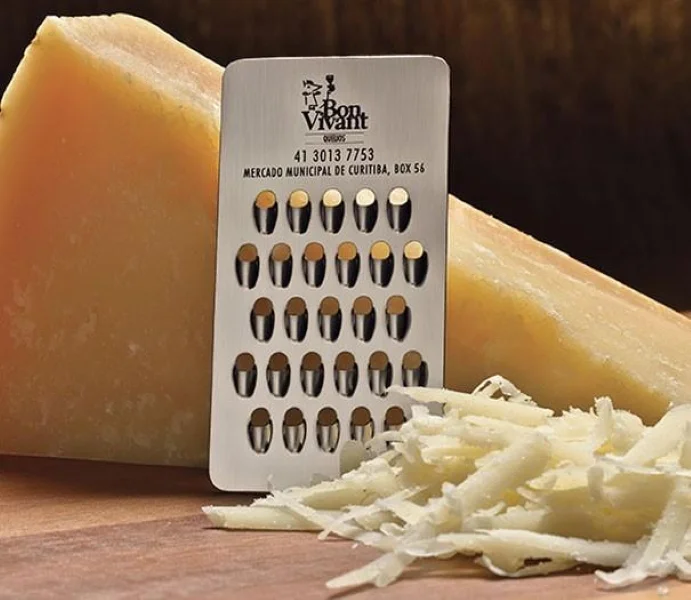
There’s nothing “grater” for brand awareness than a clever business card.
Add a QR code to your card so people can scan it and add you to their contacts.
6 creative brand awareness strategies to try
Now that we’ve covered the tried and true options, we’ll dig into a few brand awareness tactics that aren’t as common (meaning, they’ll help you stand out!).
14. Publish branded content
Branded content combines the memorable storytelling of content marketing with the audience reach and targeting of paid ads.

Branded content lets you generate trust and awareness among an existing audience.
With branded content, you can write or record your content and pay to have it published, or you can work with a publisher that helps you plan, produce, and publish it.
“It’s important to own the environment where the story lives, not just buy impressions,” Andrew said. “Brand awareness increases when brands are embedded within trusted editorial content, not layered on top of it. Premium branded content, blogs, and article integrations place brands in moments of high attention and credibility rather than fleeting ad exposure.”
15. Send marketing mailers
Direct mail marketing has the benefit of putting something tangible in your audience’s hands. A well-designed mailer can stick around for days or weeks, especially if it includes a coupon they can use later.
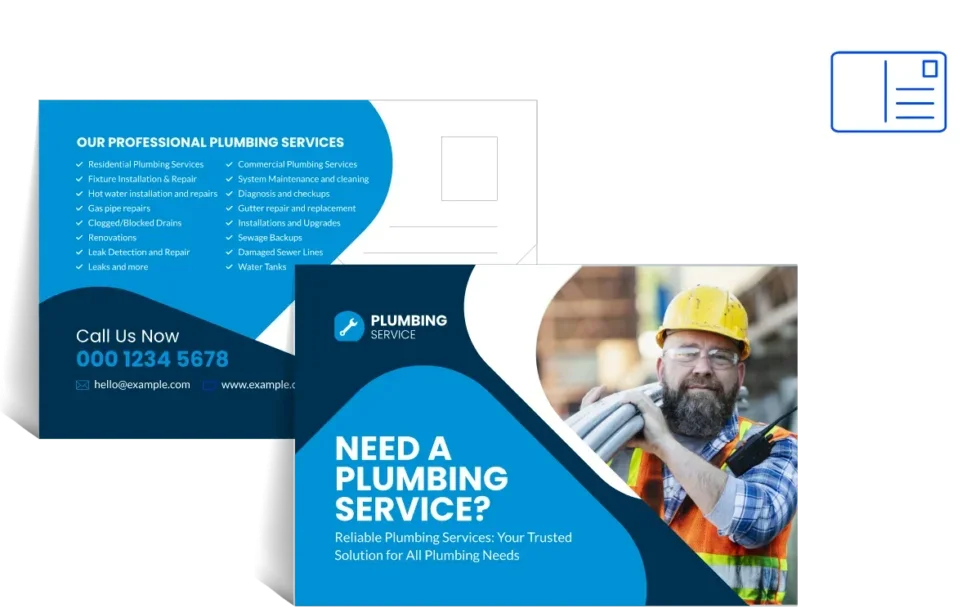
While direct mail used to be a relied-upon tactic, many businesses have ditched it in favor of going digital. But modern direct mail campaigns can actually blend online and offline tactics to help you reach a targeted, personalized audience—making it a great way to engage with your local audience right in their homes.
16. Place print ads
Print ads are one of the original brand awareness plays, and they’ve lasted the test of time because they work. People read publications they trust, and when your ad sits among that content, it gains credibility, too.

It’s important to work with a publisher that has lots of audience data and a large reach to make sure your ad gets in front of the right people.
“One of the most overlooked ways to build brand awareness is consistent presence within trusted environments people already engage with daily,” said Cami Porter, Regional Vice President of Sales at USA TODAY Co. “For us, that means leveraging our platforms not just for campaigns, but for ongoing visibility through recurring content series, sponsorships, and high-impact placements that become familiar over time.”
17. Try guest posting
A guest post is an article you write for another website. It can be a paid placement, but often you trade your expertise for citation, backlink, and exposure to the publication’s audience.
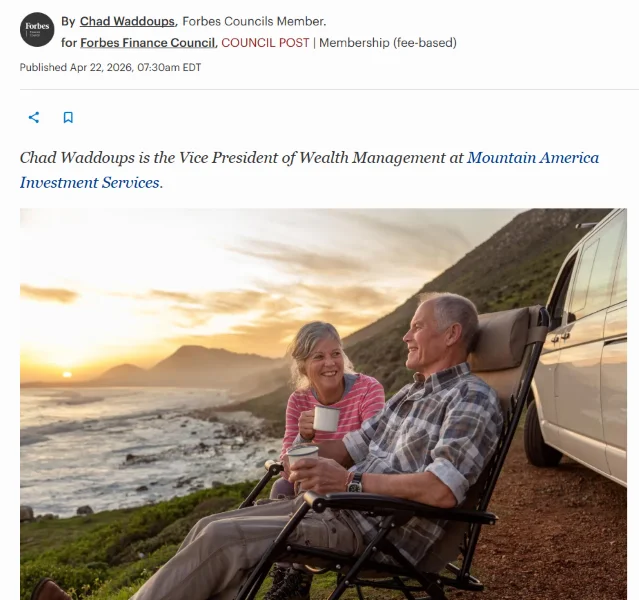
Guest posts let you build your brand as an expert in your field. And there are lots of opportunities. Just use a search phrase on Google like “[niche] + submit a guest post” and see what comes up.
18. Appear on podcasts
The podcast medium has enjoyed consistent audience growth for years. It’s becoming a common way for people to learn while they drive, walk their dog, or cook dinner.
They’re also growing as a creative way to build brand awareness. The number of topics covered rivals subreddits. You can even start your own show if you see a topic gap.

The great thing about podcasts is that they get attention. Over 70% of podcast listeners hear most or all of the episode.
19. Engage with a like-minded community
No matter what you sell, there’s likely a group of people somewhere online talking about it passionately (if you want to join a heated debate about whetstones, head to the subreddit r/sharpening).
As an expert in your field, you’d be a valuable voice in these communities. And with every post, comment, and reply, you’re laying another brick in your brand-awareness foundation.
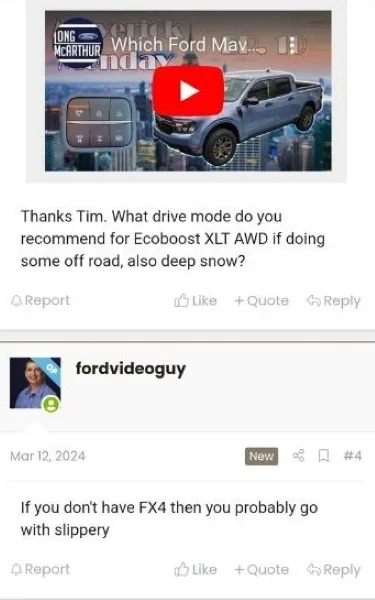
Find the places people talk about what you sell and show up as a trusted adviser.
Just remember you’re there to help, educate, learn, and share, not sell. Get salesy, and you’ll be moderated out.
An easy way to find your community is to prompt an AI tool. Ask it to “List 10 online communities that discuss [topic].” Or consider starting your own brand community if you have the following to support it.
4 bold brand awareness examples
Let’s take a look at some of the coolest brand awareness campaigns and how you can adapt them to your strategy.
Lean Cuisine: #WeighThis
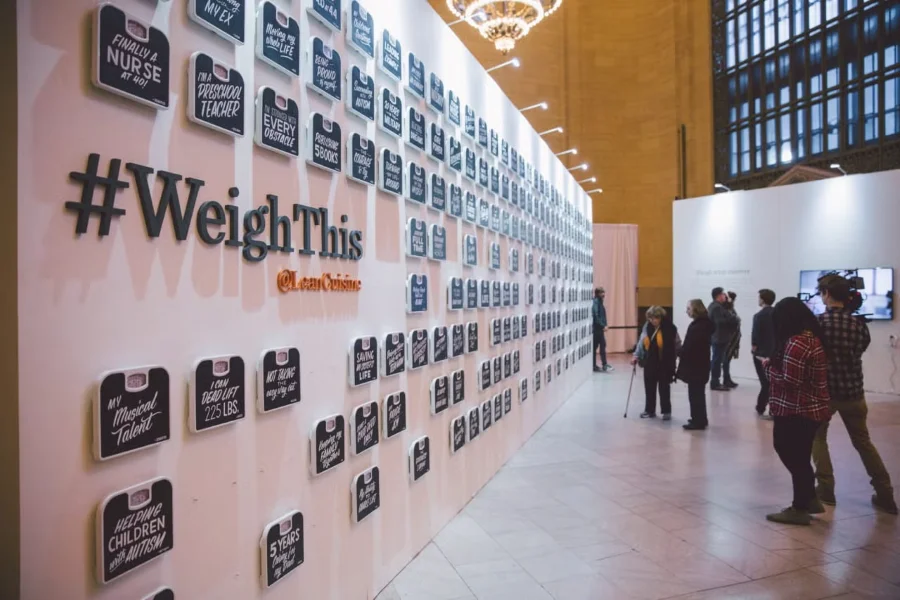
Lean Cuisine launched the #WeighThis campaign in 2015 as part of a full rebrand, pivoting away from its “diet food” image toward a more sustainable lifestyle brand.
Changing the perception of a legacy brand is a tough job. Lean Cuisine attacked this challenge with:
- A launch video that invited women to step up to a scale, but instead of weighing themselves, they were asked to write on it the things that mattered most to them.
- A branded hashtag (#WeighThis) that let people share their own stories.
- An interactive display at Grand Central Terminal in New York with 244 bathroom scales painted with inspirational messages.
What you can take away from this brand awareness example
You may not be able to take over Grand Central Station, but you can take a counterintuitive stance on something in your industry and create a branded hashtag that encourages people to share that message (and generates some new UGC for your brand).
For example, a lawncare company could encourage the use of clover instead of grass for a more sustainable, drought-resistant lawn and use the hashtag “#nomowbeehappy.”
“Own moments, not just placements,” Chadi advised. “Brands often focus on impressions, but the real impact comes from aligning with high-interest cultural or seasonal moments, like the World Cup, major local events, or tentpole editorial series. When a brand is consistently present around what people care about in real time, it builds relevance faster than standalone campaigns.”
Spotify: Wrapped
Spotify Wrapped is an annual campaign where Spotify gives every user a personalized recap of their listening habits for the year.
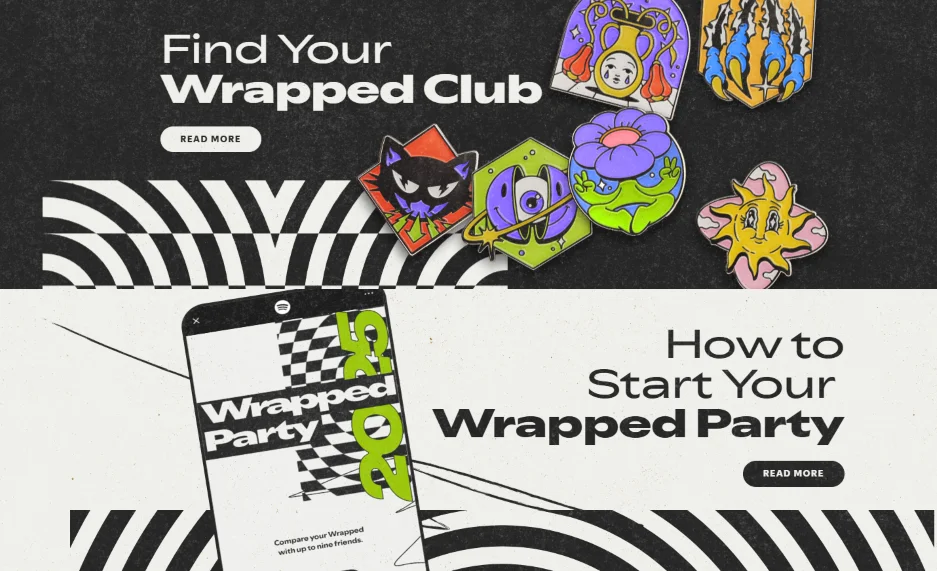
It’s incredibly shareable, so millions of Spotify users become enthusiastic (and unpaid) brand ambassadors every December.
What you can take away from this brand awareness example
The core premise behind Spotify Wrapped is that you take data you already have about your customers and turn it into something fun, flattering, and shareable.
Ask yourself, what do you know about your customers? Here are some examples:
- A restaurant or coffee shop: “You were our 47th most loyal customer this year. You ordered our house latte 34 times. That’s 34 good mornings.” A printed card at the end of the year, or an email to loyalty members. Simple and personal.
- A hair salon or barbershop: “In 2024, we gave you 8 cuts, saved you approximately 4 hours of bad hair days, and your most requested style was the taper fade.” Clients would absolutely share that.
- A gym or fitness studio: “You showed up 94 times this year. You burned an estimated 47,000 calories. You never once skipped leg day.” (Even if they did.)
- A veterinary clinic: “Bella had a great year. She visited us 3 times, got her shots, and is officially in the top 10% of our best-behaved patients.” Pet owners would frame that.
M&M: Flavor Room
In 2018, M&M’s set up a pop-up in lower Manhattan where fans could vote on the brand’s next flavor. Three immersive rooms were each decorated and scented to match one of three candidates: raspberry, espresso, or mint. Visitors go to try the flavors, take photos, and cast their vote.

What you can take away from this brand awareness example
M&Ms used a pop-up to get the word out, and so can you. These can take the form of a table at a local 5K all the way to a pop-up shop in a busy town center. You get exposure and a chance to actually speak with people. Plus, you can add it to a giveaway to collect leads.
Staples: Social media poll
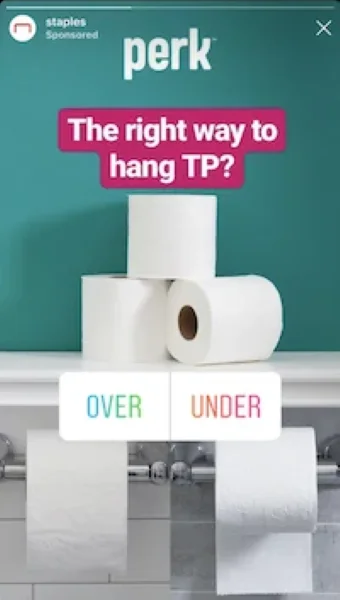
Not all creative awareness tactics have to be huge and flashy. Take this simple social media poll from office supply retailer Staples.
They stirred the conversational pot by posting a poll that asks about the correct orientation of toilet paper rolls.
What you can take away from this brand awareness example
This awareness strategy is genius because:
- It’s simple: You can post a poll in a minute, and it’s free unless you pay to promote the post.
- It’s versatile: You use this idea on just about any social media platform.
- It has built-in organic distribution: If you choose the right question, lots of people will answer and share it, which will also give it an algorithm boost.
All you need is a question your audience will want to answer.
How to create your brand awareness strategy
As you can see, there are a LOT of brand awareness tactics you can use to build buzz and generate affinity for your business. How do you create a brand awareness strategy for yourself? Start with these steps:
- Define your audience: Get specific about who you’re trying to reach, where they spend their time, and what they actually care about.
- Clarify what makes you different: Nail down the one or two things that set you apart, because awareness without a memorable message is just static.
- Choose your channels: Pick two or three places where your audience already is and focus your energy there instead of spreading it thin everywhere.
- Create consistent, recognizable content: Show up regularly with a look, voice, and message people can start to associate with you.
- Measure and adjust: Track what’s working, cut what isn’t, and double down on the channels and content driving real recognition.
How to measure brand awareness
No marketing strategy is complete without a plan to measure the results. It’ll tell you if your investment was worthwhile, where to double down, and where you can pivot for even more success.
Since brand awareness can have a positive effect across your business, there are several areas to track.
What people are searching
Ideally, once people know your name, they’ll look for it online. So look for:
- Branded search volume: How often people search your business name directly, tracked in Google Search Console.
- Share of voice: How often your brand shows up in search results compared to competitors.
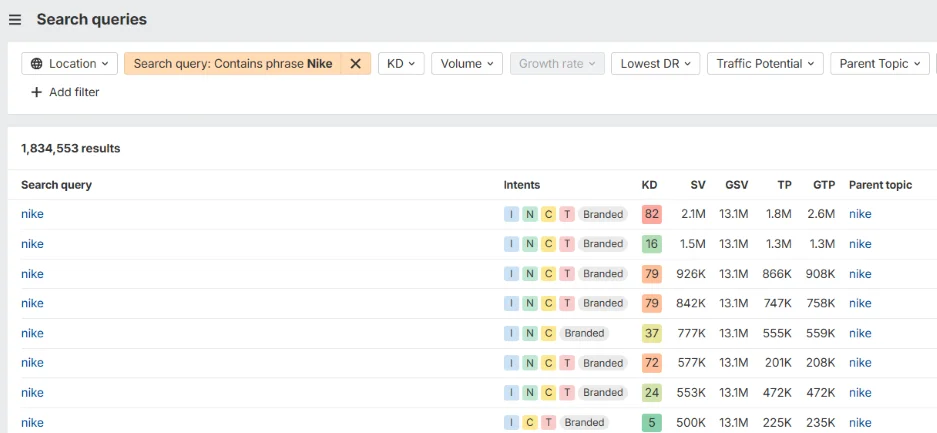
You can use SEO tools to track how often people search for your brand.
“Track brand lift by monitoring branded search volume,” Stephanie said. “When someone types your brand name into Google unprompted, that’s real recall, not a vanity metric. Watch how that volume moves in response to your campaigns over time. That movement is your signal that awareness is actually working.”
How people are engaging
Audience behavior is another signal that your awareness efforts are moving the needle. Track:
- Social media reach and impressions: How many people are your posts actually getting in front of?
- Video views and completion rates: Are people watching, or bouncing?
- Website direct traffic: This measures the number of people who type your URL directly, which is a pure awareness signal.
“I think the biggest pitfall in measuring awareness is yesterday’s metrics,” Dennis said.
“There is no single number that captures impact anymore. Modern brand measurement should combine growth of branded searches, share of answer, share of voice, and sentiment, while also accounting for how AI systems surface and describe your brand.”
What people are saying
If your brand awareness campaign is working, you should see more discussions that include your brand online. You can use social listening and track them by:
- Social mentions and hashtag usage: Look at the volume of conversations about your brand.
- Sentiment: Is the conversation positive, negative, or neutral?
- User-generated content volume: How much are customers posting about you on their own?
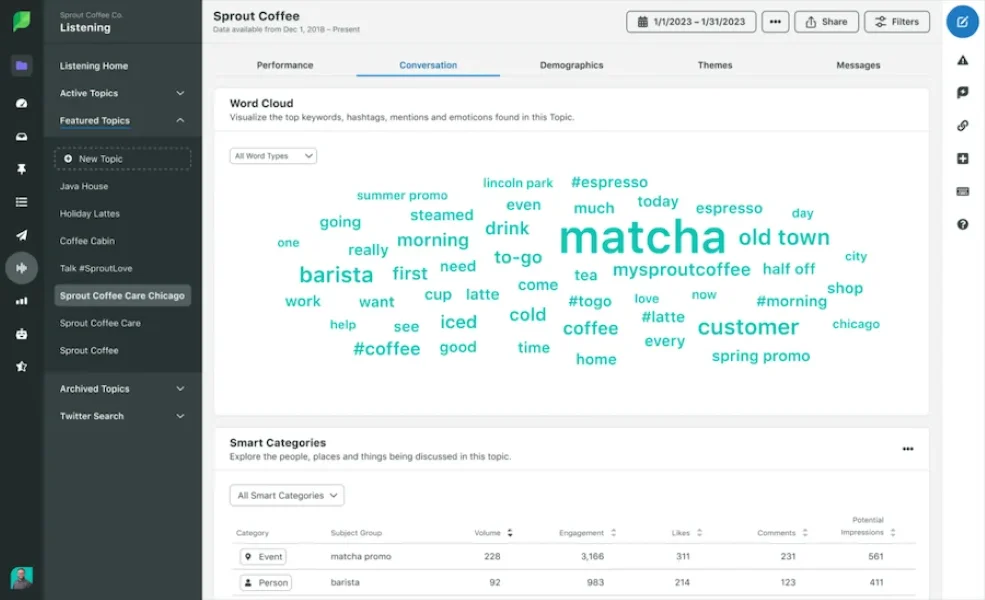
Social media management tools help you track conversation volume and sentiment.
What people tell you
One simple way to learn how well your brand awareness campaigns are working is to ask new customers how they heard about you. As you collect their answers, you’ll start to see which tactics have the greatest impact.
You may also be able to automate this. “On the USA TODAY Network, we can measure brand awareness by asking readers via an online survey whether they are aware of a particular brand where we know we delivered them media,” Jeff said. “ Additionally, we further measure their preference, consideration, and intent to call, visit, or purchase from the brand. Cumulatively, across all these studies we conduct, we can see how much we lift brand awareness for customers.
Generate brand awareness for your business
Brand awareness is no longer something you can afford to do “when there’s time.” It’s an important part of not just converting customers, but of getting found in the first place.
The important part is to right-size your brand awareness strategy for your business. A local house painter can lean heavily on yard signs and business cards. A national daycare will benefit from display ads and a strong social media presence.
From there, just be consistent. Keep showing up, and always look for the little ways you can create a buzz with your audience.
And of course, we’re here to help. Let us show you how our marketing solutions can accelerate your brand awareness, lead generation, and customer conversion success.
About the WordStream Blog
We've been a trusted source of data, news, and strategy for over 15 years. All of our content is written and reviewed by real people: a dedicated team of professionals with decades of combined experience in marketing and advertising for businesses of all sizes.


Add us as a preferred source on Google


Meet The Author
Rob Glover
Rob is the Senior Copywriter at WordStream and LocaliQ, with over 10 years of experience in paid and organic marketing—including SEO, social media, content marketing, and local search. He’s worked across dozens of industries, from SMBs to enterprise, and now specializes in helping businesses build sustainable growth strategies. His work has appeared in Search Engine Land, eMarketer, and more. Outside of marketing, he loves to travel, camp, and mountain bike with his wife and dog.