About the Author


For years, your competitive landscape was pretty simple. A dentist competed with other dentists. An HVAC company competed with other HVAC companies. You knew your competitors because they were doing the exact same thing you were doing, chasing the exact same customers.
That’s not how it works anymore.
AI search engines don’t sort businesses into neat little boxes and hand users a tidy list. They synthesize answers. They pull in solutions the user never thought to ask about, and sometimes never would have considered on their own.
Ask AI how to whiten teeth, and the answer might include professional whitening, at-home kits, whitening strips, and charcoal toothpaste, all in one breath. That local dentist isn’t just competing with the clinic across town anymore. They’re competing with the drugstore aisle, YouTube, and a dozen self-serve solutions that all promise the same outcome.
So what does that actually mean for your business? And more importantly, what do you do about it? We’re going to break all of this down in this article.
Contents
- How AI search is changing (and broadening) your competitors
- Why is AI causing small businesses to lose visibility to the competition?
- How to position your business against AI-expanded competition
- A simple framework for AI-optimized competitive positioning
How AI search is changing (and broadening) your competitor set
Pre-AI search, it was pretty easy to understand who your competitors were and the best ways to stand out from them. You conducted a competitive analysis to identify top local businesses in your industry and the national chains serving your area. Then, you built your competitive positioning in response to those local competitors.
You controlled the narrative on your website, ads, and in marketing materials—and comparisons were mostly made with your direct local competitors. But with AI answers providing information about your business and sourcing competitors outside of your usual scope, it’s getting a little harder to control.
Here are the ways AI is impacting the competition and what that means for your business.
1. AI search expands your competitive set
Traditional search kept comparisons inside the category. Search “best HVAC company near me” and you’d mostly get local HVAC businesses. That made positioning pretty familiar:
- Better service
- Better reviews
- Better prices
- Better local reputation
AI tools work differently. They work at the problem level, not the category level.
A question like “What’s the best way to lower my heating bill this winter?” doesn’t just pull up HVAC companies. It surfaces smart thermostats, too.
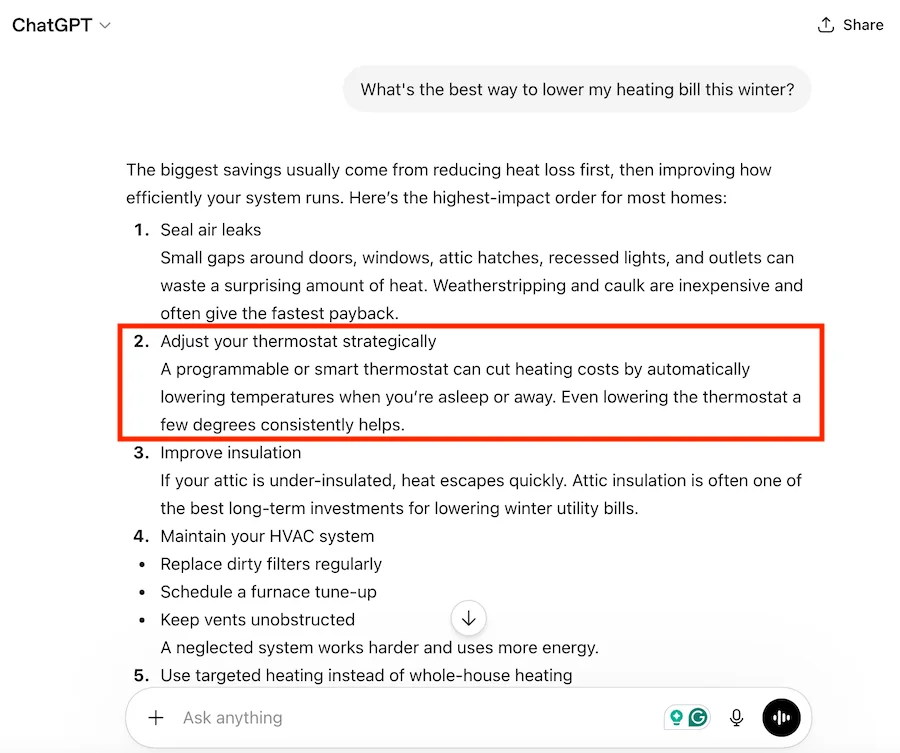
Google promotes Nest thermostat as a tool that can help save energy over time. From the customer’s point of view, that’s a direct competitor to an HVAC service call, because both claim to fix the same thing.
That changes the game for how an HVAC company needs to frame its offer.
If your website only says “we do furnace repair and maintenance,” AI has very little reason to bring you into a broader conversation about energy savings. But if your content explains that heating bills often spike because of duct leakage, airflow imbalance, short cycling, or neglected equipment, now you’re something different.
You’re not just a vendor in a service category. You’re a trusted source that explains when a device-based fix helps, when it doesn’t, and when a system-level problem needs a real diagnosis.
That’s where AI visibility starts.
🛠️ Get everything you need to know about showing up in AI search in our free guide: The AI Search Toolkit >>
2. Your real competitors are often substitute solutions
A substitute solution solves the same problem through a completely different product, service, or approach. It’s not a new concept. Economists have been talking about substitutes forever.
What’s new is how visible these substitutes have become inside AI-generated answers.
A user who asks how to whiten teeth does not just see dentists. They also see consumer products framed as viable alternatives. Smileactives markets a range of whitening products for at-home use and claims users can see results quickly depending on the product and application. Suddenly, a local dental practice is in an implicit head-to-head comparison with a $25 kit from the pharmacy, even though the dentist never intended to compete in that frame.
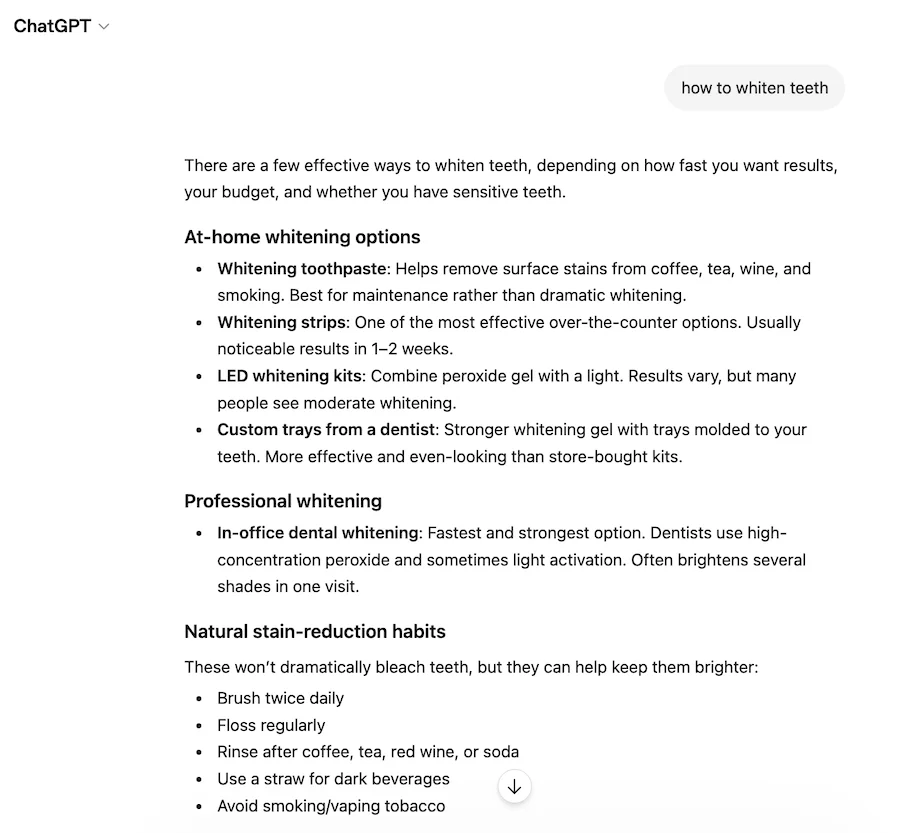
If your website only says “we offer professional whitening treatments,” that message is too thin. It describes the service without making the case for it.
A stronger angle explains what AI can actually use:
- What level of staining doesn’t respond well to over-the-counter products.
- When gum sensitivity or enamel issues make professional supervision worth it.
- How results actually differ across methods, and why a one-time cosmetic goal is a completely different situation than long-term oral health.
That kind of content does two jobs at once:
- It helps buyers make a smarter decision.
- It gives AI structured reasoning it can pull from when someone asks the question.
This is the broader shift. Your business no longer just competes with providers that look like you. It competes with anything that sounds like a plausible answer to the same question.
3. AI often recommends DIY before professional services
AI systems are shaped by the internet they summarize, and the internet is packed with how-to content, tutorials, explainers, and step-by-step videos. That gives DIY options a massive head start.
A homeowner asking how to fix patchy grass may get a DIY-heavy answer before they ever see a single local lawn service.
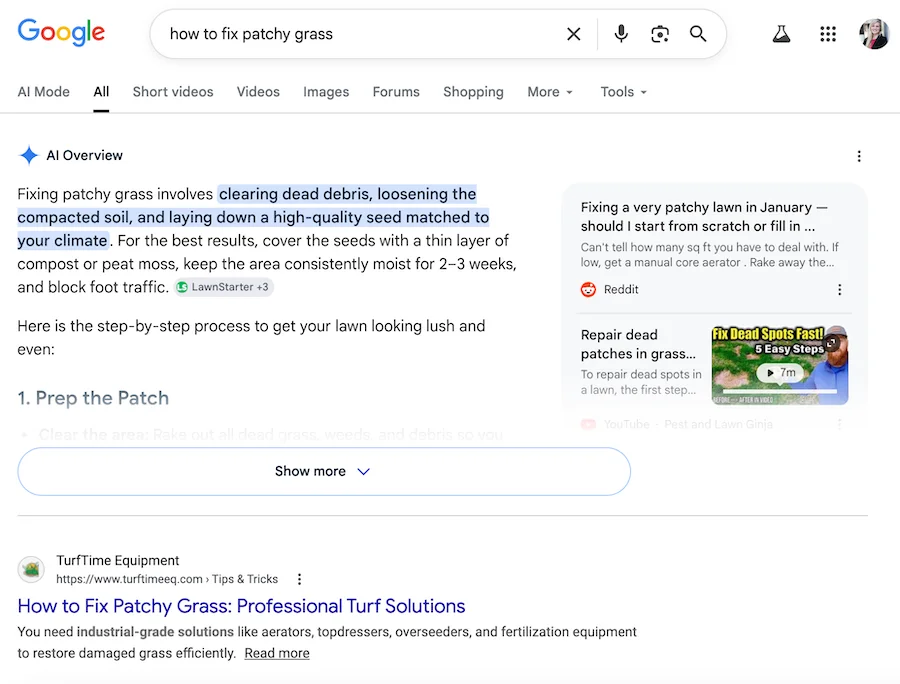
You see the DIY option in the AI Overview ahead of results from a lawn care company.
That doesn’t mean DIY wins. It just means DIY often gets introduced first.
The mistake a lot of businesses make is writing content as if the buyer has already decided to hire someone or make a purchase. They often haven’t. They’re still weighing their options:
- Do it alone
- Buy some products and follow a guide
- Hire a pro for part of it, or hand the whole thing off
A smarter positioning strategy meets that indecision directly:
- Which lawn problems are genuinely DIY-friendly?
- Which ones usually fall apart without the right equipment, soil analysis, or timing?
- What’s the cost of getting the sequence wrong?
- Why does patch repair fail when the real problem is compaction, shade, or disease?
Answer those questions on your site, and you stop being invisible to the buyer’s actual decision process.
4. AI creates new competitors across entire industries
One of the least obvious effects of AI search is that it removes the walls between industries when the end goal is the same.
Personal training is a good example. A local trainer used to compare themselves mostly against other trainers or gyms. Now they also compete with fitness apps, digital coaching platforms, and creator-led workout channels.
Freeletics describes its product as a personalized training app powered by an AI Coach that builds plans around goals, feedback, and fitness level. If a person asks how to get fit at home, both a personal trainer and Freeletics fit the intent. From the AI engine’s perspective, both are legitimate answers to the same problem.
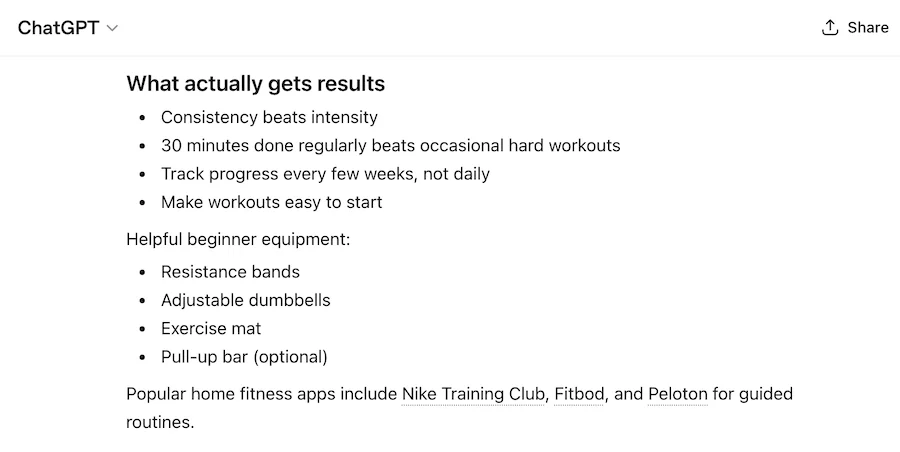
That means a trainer’s site needs more than generic language about customized workouts. Almost every option in the answer set will claim customization.
A stronger positioning angle would focus on dimensions that apps struggle to replace:
- Real-time form correction.
- Injury prevention for specific limitations.
- Accountability through live interaction.
- Adaptation for confidence, motivation, and adherence.
- Feedback that changes not just the workout, but the person’s execution.
These are not marketing flourishes. They are decision criteria. AI systems are more likely to include you when those criteria are stated clearly and mapped to real situations.
Why AI is causing small businesses to lose visibility to the competition
Most SMB websites were built for a different era of search. They describe services. They mention geography. They list reviews and trust markers.
Maybe a few FAQ pages and some blog content. That structure still works for local pack results and branded searches. But it falls short in AI-mediated discovery because it assumes the comparison starts inside the category.
It often doesn’t.
The buyer’s comparison starts earlier and wider than it used to. And a lot of SMB sites miss the real question behind the query. They just name the service they want to sell.
Look at the difference between these two pages:
- “Affordable HVAC repair in Dallas”
- “Why your heating bill is still high even after installing a smart thermostat”
The first describes an offer. The second enters the actual decision space the customer is living in, and the one AI is trying to explain.
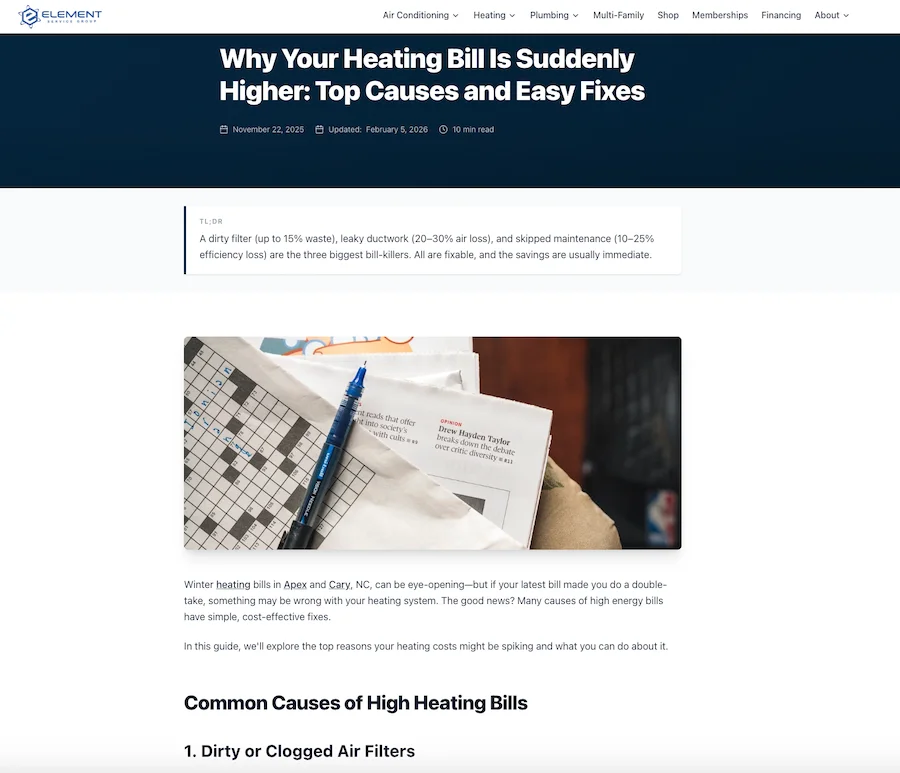
This is why many businesses feel like AI is skipping them. It’s not always about domain authority or ad budget. Sometimes the content just doesn’t give the model anything useful to work with.
AI needs substance it can extract:
- When an alternative works, when it breaks down
- What trade-offs matter
- Who should choose which path, and what’s the risk of making the wrong call.
If your site never answers those questions, AI has no reason to surface you when someone asks them.
⬇️ What are the biggest challenges businesses are facing with their websites and SEO? Free download >> Small Business Website Trends Report
How to position your business against AI-expanded competition
AI is expanding your competition and making it harder to control the narrative around your business. How can you fix this? You need to position against substitutes directly instead of pretending they are irrelevant.
Here are four ways to do that.
1. Acknowledge alternatives openly
Businesses often avoid naming substitutes because they think that gives the alternative more oxygen. In practice, silence creates ambiguity. AI fills ambiguity with whatever it already finds elsewhere.
- If you offer whitening, write the comparison page: Professional teeth whitening vs. at-home whitening kits
- If you run an HVAC company, publish: Can a smart thermostat lower your heating bill on its own?
- If you sell lawn services, create: DIY lawn repair vs. professional lawn treatment: when each makes sense
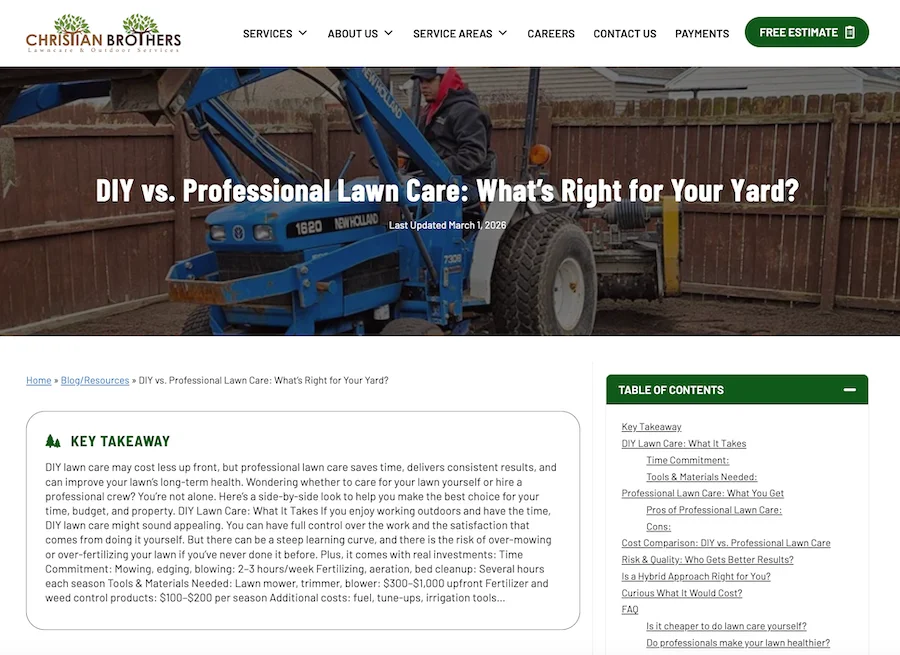
This kind of content helps buyers and gives AI a reusable structure.
2. Explain when DIY fails
DIY-focused content gets traction because it feels cheap, immediate, and empowering. That makes it attractive in AI answers. Your job is to explain the failure conditions clearly.
That means content like:
- When whitening strips produce uneven results.
- When thermostat upgrades fail because the issue is mechanical.
- When overseeding fails because the underlying problem is soil compaction.
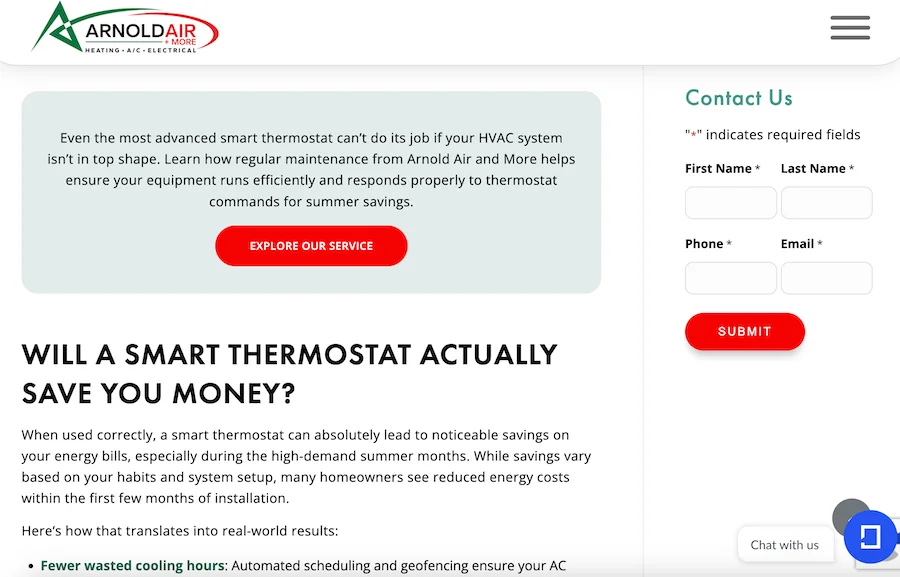
Good comparison content does not mock the DIY option. It explains its limits.
3. Position around outcomes, not service labels
Buyers care about outcomes first.
They want lower bills, better-looking teeth, healthier lawns, less pain, better sleep, more leads, stronger security, or faster recovery. Your site should reflect that. Service pages still matter, but outcome pages often make it easier for AI to understand and easier for buyers to choose.

4. Create extractable comparison content
AI systems favor content that is easy to parse and summarize. Clear headings, structured comparisons, and concise explanations increase the chances your content appears in AI answers.
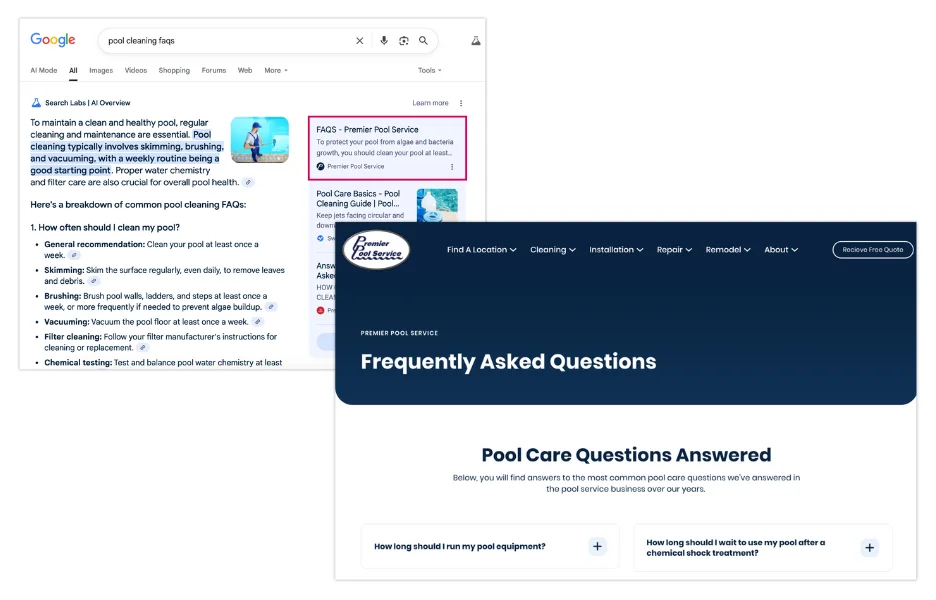
These formatting patterns are similar to what works in featured snippets and AI Overviews, which we break down in this guide to creating AI-optimized content for search visibility.
⭐️ Need help figuring out what makes your business the best and how to position it to customers? Download our guide: How to Do a SWOT Analysis (With Examples & Reusable Template) >>
A simple framework for AI-optimized competitive positioning
If you want a repeatable way to apply this thinking to your content strategy, start with three questions every time you create a new piece of content.
1. What problem does the customer actually have?
Not what service they’re looking for, but what underlying problem are they trying to solve? Lower heating bills. Whiter teeth. A healthier lawn. Getting fit.
Starting from the problem instead of the service category forces you to think like your customer and like an AI, both of which lead to better positioning.
2. What substitute solutions exist?
Make a realistic list. Include products, apps, DIY guides, online tutorials, and adjacent services that solve the same problem differently.
If you’re not sure what’s out there, ask an AI, and it will tell you exactly what it’s recommending to your potential customers.
3. Why is your solution better for certain situations?
This is where you earn your place in the AI answer. Be specific about the situations where your approach wins: complex problems, safety-sensitive work, cases where long-term results matter, scenarios where guaranteed outcomes are worth paying for.
This isn’t about being defensive. It’s about being genuinely useful to someone trying to make a good decision.
Positioning around the problem instead of the service category is what helps AI understand when to recommend you. And once AI understands when to recommend you, you’ll start showing up in conversations you didn’t even know you were missing.
Take on the AI-expanded competition with ease
AI search has quietly expanded what “competition” actually means. A dentist now competes with whitening kits. An HVAC company competes with smart thermostats. A lawn care business competes with YouTube tutorials. A personal trainer competes with a $15 app.
The businesses showing up in those AI answers aren’t always the ones with the best traditional SEO or the biggest ad budgets. They’re the ones that positioned themselves most clearly against the full range of solutions a customer might consider. That’s the shift worth internalizing.
Winning in AI search isn’t just about optimizing for keywords or climbing rankings. It’s about recognizing that when someone asks an AI for help, your real competition is every possible answer to the same question—not just the business down the street. And the best way to win that competition is to engage with it directly: acknowledge the alternatives, explain the trade-offs, and make a clear, honest case for when your solution is the right one.
The businesses that figure this out early will have a real advantage. The ones that don’t will keep optimizing for a competitive landscape that no longer exists.
About the WordStream Blog
We've been a trusted source of data, news, and strategy for over 15 years. All of our content is written and reviewed by real people: a dedicated team of professionals with decades of combined experience in marketing and advertising for businesses of all sizes.


Add us as a preferred source on Google


Meet The Author
Goran Mirkovic
Goran Mirković is a marketing leader with over a decade of experience in SaaS growth, SEO, content strategy, and demand creation, a freelance contributor for WordStream, and a 2x CMO. With a background spanning both agency and in-house leadership roles, he focuses on AI-era search, the evolution of content marketing, demand creation, and practical strategies that help businesses turn expertise into revenue. Outside of marketing, he is a dedicated cinephile with a particular obsession for horror films.
Recommended for you