
About the Author


✨ Quick overview
This article by Facebook ads expert Michelle Morgan outlines the biggest trends shaping Facebook (Meta) advertising in 2026, showing how clean data, targeted audiences, authentic creative, and smarter AI usage will drive better performance and competitive advantage.
Key takeaways
- Clean, accurate data and conversion tracking are foundational as platforms rely on strong signals to optimize campaigns effectively.
- Audience strategy and segmentation remain mission-critical, especially as first-party data becomes more valuable with third-party data restrictions.
- Authentic creative and design tools help ads stand out, with real imagery and engaging visuals outperforming generic AI content.
- Dynamic creative and AI-assisted tools will outpace manual testing by adapting headlines and elements to what works for each viewer.
Facebook is an integral advertising channel for many businesses. It’s a comprehensive platform where potential customers discover you, engage with your brand, and ultimately convert.
But if that’s the case for your business, that also means it’s the case for your competitors.
In 2026, I believe there are three key components to focus on to make sure you’re getting the most out of Facebook ads (aka Meta ads) and getting better results than your competitors: clean data, stand-out creative, and a responsible use of AI—especially for smarter targeting.
In this guide, I’ll break down each of these Facebook ads trends into actionable components and show you how to address each one for greater success in 2026.

Contents
- Clean data is the foundation of success
- Conversion tracking remains a core requirement
- Audience targeting stays mission-critical
- Current audiences will fuel some of the best targeting results
- Authenticity will set the best Facebook ads apart from the rest
- Ad creatives benefit from design tools
- Segmentation will dictate the strength of your campaign structure
- Dynamic creatives outpace manual ad testing
8 Facebook ads trends that’ll shape success in 2026
Let’s examine the trajectory of Facebook ads trends and review the ones that’ll have the greatest impact this year.
1. Clean data will be the foundation of success
We always talk about how smart the AI systems are (which is true, and I’ll get to that portion of the post a little later on), but we first have to talk about why they’re smart and why they can get results for you.
It’s all about the data.
First-party data, third-party data, second-party data, etc., it doesn’t matter. Data is what makes all of these systems work as efficiently as they do. Without that data, the platforms are starved for signals that show success and have nothing to optimize on.
From the Meta Ads advertising angle, that means the platform needs to be fed as much accurate data as possible to get good results for your campaign.
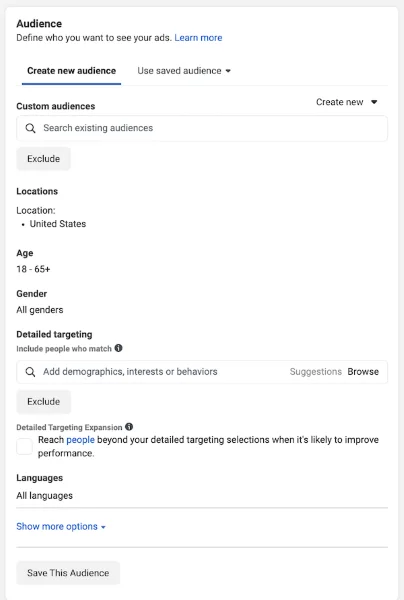
Brands that can feed clean audience data into Meta Ads will have the best results in 2026.
I think the trend for 2026 is that the businesses that have the cleanest, most accurate data will have an easier time seeing good results from Meta and will have an advantage over the competition.
💡 Want to up your ad game? Download 9 Powerful Ways to Use AI in Google & Facebook Ads
2. Conversion tracking remains a core requirement
From the start, you need to have conversion tracking locked down and accurate for all valuable conversion actions. But it’ll also be important to leverage value options where possible in case some conversions drive more revenue than others.
Having all conversion actions tracked and accurate ensures the platform gets credit when it’s done well and, in the absence of a conversion, gets negative feedback when it doesn’t.
For the best results, it’s suggested to use as many sources of data as possible. This means use the Meta Ads pixel, CAPI (Conversion API), and any other conversion tracking enhancements when possible.
If your website uses one of Facebook’s partner platforms, you set up CAPI through Meta’s partner integrations to make it even easier to track conversions.
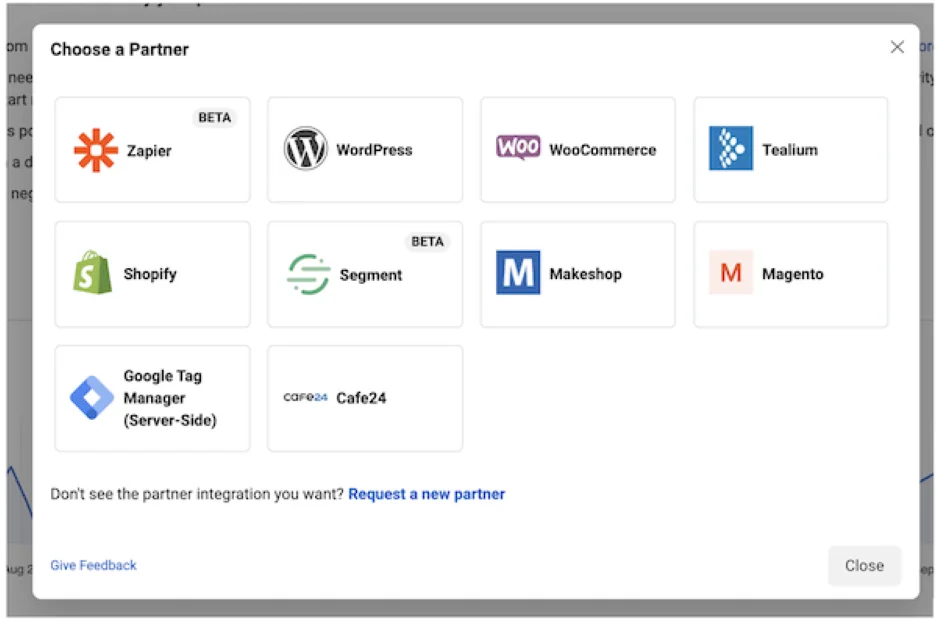
Meta offers several partner integrations to make it easier to share data for better conversion tracking.
3. Audience targeting stays mission-critical
With audience targeting, even if you’re using Advantage+ Audience and letting Meta make most of the ad decisions for you, that doesn’t mean you can’t give some input.
When you take a look at the Audience control dashboard in Meta ads, you get an idea of some of the ways you can manually target an audience, even with using Advantage+.
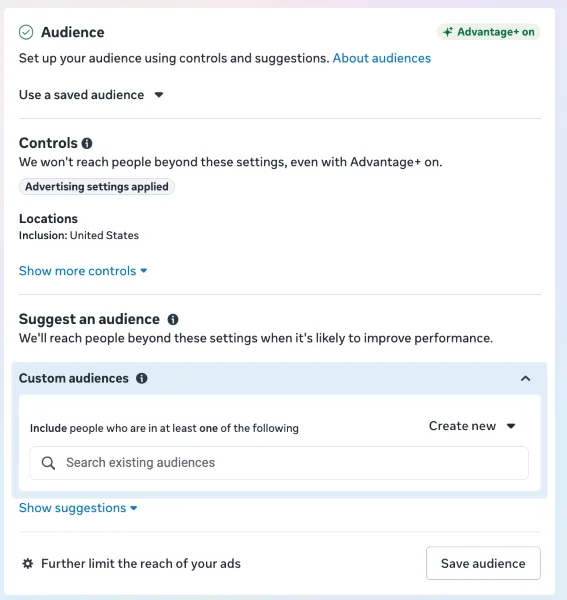
When you create a new ad set, you have the option to suggest targeting within your ad set. This is where Meta will start serving ads, then expand after it gets going. Don’t skip this step, as too many folks feel like the bidding algorithm can run on day one, but in reality, it needs a little time to walk before it can get there.
4. Current audiences will fuel some of the best targeting results
Leveraging your customer lists to show Meta who is a good customer and who isn’t has always been a valuable way to tighten your audience targeting; it’s even more important since third-party data is harder to come by.
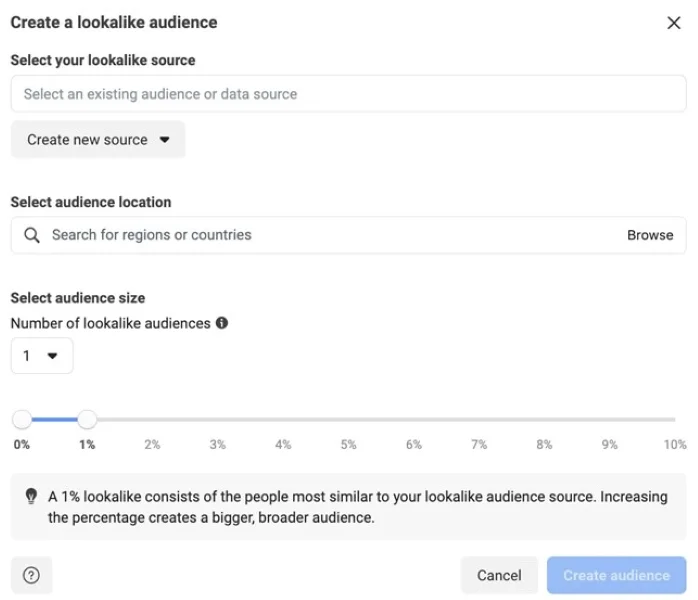
Using lookalike audiences will be an important Facebook ads strategy this year.
For ecommerce, this could mean uploading high-revenue audiences separately from lower-revenue ones. It could also mean uploading lists of users who have unsubscribed from your emails to use as negatives, so you stop spending money on them if they’re less likely to convert.
For Lead Gen, upload your customer lists, as well as those in the opportunity and qualified lead stages, and assign them a slightly lower value. This can show Facebook who is a high-value customer and who is lower, but still get a good idea of who you’re after. Additionally, you can use all of these audiences as exclusions so you’re not spending money on someone you already have in the pipeline.
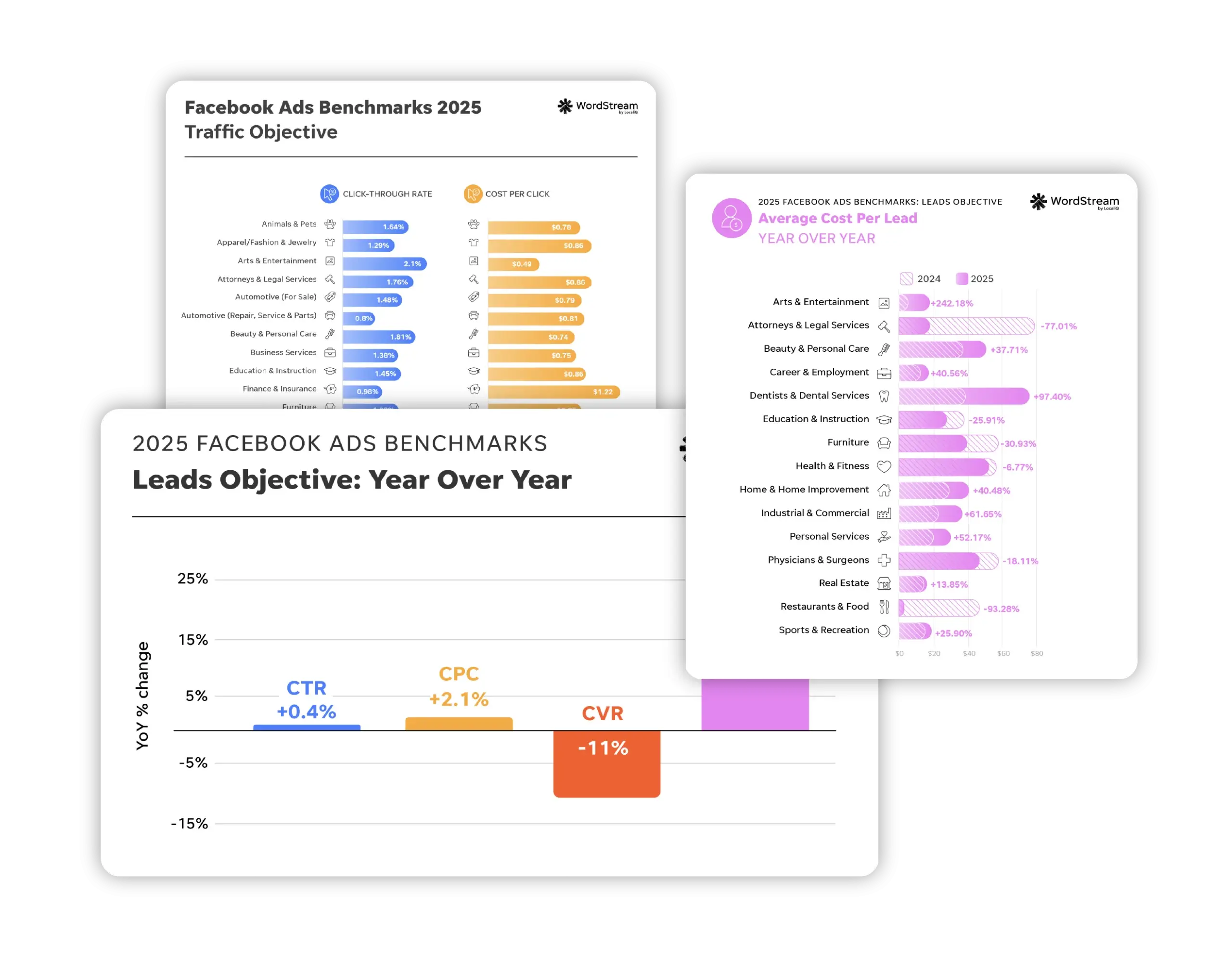
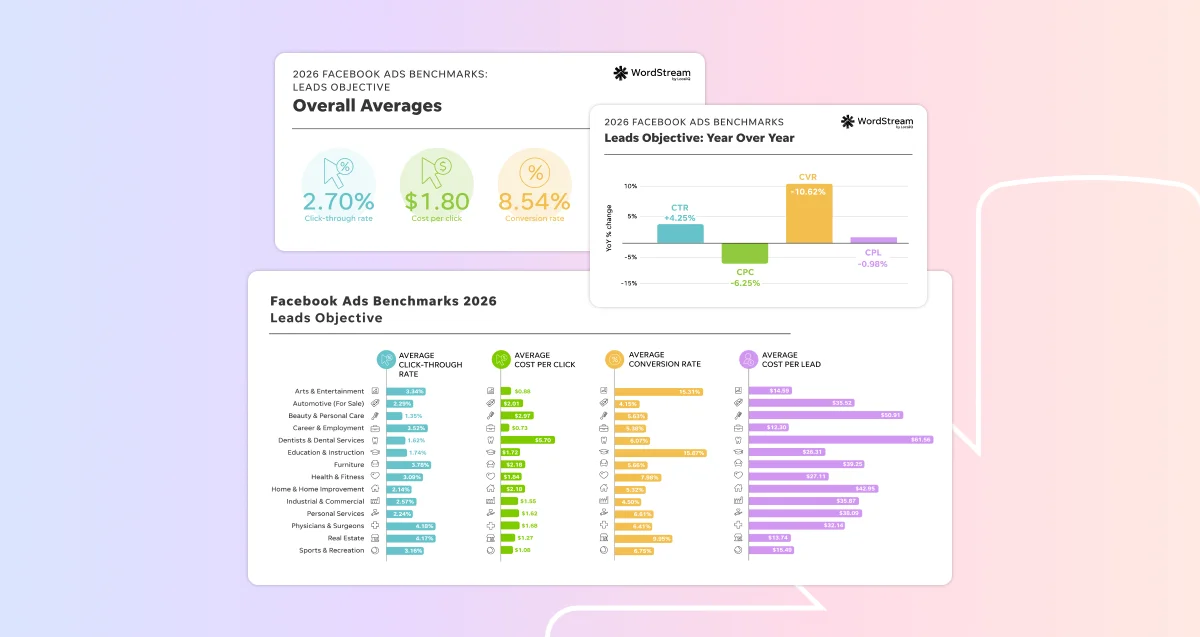
🛑 How do your Facebook ad results compare to your competitors? Find out from these Facebook Ads Benchmarks: Competitive Data & Insights for Your Industry
5. Authenticity will set the best ads apart from the rest in Facebook ads
The actual impact you make on your target audience is all about your ad creatives. All of these platforms (Facebook, Instagram, and Threads) rely quite a bit on novelty and attention-grabbing creatives. If something isn’t interesting, the user can easily scroll to the next thing.
If I had to vote for one thing to include in all of my clients’ ad creatives for 2026, it would be authenticity.
That’s over volume, over creativity, over production value.
Pretty much everyone knows AI is infused into everything these days, especially advertising. Plus, most folks I encounter are at least a little weary of (or downright negative about) advertising in the first place. So anything that comes off spammy or generated by a computer will feel like icing on a slimy cake.
Ads that have an actual human feel to them, not something that feels like they’re being sold to from a machine, will perform better in the coming year(s).
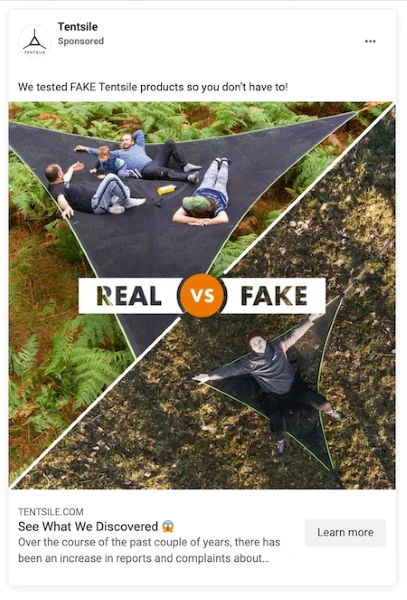
Real imagery and authentic copy will stand out against AI-generated ads in 2026.
Be honest with your customers. Show them who you and your brand are and give them real stories to engage with. Even if things are imperfect, that’s going to speak volumes and give somebody something to connect with.
6. Ad creatives will benefit from design tools
Just because I would prioritize authenticity doesn’t mean all of the other things should go out the window. And with greater accessibility to better design tools—especially those using AI—brands will (and should) improve how they use design to position their products.
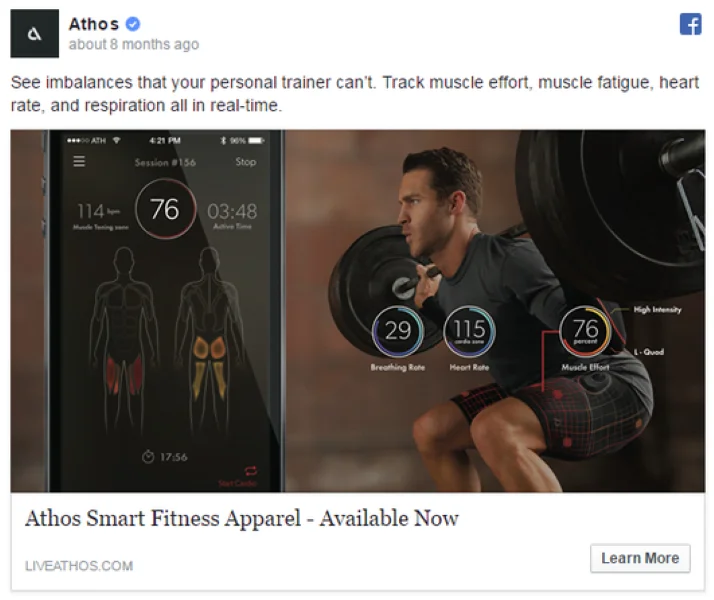
Great ad creative will help viewers understand the value proposition of what you sell.
The takeaway here is to leverage the tools you have to make images more compelling. This could be through external tools like Canva or, yes, even some AI tools can take your authentic ads and help you create new variants with slight tweaks. This will help keep your ads in the right vibe while introducing a new look and feel to keep things fresh.
7. Segmentation will dictate the strength of your campaign structure
With all of the signals you send to the Meta ads platform with your clean, accurate data, it’s important that you have your account structured in such a way as to use that data to the fullest.
For folks who have been in the industry for a long time, this likely means having a slightly less segmented campaign structure and letting the algorithm do more of the work.
For those who haven’t been in accounts every day for the last three years, this could mean you need to consider smart segmentations if your audience, messaging, or conversion action is different for a portion of your account.
And this is where we come back to conversion data, because having enough of it consolidated in the right ways can be the difference between success and failure. Make sure you’re giving Meta enough conversion volume to run with, but not failing to miss crucial segmentations when they matter.
8. Dynamic creatives will outpace manual ad testing
For the most part, the brands I work with have some restrictions on ad messaging, but we’re still able to leverage Meta’s dynamic creatives to serve different headline and description combinations based on what might work best for each user.
Meta lets you add options for things like headlines and text descriptions. It’ll then predict which will perform the best.
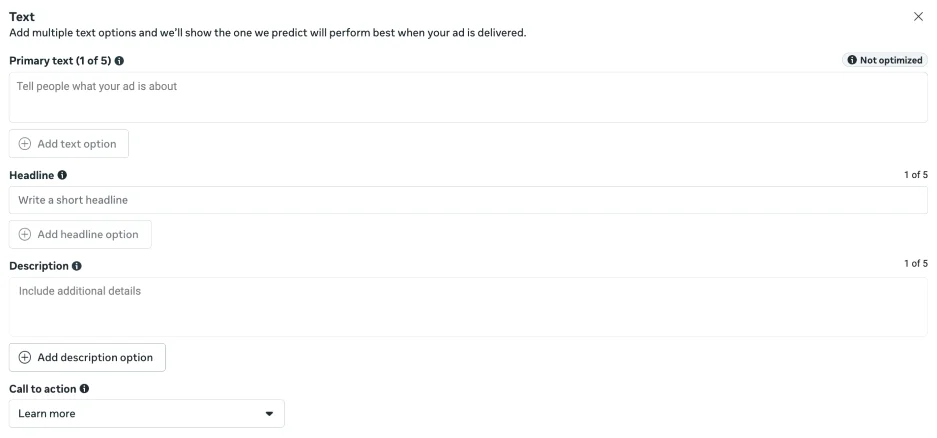
For each ad, you can leverage up to five headlines, five intro texts, and five descriptions to keep the messaging fresh, even if the creatives themselves have to stay the same. This gives Meta more variants to work with and lets the algorithm find patterns in combinations that you, as a mere human person, might not be able to discern without much more time and experimentation.
Follow these Facebook ads trends for success in 2026
I’ll be the first to say that many things that will get you ahead this year are the fundamentals (and that goes for B2B brands, too). But here’s the thing: that’s because most people aren’t doing them. They’re getting caught up in the hype around new tools and trying to find a cheat code, but laying the groundwork and then starting to leverage those tools will have a bigger impact than jumping right to the next big trend. These Google Ads trends and content marketing trends are worth following, too.
And if you’re ready to level up your Facebook marketing beyond these trends, contact us. We’ll show you how our AI-powered solutions can help you find more customers through Facebook and all your digital marketing channels.
About the WordStream Blog
We've been a trusted source of data, news, and strategy for over 15 years. All of our content is written and reviewed by real people: a dedicated team of professionals with decades of combined experience in marketing and advertising for businesses of all sizes.


Add us as a preferred source on Google

Meet The Author
Michelle Morgan
Michelle is the Co-Founder of Paid Media Pros. She has twelve years of experience in all aspects of PPC and brings a wealth of experience developing and executing campaigns across search, social, and display platforms in both agency and in-house settings. Her experience gives her an especially well-rounded and holistic view of the paid search landscape—one she shares regularly as an influencer, author, and industry speaker at events like SMX, HeroConf, and Pubcon, as well as the Paid Media Pros YouTube channel.

![How to Run Watch-Worthy Facebook Video Ads [Complete Tutorial]](https://www.wordstream.com/wp-content/uploads/2026/03/facebook-video-ads-feature-image.jpg)