About the Author


✨ Quick overview
This article by Google Ads expert Michelle Morgan explores the key Google Ads trends expected to shape performance in 2026, emphasizing the growing role of AI, better automation controls, and the continued importance of human strategy and clean data.
Key takeaways
- More control over automation makes AI-driven campaign types easier to use while maintaining lead quality.
- Clean, well-structured data becomes critical as Google’s algorithms rely more heavily on conversion signals.
- Human strategy and oversight remain essential for guiding AI tools toward meaningful results.
- Clear value messaging and richer landing pages help brands stand out in AI-powered search environments.
2025 was a year of plentiful changes in Google Ads. We now have many new options for campaign optimization, more in-depth reporting, and AI continues to creep into the search ecosystem at seemingly every level. (If you want a full recap of changes to Google in 2025, you can check out this post.)
But what does all this mean for the future?
While none of us can accurately predict everything that’s going to happen in Google Ads moving forward, we can take cues from the past and make some educated guesses about what could be important in the next 12 months. Without further ado, here are the six things I think will have a big impact on Google Ads success in 2026.
Contents
-
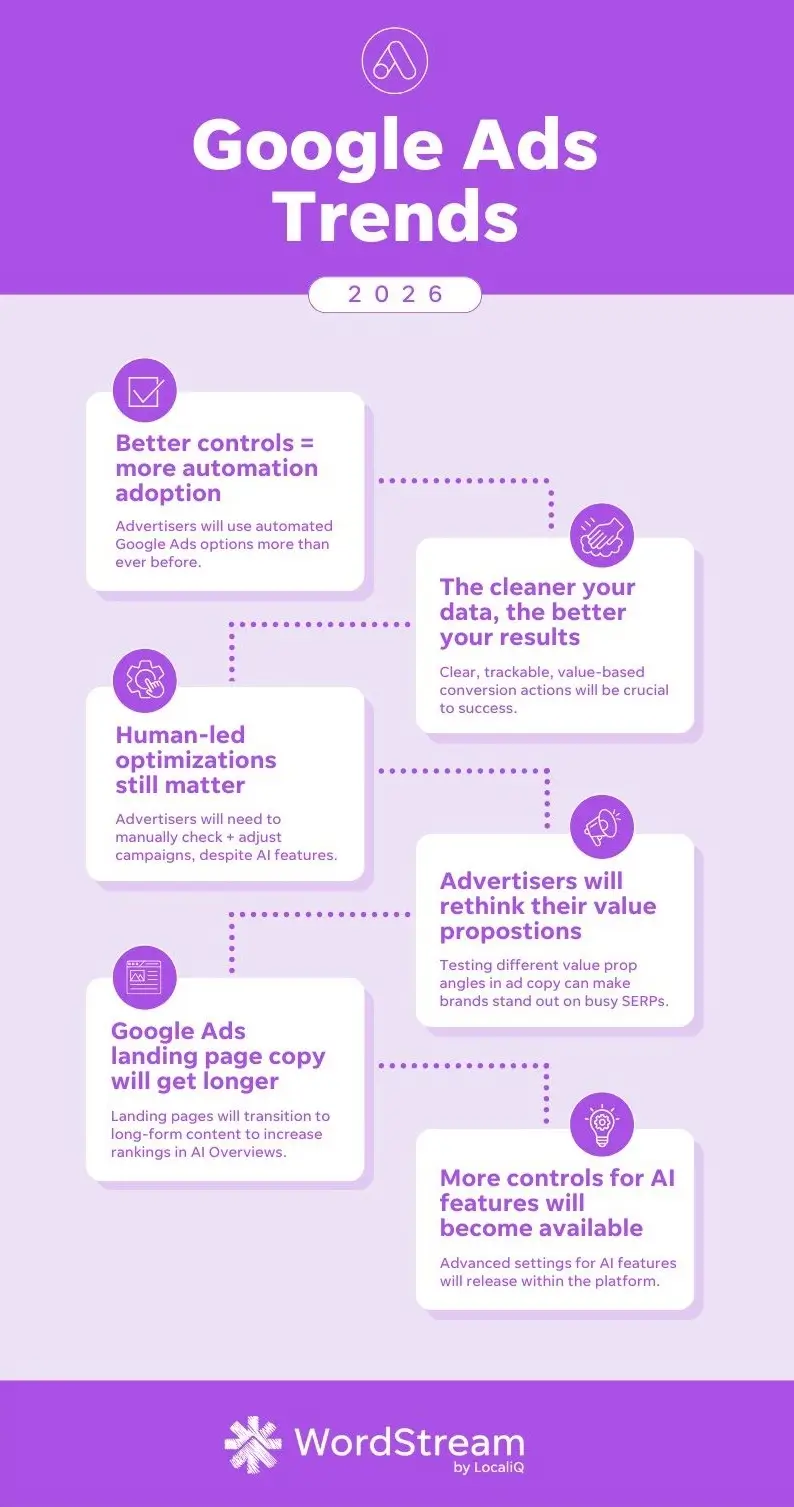
- Better controls will allow for wider automation adoption (and improved performance)
- The cleaner your data, the better your results
- Human-led optimizations will remain crucial to Google Ads success
- Advertisers will rethink their value propositions
- Google Ads landing page copy will get longer
- Advertisers will get more control over their AI-powered Google Ads features
Google Ads trends and predictions you can’t miss in 2026
These are all the 2026 Google Ads trends that might alter your campaign approach in 2026.
🚨 Are your Google Ads campaigns set up for success this year? Find out with a free, instant account report using our Google Ads Grader
1. Better controls allow for wider automation adoption (and improved performance)
Until 2025, Performance Max was off the table for the majority of my clients. Every time we tested them, they would steal remarketing and brand traffic from our existing campaigns, see decent results to start, then either fall off a cliff in terms of volume or generate an obscene number of low-quality leads.
All that changed with the new features Google released for PMAX campaigns:
- Campaign-level negative keywords
- Placement reports
- Brand exclusion lists
- Device and demographic exclusions
- URL controls
- Expanded search terms
- Improved asset performance reporting
Now, I’m able to control which terms my PMAX campaigns can show for, have better insights on what’s performing, and adjust strategy to increase lead quality. This also allows me to feed more accurate success metrics into PMAX campaigns so the machine can learn what’s actually a good conversion and what’s not. With these controls, you can now leverage your human intelligence to shape the AI to get better results all around.
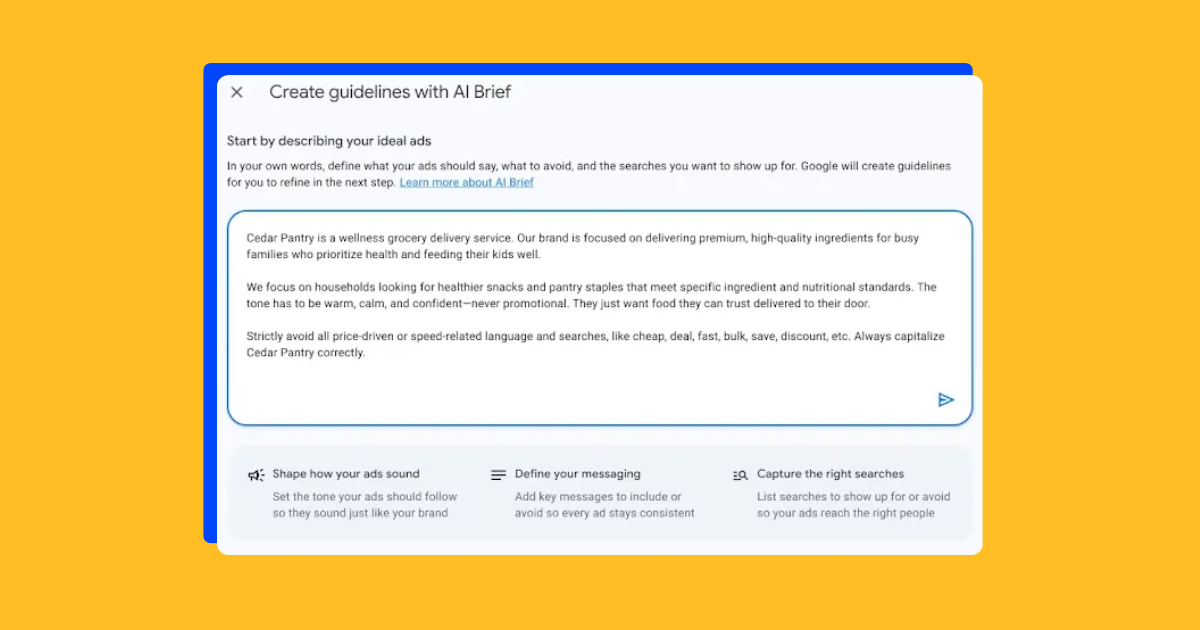
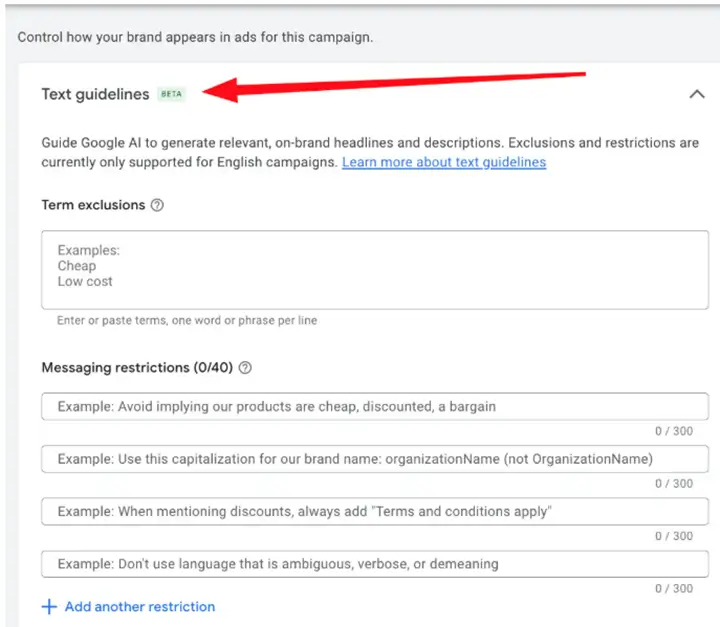
Moving forward, we’re going to get even more control with advertiser prompts in brand guidelines to help ensure the AI-generated text Google creates for you is in line with your company.
But PMAX isn’t the only campaign type with changes. Demand Gen campaigns also have quite a bit more controls in them now, and AI Max was launched with nearly all the controls you could want already included in the system.
Each of these new tools is just one more lever you can pull to ensure you’re seeing good results for your campaigns. All of these things signify one thing for me: campaign types that leverage lots of machine learning just got a lot more appealing for many more brands because they can be safely used and optimized for good quality.
2. The cleaner your data, the better your results
This is a pseudo-extension of the point above, but from a different angle.
The algorithms derive their insights from existing datasets. Meaning, if they analyze patterns in your converting users, they can go find other folks who are like them. And that’s a good thing!
But to do that, you have to have accurate conversion data. Otherwise, the system is going to identify patterns with false positives, false negatives, or distracting factors that are only going to bring results down.
Teams that have clean data setups will have an advantage over their competition, but simple conversion tracking alone isn’t the only hurdle:
- Enhanced conversions aren’t required, but can improve data signals in situations where regular conversion tracking has gaps.
- Imported conversions can allow you to track actions throughout the buyer funnel, not just the final conversion.
- Value-based bidding can enhance conversion success by differentiating between high-value and low-value actions and utilizing Google’s Smart Bidding to achieve profitability metrics based on these values.
Overall, the more integrated your platforms are, the better decision-making can be done within the platform to hit your campaign KPIs.
For 2026, if you have the option to provide more data to the Google platform, I suggest you do it and leverage it to the fullest extent you can.
❓Are you taking full advantage of Google Ads Smart Bidding? Find out with our free, fool-proof guide to Smart Bidding (+how to get started fast)!
3. Human-led optimizations will remain crucial to Google Ads success
This one might not be something many folks agree with, but I believe in 2026, a new premium can (and should) be added to real management due to all of the new-fangled tools I mentioned above. The tools can be smart, but they’re better when you direct them to have good results, and a skilled practitioner is the way to do that.
If I’m honest, I can’t say that I think this ever actually went away, but now more automated campaign types are going to be in reach for more advertisers, and the ones who can make them work are going to win the year.
4. Advertisers will rethink their value propositions
Mostly thanks to the increased reliance on AI within the market, there’s a bit of uncertainty at the moment, with some thinking we may be in an AI bubble. There are also other factors weighing on the market, like tariffs, healthcare costs, and others (factors that will also affect B2B brands). This certainly isn’t a financial article, and I’m not saying I personally believe there will be a burst of that suggested “bubble,” but I think some companies and consumers are more wary of where their funds are going.
Personally, I think it would be prudent to at least test a value angle in your promotions to see how it performs compared to your regular messaging.
Value doesn’t have to mean putting things on sale, though it could. Instead, value just means showing the customer the actual value in your offering. This could be done in several ways:
- Monetary value: Putting things on sale, giving things away with purchase.
- Quality: Showing off your high-quality products to justify costs.
- Reliability: Use customer reviews to nudge potential customers your way by highlighting other customers’ stories.
- Expanded Resources: Highlight other benefits customers get when they work with you: access to support, online community, etc.
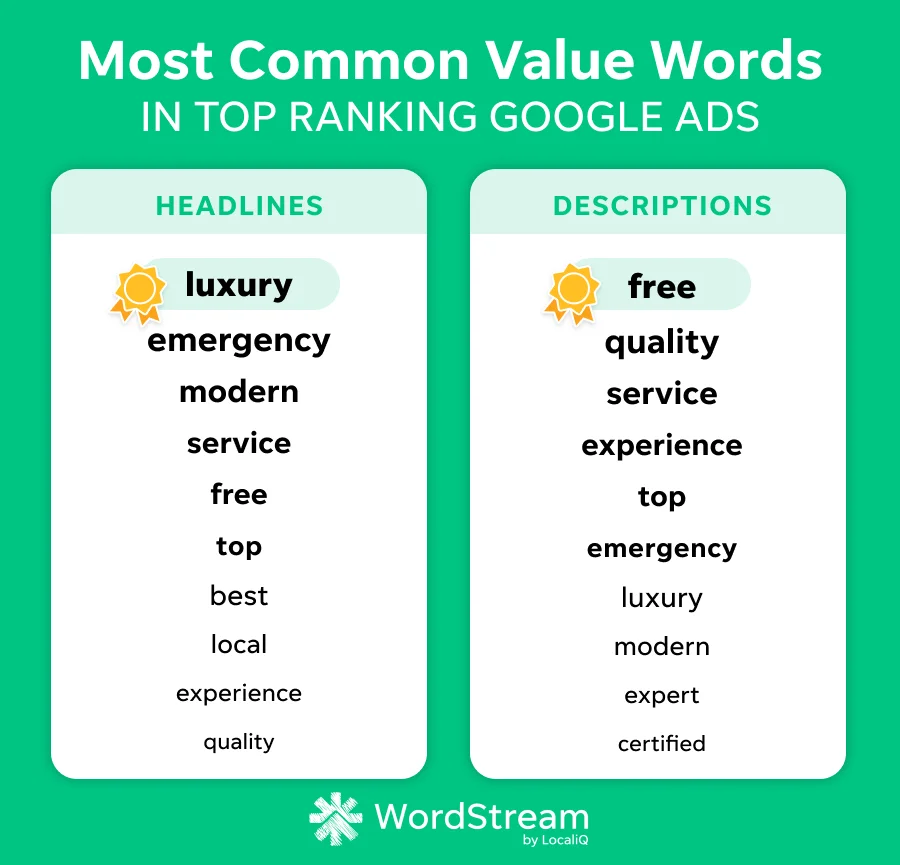
Ideally, you already know how to convey your products to make them appealing, but my hypothesis is that 2026 is the year to give just a little more and make your customers feel more comfortable. To start, you could use popular power words in your copy, like the examples below.
5. Google Ads landing page copy will get longer
In our current phase of AI Overviews and AI Mode ad creatives, Google has only shared that advertisers need to be using some of Google’s automated targeting and need to be relevant to both the query and the answer to show up.
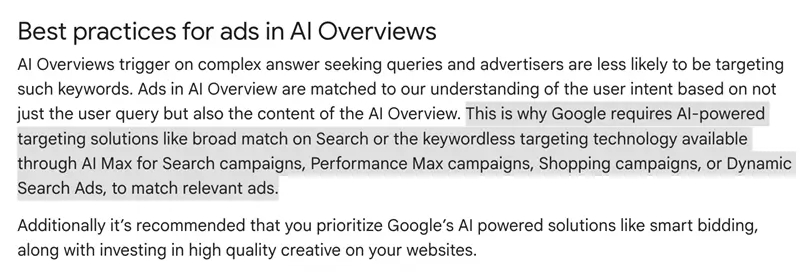
My prediction is that companies that are highly driven to show in these AI SERP solutions will adopt longer form landing pages that have much more copy included.
This will be a bit of a departure for some advertisers that have seen shorter, splash-type landing pages convert at a higher rate, so I’ll be curious to see which goal wins out, AI inclusion or conversion, and if the two are mutually exclusive, like I think they may be.
💡Learn how to use AI in advertising the right way with our free guide to 200+ AI prompts any business can use!
6. Advertisers will get more control over their AI-powered Google Ads features
For our last Google Ads trend, I predict that as Google rolls out more ads in AIOs and AI Mode, they’ll get more comfortable giving more control to advertisers to show up in these spaces. The current recommendation of “use keywordless targeting and be relevant” leaves quite a bit for interpretation.
I expect we’ll have much clearer guidelines and tools at the end of 2026, but I’m unclear what they could look like. They could be:
- Opt in/out check boxes to make ads eligible for AI solutions.
- New assets and features that show only in AI placements.
- Landing page formatting suggestions to make pages more AI-friendly.
- Reporting for placements in AI solutions vs. other similar network breakdowns.
Obviously, the sky is the limit on this one, so while I’m pretty bullish on our likelihood of more control, I’m completely in the dark as to how they’ll manifest.
Incorporate these Google Ads trends into your strategy this year
As always, we never know what Google is thinking or planning when it comes to its updates, changes, and new rollouts. But based on historical evidence and where we see the future of ads going, these are some areas I would recommend paying attention to in 2026 (and check out this guide on seasonality adjustments).
No matter what’s ahead, the most important thing is to stay informed and make sure you’re testing with purpose. For help getting ahead of Google Ads trends this year, see how our solutions can maximize your campaign results!
About the WordStream Blog
We've been a trusted source of data, news, and strategy for over 15 years. All of our content is written and reviewed by real people: a dedicated team of professionals with decades of combined experience in marketing and advertising for businesses of all sizes.


Add us as a preferred source on Google


Meet The Author
Michelle Morgan
Michelle is the Co-Founder of Paid Media Pros. She has twelve years of experience in all aspects of PPC and brings a wealth of experience developing and executing campaigns across search, social, and display platforms in both agency and in-house settings. Her experience gives her an especially well-rounded and holistic view of the paid search landscape—one she shares regularly as an influencer, author, and industry speaker at events like SMX, HeroConf, and Pubcon, as well as the Paid Media Pros YouTube channel.