About the Author


You’ve probably had this exact same experience: You land on a website, get three H2s deep, tilt your head to the right, and—magically—you can hear the rest of the copy queuing up backstage. And it’s weird because nothing is technically wrong. The sentences are clean, and the structure is polished. Something just feels off. It’s flat, generic, 100% interchangeable, and easy to ignore.
That reaction is becoming more common—and it’s not an accident. Now that AI tools are making it easier for us marketers to produce content at scale, they’re also making it easier for content to sound like slop. And that sameness has a cost: AI-generated text can heavily reduce trust.
This is important to remember because people don’t always stop and analyze exactly what they’re reading—but they do adjust how much they trust you. So when your content feels generic or templated, people can tell (and people will remember).
This article will help you identify the signs that make your content sound like it was written by AI, what readers trust when it comes to your content, and how to do a quick audit of your content to make sure it stands out from the AI sameness.
Contents
- 14 signs your content sounds like AI
- What customers trust instead when reading your content
- A quick audit to make sure your content doesn’t sound like AI (+how to fix it)
14 red flags that make your content sound like it was AI-generated
A lot of websites lose conversions simply because nothing pops. When everything sounds familiar, there’s:
- No reason to keep reading
- No reason to trust what you’re saying
- No reason to choose you over anyone else
AI makes this even worse by smoothing out all your uniqueness—turning your content into a polished facade that lacks clarity, specificity, and intent.
Warning: these are signals, not “proof.” AI learned how to write by training on human content, so, naturally, most of these patterns show up in human writing too. The difference is the frequency. When these things stack, the result starts to feel generic. And that’s the tell. What I’m saying is that, contrary to popular belief, em-dashes do not equal AI-generated (Charles Dickens probably didn’t have ChatGPT).
Now, let’s jump into the list.
1. Every sentence follows the same rhythm
What it looks like: Line after line with similar length, structure, and pacing.
Why it shows up in AI writing: AI models optimize for predictability. Consistent sentence structure is a safe output.
What it signals to readers: This wasn’t written with intent. It was pre-packed and assembled like Swedish furniture.
✅ What to do instead
- Break the rhythm up intentionally
- Shorten one sentence dramatically
- Let emphasis drive structure (instead of symmetry)
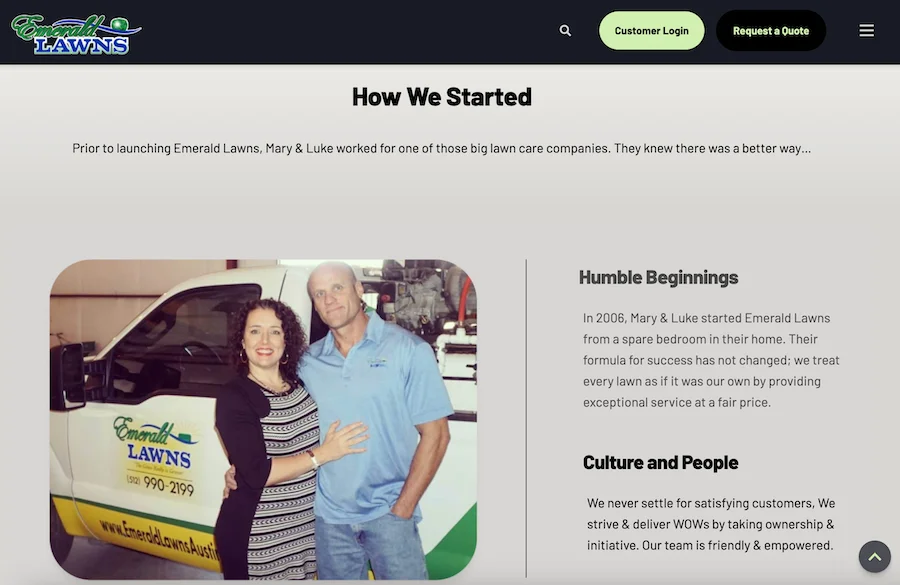
📚 Free guide download >> 135 of the Best Words & Phrases for Marketing with Emotion
2. Lists that don’t actually build
What it looks like: A list where each point feels interchangeable. You could rearrange them, and nothing would change.
Why it shows up in AI writing: AI generates items independently rather than developing a progression.
What it signals to readers. No clear thinking behind the structure.
✅ What to do instead
- Order points by importance or sequence
- Make each item depend on the previous one
- Then remove anything that repeats the same idea
3. Claims without constraints
What it looks like: Broad promises with no boundaries or tradeoffs.
Why it shows up in AI writing: AI avoids specificity unless prompted—it defaults to safe generalizations.
What it signals to readers: Low credibility. If everything sounds possible, nothing feels believable.
✅ What to do instead
- Add scope (“for teams under 20 people”)
- Add limits (“works best when…”)
- Show where it doesn’t apply, too
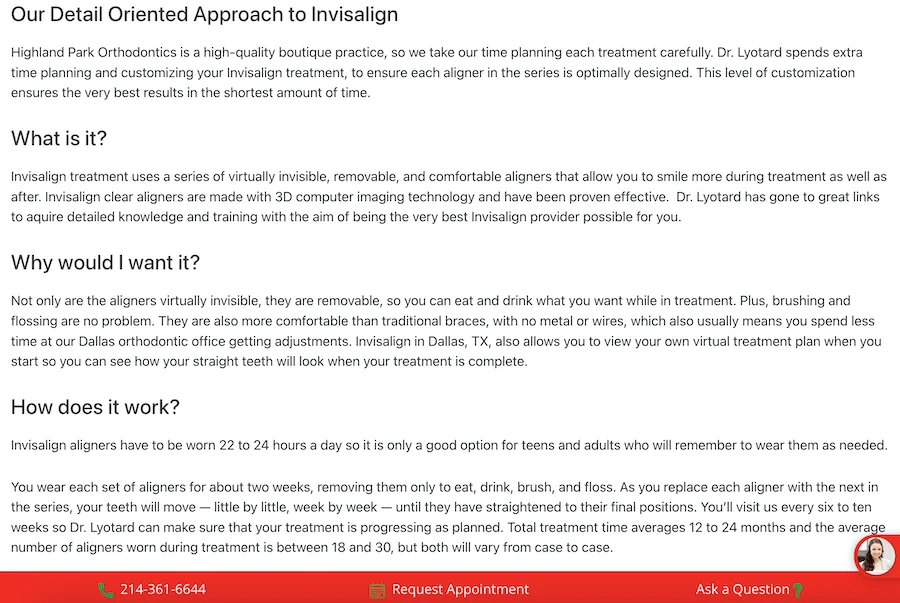
4. Headlines that could belong to anyone
What it looks like: An all-in-one headline that sounds fine but could sit on literally any competitor’s site without changing meaning.
Why it shows up in AI writing: AI pulls from common headline patterns that appear across thousands of pages.
What it signals to readers: No differentiation. Meh.
✅ What to do instead
- Add a specific outcome
- Add a clear audience
- Add something that can’t be copied without sounding off
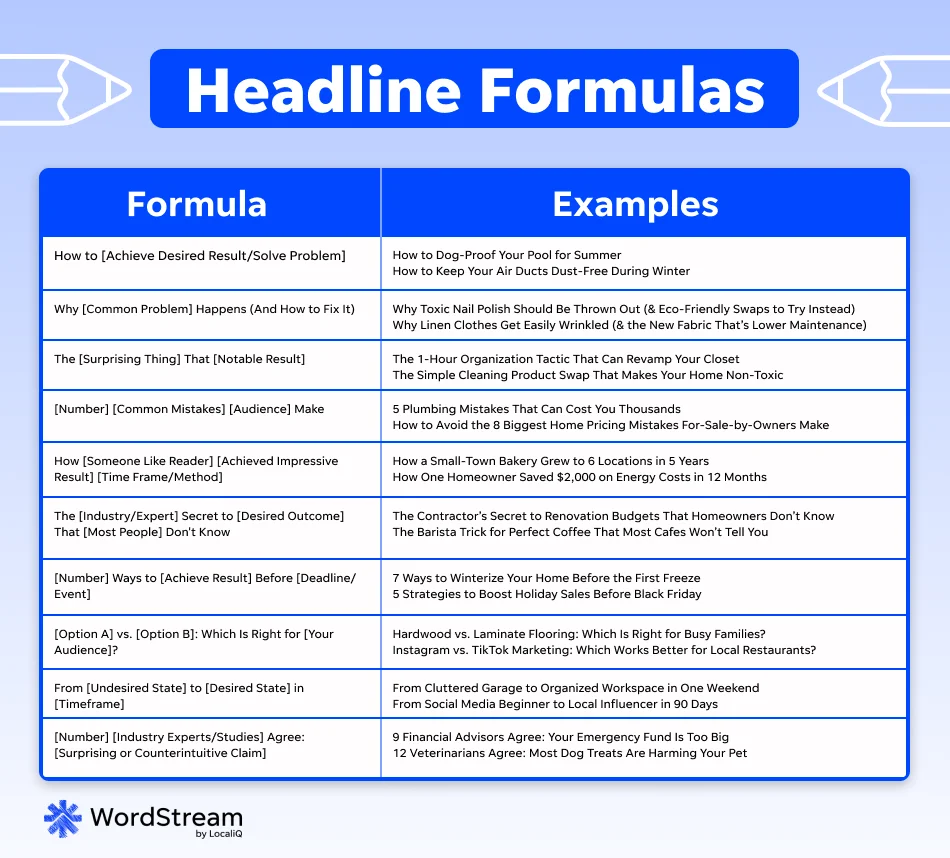
If you need help crafting better headlines, try these headline formulas.
5. No real examples anywhere
What it looks like: A page full of claims, but nothing concrete to anchor them.
Why it shows up in AI writing: Examples require context. AI defaults to generalization.
What it signals to readers: This hasn’t been tested. Or worse: it hasn’t been thought through.
✅ What to do instead
- Show one real, human use case (like this)
- Include numbers, even rough ones
- Replace one abstract claim with a specific scenario
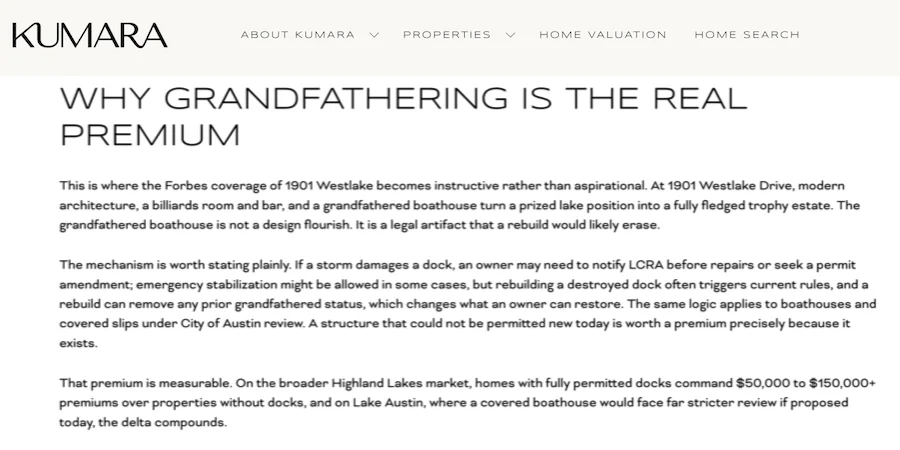
This real estate agent’s blog uses a real listing as an example.
6. Everything sounds equally important
What it looks like: Every benefit, feature, or claim is given the same exact weight.
Why it shows up in AI writing: AI doesn’t inherently prioritize. It expands evenly across ideas.
What it signals to readers: No clear value hierarchy.
✅ What to do instead
- Decide what matters most
- Emphasize that clearly
- Let secondary points stay secondary
7. Repeating the same idea in slightly different ways
What it looks like: Multiple sentences that feel like variations of the same statement.
Why it shows up in AI writing: AI expands ideas to sound complete, often through paraphrasing.
What it signals to readers: Filler.
✅ What to do instead
- Cut repetition aggressively
- Replace one repeated sentence with a concrete detail
- Ask yourself: Does this add new information?

8. No tradeoffs, no tension
What it looks like: Everything is presented as positive. No limitations, no downsides. Just vibes.
Why it shows up in AI writing: AI avoids negative framing unless explicitly instructed.
What it signals to readers: This isn’t realistic.
✅ What to do instead
- Acknowledge where your product isn’t ideal (practical)
- Clarify who it’s not actually for (personal)
- Show awareness of real-world constraints (relatable)
9. CTAs that don’t really explain what’s next
What it looks like: Buttons or prompts that require interpretation. Read more?
Why it shows up in AI writing: Generic calls to action are widely represented in training data.
What it signals to readers: Uncertainty. Friction.
✅ What to do instead
- Be explicit about the next step
- Reduce ambiguity
- Show what the user gets immediately

✍️ Need help crafting the perfect calls to action? Get our free guide: The 42 Best Call to Action Phrases Ever (& Why They Work)
10. Writing that avoids specifics
What it looks like: No numbers, no timelines, no proof, and no concrete outcomes.
Why it shows up in AI writing: Specifics require source grounding. AI defaults to safe abstraction.
What it signals to readers: Low confidence.
✅ What to do instead
- Add one measurable outcome
- Replace one vague claim with a number
- Define what “better” actually means
11. Generic phrasing that replaces real meaning
What it looks like: Phrases that sound familiar but don’t add clarity.
Why it shows up in AI writing: AI leans on widely used language patterns that appear across (literally) every industry.
What it signals to readers: You’re relying on language instead of thinking.
✅ What to do instead
- Replace one generic phrase with a concrete description
- Ask yourself: What does this actually mean in practice?
- Write the explanation you’d give out loud, in person
12. Over-explaining simple ideas
What it looks like: Basic concepts that could have been communicated cleanly and without incident in a single sentence, but are instead carefully elongated across multiple sentences, as though the idea itself might feel neglected if it were delivered too directly or without the word “streamlined.” Good thing we don’t do that here.
Why it shows up in AI writing: AI tends to expand for completeness, even when it’s not needed.
What it signals to readers: This is trying to sound smart, not useful.
✅ What to do instead
- Cut explanations in half whenever possible
- Keep only what adds clarity
- Trust the reader to follow along
13. No visible decision-making
What it looks like: Content that presents conclusions without showing how they were reached.
Why it shows up in AI writing: AI gives you results, not reasoning, unless explicitly prompted.
What it signals to readers: Lack of depth.
✅ What to do instead
- Show why something works
- Explain key choices
- Add a short “because” behind one claim
14. It feels like it could have been written by literally anyone
What it looks like: Nothing in the copy reflects a point of view, experience, original thought, voice, or constraint.
Why it shows up in AI writing: AI generalizes across multiple sources rather than committing to a single perspective.
What it signals to readers: No ownership. No accountability.
✅ What to do instead
- Add a clear stance
- Reference real situations
- Let the writing reflect actual experience
🛠️ Get everything you need to know about showing up in AI search in our free guide: The AI Search Toolkit >>
What do readers trust instead when they’re reading your content?
If all of the patterns above create doubt, the opposite builds confidence because it feels considered.
When you make specific claims
Clear scope, defined outcomes, and measurable results signal that something real sits behind the words. Instead of broad improvements, you can see what changes and by how much.
When you show that you’re thinking
You can follow the logic. You understand why something works, not just that it does. That doesn’t require long explanations. Just intention.
When you signal effort
There’s a noticeable difference between something that was generated and something that was written. AI can produce clean sentences, but it struggles to show judgment. Your copy doesn’t need to announce itself. It just needs to feel like someone took the time to think it through.
When it reflects quality
Clear language signals clear thinking. Not complexity or polish. Precision.
A quick audit: Does your content sound like it was written by AI? Let’s solve it
Use this as a 5-minute audit. You don’t need to fix everything all at once—just start with one page.
| If your content… | People assume… | Fix it by… |
| Repeats the same sentence rhythm | It was generated or templated | Rewrite one section without referencing the others |
| Avoids specifics | You’re unsure or overselling | Add one measurable outcome |
| Sounds perfectly polished everywhere | It lacks a real voice | Introduce variation in tone and structure |
| Makes broad claims without limits | It’s marketing filler | Add constraints or tradeoffs |
| Uses interchangeable headlines | You’re not differentiated | Rewrite one headline to be uncopyable |
Make your content stand out from AI-generated copy
AI didn’t introduce generic marketing copy. It just made it easier to produce—and harder to notice. That’s the real shift here. The more content people see that feels interchangeable, the more they rely on subtle signals to decide what to trust.
Remember that your content shouldn’t try to compete with volume. Instead, it should feel like someone (not something) actually took the time to write it. That’s how you win.
Here’s a recap of the 14 signs your content sounds like it was written by AI (so you can avoid it!):
- Every sentence follows the same rhythm
- Lists that don’t actually build
- Claims without constraints
- Headlines that could belong to anyone
- No real examples anywhere
- Everything sounds equally important
- Repeating the same idea in slightly different ways
- No tradeoffs, no tension
- CTAs that don’t really explain what’s next
- Writing that avoids specifics
- Generic phrasing that replaces real meaning
- Over-explaining simple ideas
- No visible decision-making
- It feels like it could have been written by literally anyone
About the WordStream Blog
We've been a trusted source of data, news, and strategy for over 15 years. All of our content is written and reviewed by real people: a dedicated team of professionals with decades of combined experience in marketing and advertising for businesses of all sizes.


Add us as a preferred source on Google



Meet The Author
Oskar Duberg
Oskar is a Swiss-based Swede—a freelance writer, content marketer, and brand consultant who helps B2B tech, agencies, and creative companies communicate with clarity and personality. He’s spent over a decade turning complex ideas into content that connects, creating strategies, stories, and brand identities for global players and respected publications. Above all, he loves writing and believes that every great brand starts with words that sound human.