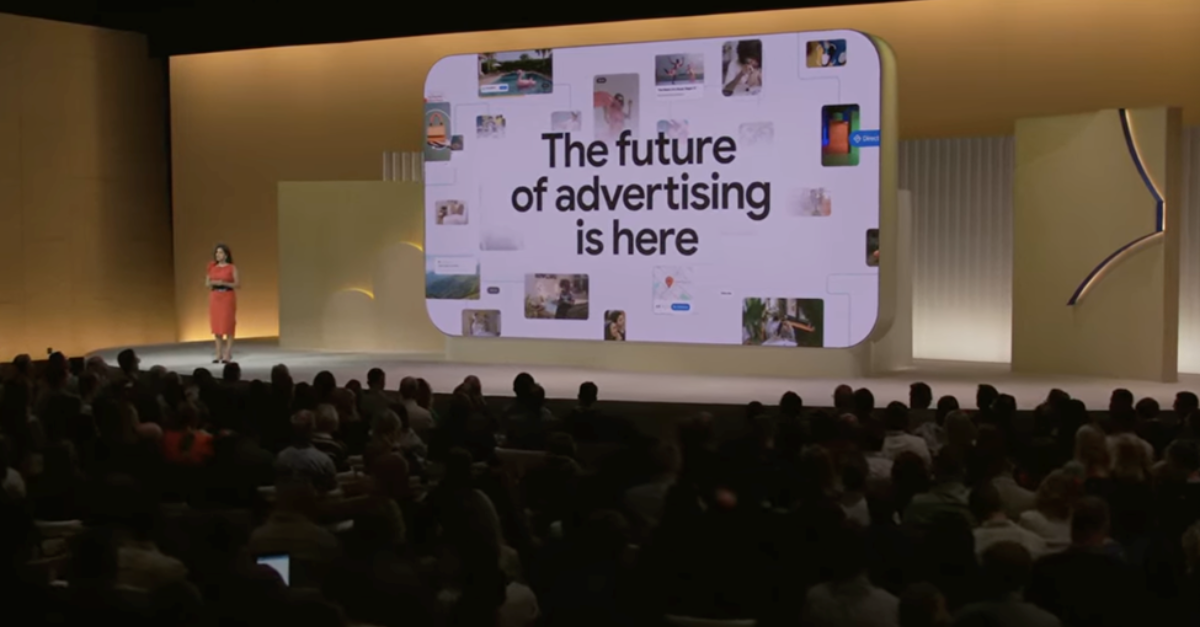
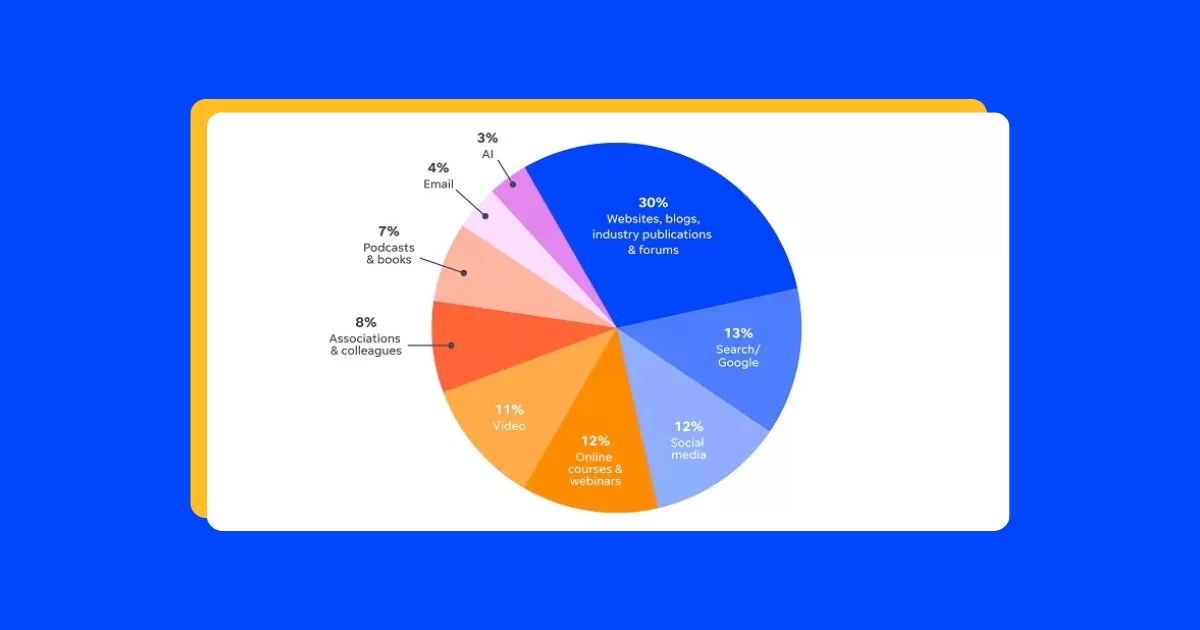
Since the first AI Overview landed in search results, businesses have watched their search clicks fall.
Now, Google is reaping some of what its AI investments have sown.
If you missed the news, Alphabet, Google’s parent company, recently shared that it’s having trouble monetizing interactions in its AI Mode. It seems that when users get all the information they need on the SERP, they’re less likely to click off of it (oh, the irony).
To shore up the gap, Google is testing more ads shown to more people in more places in AI Mode. What that’ll do to advertising results is up in the air.
For now, Google is still, by far, the leader in search activity. It has the most advanced tools for targeting and budgeting your campaign. And our own search ads benchmarks show that the average cost for a search lead is actually going down.
But it’s hard to know how Google will respond to its AI monetization problem, especially as other AI platforms, like ChatGPT, are getting into the ads game.
Let’s quickly review what’s happening, how it may shape the future of search advertising, and get an expert look at what you should do now to protect your advertising investments.
Contents
- What’s happening: Google’s aggressive AI investment is causing a monetization gap
- What this means for search advertising
- How can marketers protect their ad results?
- What’s next for ads in AI search?
What’s happening: Google’s aggressive AI investment is causing a monetization gap
ICYMI: Google’s search revenue growth is stalling, and the culprit is, in part, its own success pushing AI search.
Google’s Search revenue grew 12% year over year in Q3, according to Alphabet’s 2026 Q3 earnings call. That’s down from 17% in Q2 and 19% in Q1. Compared to the previous quarter, Google’s Search revenue was almost completely flat (but don’t feel bad for Google; its overall revenue was up nearly 25% this quarter according to the same call).
The slowdown isn’t from a lack of searches. Google said search queries grew at their fastest pace in five years. The problem is that more of those searches now happen in AI Mode, where ads earn less.
“It’s worth noting that the strong growth in AI Mode queries had an impact [on revenue] because of the lower monetization we were seeing in AI Mode,” Google Chief Business Officer Philipp Schindler said during Alphabet’s Q3 earnings call.
Google didn’t say exactly why AI Mode generates less revenue. Some experts say it’s because AI Mode searches are upper-funnel, where ads are harder to sell against. Others argue that AI gives people full answers so they have less reason to click an ad.

Users can get much of what they need from AI Mode answers, leaving less motivation to click ads.
Meanwhile, building out the infrastructure needed to handle all of those summarized answers is running up a hefty tab. Alphabet spent $51.4 billion on capital expenditures in Q3, much of it on the data centers and computing power behind its AI products. It expects to spend up to $205 billion this year and more than $300 billion in 2027.
Google’s not alone. A recent study of ChatGPT’s ad rollout estimates ChatGPT’s ads bring in about $1 per free user each year, while serving each of those users costs about $5.
AI answers cost more to deliver and earn less per search. That leaves a big challenge for AI platforms to overcome.
🔎Boost your AI visibility! Download The Complete AI Search Toolkit: Practical Strategies to Get Found by AI
What this means for search advertising
Google appears to be backing itself into an AI corner. Its only outs are to reduce cost or increase revenue. It’s clearly not interested in the former. So how can it extract more money from its audience?
One way is by expanding ad exposure during the AI search experience. Google said AI Mode ads are still being scaled to more users and in more countries. It’s also testing ads in follow-up questions.
Another possibility is to make ads more clickable within answers. Right now, ads are labeled and located below a reply in AI Mode. That makes ads much easier to overlook.

AI Mode ads are currently separated from the conversation.
By placing ads as inline links, or as clickable images within an answer, click-through rates would potentially increase.
More interruptive ads hurt the user experience and potentially put Google’s long-time search dominance at risk. Users are getting more comfortable with using AI to find what they need. Even small inconveniences could push them to other platforms.
As Nate Elliot, principal analyst at EMARKETER, told The Register, “If ChatGPT or Claude or Muse is better at helping [users] find what they’re looking for, people’s search habits might change for the first time in a generation.”
The next option would be to increase ad costs. That’s something Max Anderson, CEO of OnlyFinder, sharply called Google out for doing in an X post. He noted that Google had recently deprecated its second-price auction and loosened its exact-match keyword targeting. That leaves winning bids more expensive while advertisers are stuck paying for more low-quality clicks.
Google CEO Sundar Pichai had a more “if you build it, they will come” take during the earnings call on the potential review from AI search. “Just like our shift to mobile over a decade ago, we are focused on building the best Search user experience, followed by monetization,” he said.
But the people paying Google to reach customers aren’t buying it. As one Redditor put it, “They are so determined to win the AI race they are willing to take a hit on ad revenue and alienate customers along the way.”
It’s unclear how Google will close its growing revenue gap. It needs to find a creative way to monetize its new search experiences so they feel organic. The tactics Google and other AI search platforms try will certainly make results less predictable for advertisers. There are a few steps to take to protect your budget while it happens.
🛑 Get the most out of your search ads. Avoid these 6 Common (But Costly) Google Ads Mistakes
How can marketers protect their ad results?
Hearing Google admit fewer people are clicking on its ads might tempt you to cut your advertising budget, pivot to ChatGPT ads, or abandon Google Ads altogether. That would be an expensive mistake.
“Chasing the ‘solve’ and pivoting completely from what’s worked for you historically, even if you are getting less than you were a year ago, would be costly,” said Anthony Testaverde, VP of Marketing Growth and Analytics at LocaliQ. “Small businesses should focus on their opportunities. Clicks, leads, etc. are all a means to an end.”
Be intentional with ChatGPT ad experiments
ChatGPT ads are new and belong in the “experiment” bucket, not the “divert half your budget” bucket.
For one, they’re not yet delivering nearly the ROI of Google Ads. A recent study found that for US traffic, paid ChatGPT visits converted at less than 30% the rate of Google Ads and delivered one-sixth the revenue per session.
“I wouldn’t test it just to say you are there,” said Katia Hausman, VP of Product for LocaliQ. “ChatGPT ads make the most sense when your customers are already using AI as part of how they research, compare options, and make decisions.”
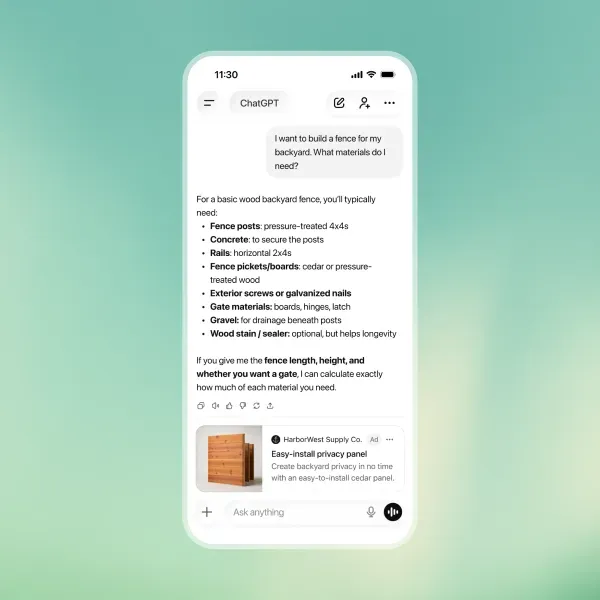
ChatGPT ads only show people using the free version.
Katia said that advertisers in the travel, retail, and home services could benefit from ads on the platform, since people use it to plan trips, compare products, and research repairs.
Given the newness of ChatGPT ads, it’s best to only invest a small portion of your budget and consider it an experiment.
We broke down how ChatGPT ads work, their costs, and the pros and cons of paying for them now.
Shift your strategy down-funnel
AI answers trigger at a higher rate for informational queries. They’re also what AI is best at, giving complete answers to questions like “how do I cook eggplant so it’s not mushy?”
To mitigate click loss and keep your ads showing up at high-intent moments, retool your search and ads strategy to questions further down the buying research funnel.
“The key to mitigating this is shifting away from a broad informational search strategy and focusing more on things like high-intent keywords, competitive offers, and value-based bidding strategies,” said Stephanie Scanlan, VP of Customer Success at LocaliQ.
“You’ll also need to use first-party customer data, understand your audience, and narrow down to target them where they are online. These shifts will help keep the focus on qualified leads and ROAS instead of going for a ‘show me in the SERP as much as possible’ approach.”
Stay focused on visibility in traditional search and AI answers
Organic clicks are down, but they’re not gone. About 68% of Google search sessions now end without a click. But Google handles 5 trillion searches each year, and 32% of that is still a LOT of high-intent traffic for you to capture.
Plus, overall search use is increasing, especially when you add interactions on AI platforms like Claude, ChatGPT, etc.
The good news is that the task list to rank in search and get mentioned by AI is largely the same. Google even said as much in its official guidance on how AI Overviews and AI Mode work.
Keeping your site fast and accessible, publishing pages that AI and algorithms can understand, and building strong online reputation signals should be a top priority.
Measure leads over clicks
Google is expanding ads in AI Mode to more users and more searches. It’s also testing ads in follow-up questions in the US. If you run Search, Shopping, or Performance Max campaigns, you’re already eligible for these placements by default.
That means your ads may show up in new spots that perform differently from regular search results. Your click-through rate could fluctuate, even if nothing in your account changed.
So don’t judge success by clicks alone. “Your funnel is likely shifting; you don’t have to continue to optimize to the same historical metrics,” Anthony said.
Track the actions that bring in revenue, like calls, form fills, and bookings. Then pay extra attention to your cost per lead over time.
“Small businesses should focus heavily on their conversion rate, cost per qualified lead, and their overall ROAS as metrics,” Stephanie added. “Truly understand if you are getting the right consumers engaging at a profitable acquisition cost. Success should be measured based on leads and customer acquisition vs lifetime value, not traffic alone.”
Be ready to pivot your budget
Google Ads is still a smart bet for most advertisers. But things are changing fast, and they’ll likely shift even more until Google and its AI peers figure out their monetization formula. It’s hard to say which placements and platforms will deliver the best return in a year or five.
“Don’t be afraid to expand and diversify your portfolio to other digital marketing campaign types that do help build your brand while keeping your search campaign more intent-focused,” Stephanie said. “YouTube, paid social, targeted email and display are all good ways to ensure you’re continuing to build a recognizable brand in your market.”
Stay hyper-focused on your performance and be prepared to shift budget when one campaign takes off and another falters.
You don’t have to make every call by hand. Tools like LocaliQ’s Cross-Media Optimization (XMO) technology take a single budget, spread it across channels like search and social, and automatically shift spend toward what’s performing best.
Grow your owned channels
Your email list, text subscribers, and website are much less susceptible to the whims of search and paid ad platforms. You own those audiences, and they’ve already shown interest in your business. Algorithms and ad auctions can’t keep you from engaging them.

Email Marketing ROI Calculator
Project your monthly and annual revenue from email. We do the math; you keep the assumptions honest.
Email marketing offers a stable payback.
Making investments in your owned channels is the ultimate buffer against whatever Google decides to do. Grow your subscriber lists and keep experimenting with new ways to keep them interested and converting.
What’s next for ads in AI search?
Google and ChatGPT will be highly motivated to figure out their AI search monetization strategies. Expect them to aggressively test and expand ad types.
That could mean ads that follow you through a whole conversation, or ads placed inside the answer itself. The researchers behind the ChatGPT ads study point out the catch. The closer ads move to the answer, the more they risk hurting the experience people came for. That turbulence will be difficult to account for.
For local businesses, the smart move is to stay flexible. Keep your Google Ads running, test new placements with budget you can afford to learn from, and keep building the reviews, website, and customer lists that work no matter where people search next.
If you’d like some help staying on top of these search ad shake-ups (and growing all your digital channels), reach out. We’ll show you how our digital advertising experts and proprietary technology take the guesswork out of managing budgets and finding new customers online.
About the WordStream Blog
We've been a trusted source of data, news, and strategy for over 15 years. All of our content is written and reviewed by real people: a dedicated team of professionals with decades of combined experience in marketing and advertising for businesses of all sizes.


Add us as a preferred source on Google
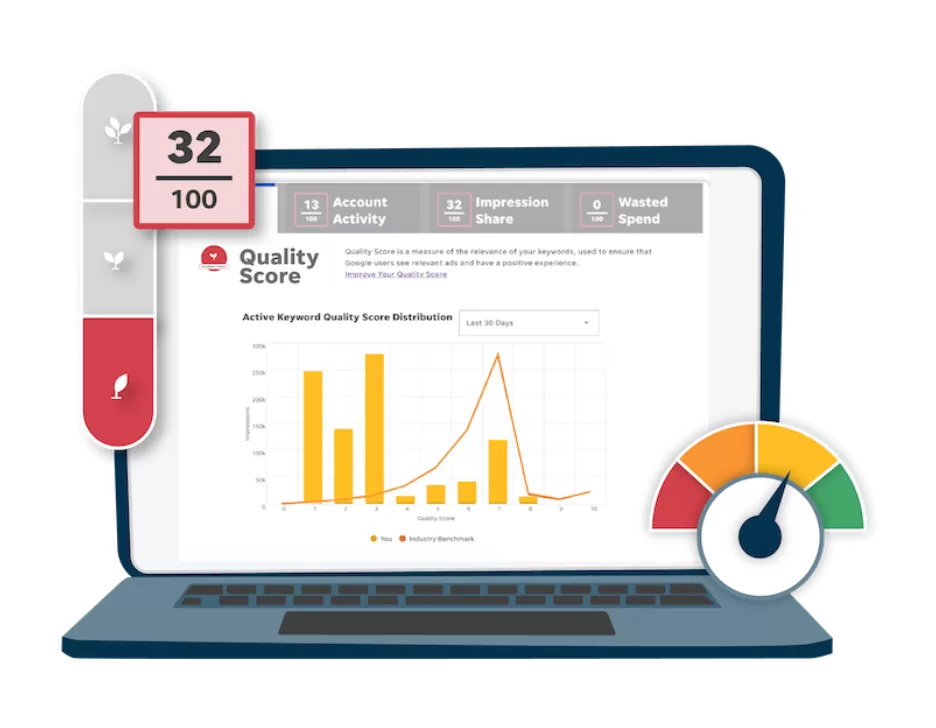
Are you wasting money in Google Ads?

Meet The Author
Rob Glover
Rob is the Senior Copywriter at WordStream and LocaliQ, with over 10 years of experience in paid and organic marketing—including SEO, social media, content marketing, and local search. He’s worked across dozens of industries, from SMBs to enterprise, and now specializes in helping businesses build sustainable growth strategies. His work has appeared in Search Engine Land, eMarketer, and more. Outside of marketing, he loves to travel, camp, and mountain bike with his wife and dog.
Recommended for you