About the Author


Most businesses describe themselves differently from how their customers do.
- A roofing company talks about “comprehensive exterior restoration services.” Customers just search “roof leak after storm.”
- A dentist promotes “comprehensive orthodontic solutions,” while the patient on the phone is asking how much Invisalign costs.
- A marketing agency pitches “full-funnel demand generation.” The prospect just wants more leads.
- And a car rental company leads with “premium fleet solutions” when the traveler on the other end really just wants to know if they can skip the deposit.
That gap shows up everywhere a business talks to a customer: in ads, on landing pages, in search results, in AI answers.
And the cost shows up in different places too.
Customers don’t recognize that you’re solving their problem, so conversion rates take the hit first. Ad costs creep up next, since Google’s Quality Score rewards ads that match what people actually typed. SEO suffers because the business is chasing phrases nobody searches for. And AI tools, which lean on the language people actually use when they talk about a product or service, have a harder time placing the business in an answer at all.
The businesses that consistently outperform their competitors tend to do one thing well: They mirror the language customers already use.
Here’s how to find that language, where it pays off first, and how to turn it into a habit instead of a one-time fix.
Contents
- Why customer language matters more than ever
- The fastest way to find customer language
- How to use customer language to improve your marketing copy
- Common mistakes that keep businesses stuck
- A simple customer language audit
- Your customer language action plan
Why customer language matters more than ever
People rarely describe problems the way businesses describe solutions, and the distance between those two things has always cost businesses money. What’s changed is how much that distance costs now.
For most of the last decade, a business could get away with formal, jargon-heavy copy as long as it ranked well and had a decent website. Customers would find the page, figure out what the business actually did, and convert anyway. That buffer is shrinking. Two things are driving it.
1. Search engines have gotten much better at understanding intent
Google no longer just matches keywords to pages. It tries to understand what the person searching actually wants and surfaces content that delivers it clearly.
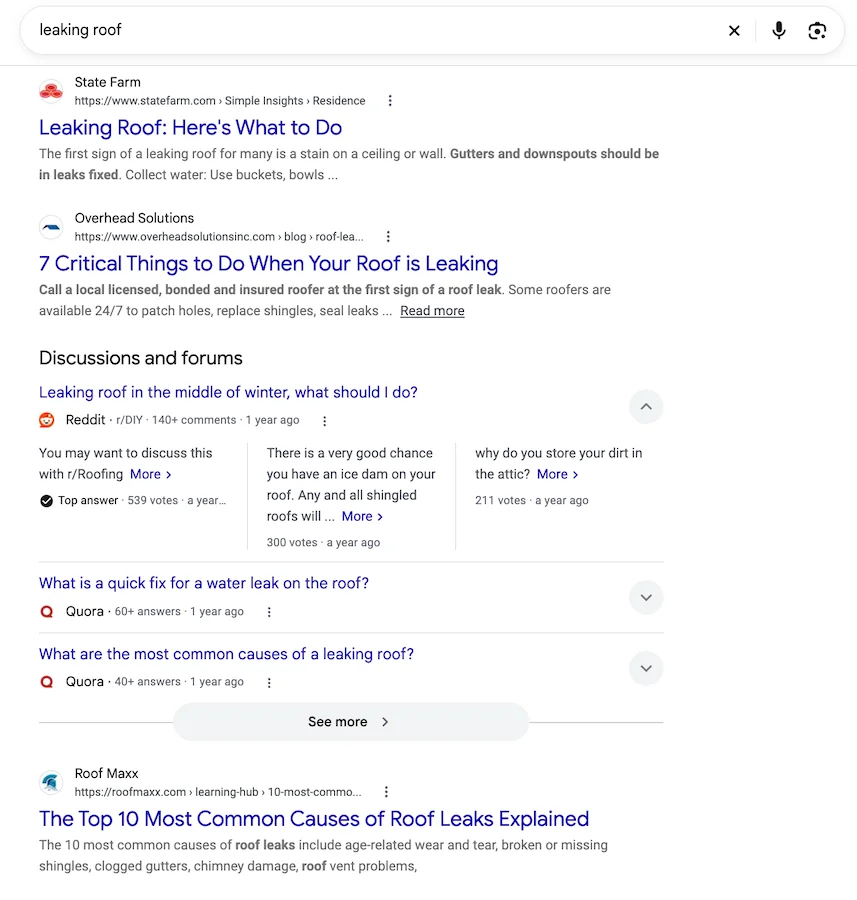
Example: A roofing company with a page titled “What to Do When Your Roof Is Leaking” will often outperform a competitor with a page titled “Residential Roofing Services,” even if the competitor has more backlinks, because one page is written in the language of the problem and the other is written in the language of the solution.
2. AI systems like Google’s AI Overviews and ChatGPT are trained on how people actually talk: reviews, forums, Reddit threads, support conversations, Q&A sites
That language becomes part of the retrieval layer that shapes what gets recommended. When a business writes exclusively in internal terminology, it’s optimizing for an audience that isn’t doing the searching.
Stephanie Yoder, Director of Content Strategy at LaunchSquad, puts it directly: “Most brands are still writing for keyword match. AI retrieval doesn’t work that way, and if your content doesn’t show up in that conversation, neither does your brand.”
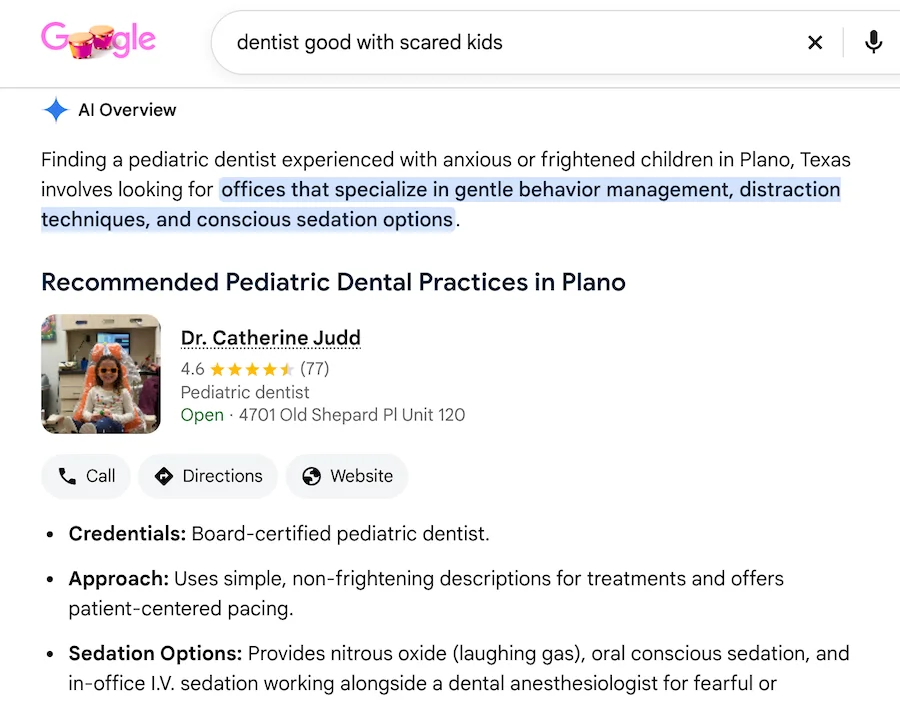
Example: A pediatric dentist who writes about “anxiety-free pediatric oral care” is not speaking the same language as the parent typing “dentist good with scared kids” into Google at 11 p.m.
This matters even more because there’s less room than ever to make a second impression. Zero-click searches, meaning searches that end without a click to any website, reached roughly 68% in early 2026, up from about 60% in 2024 and under 50% a decade ago, according to SparkToro and Similarweb data.
If a searcher never clicks through, the words inside the AI answer or the search snippet are often the only chance a business gets to be understood. Getting those words right is no longer optional.
🛠️ Get everything you need to know about showing up in AI search in our free guide: The AI Search Toolkit >>
The fastest way to find customer language
The good news is that most businesses are already sitting on the raw material. The research doesn’t require a budget or a tool subscription. It requires paying attention to conversations that are already happening.
Start with your reviews
Google reviews are often the richest source of customer language because people writing them aren’t trying to sound professional. They’re just describing what happened and how it felt.
A plumbing company that reads through its last 50 Google reviews might find that a dozen of them say some version of “fixed it the same day.” That phrase is more valuable than anything the marketing team has written, because it captures exactly what anxious customers care about most when a pipe bursts. It belongs in a headline, not in paragraph four of a service page.
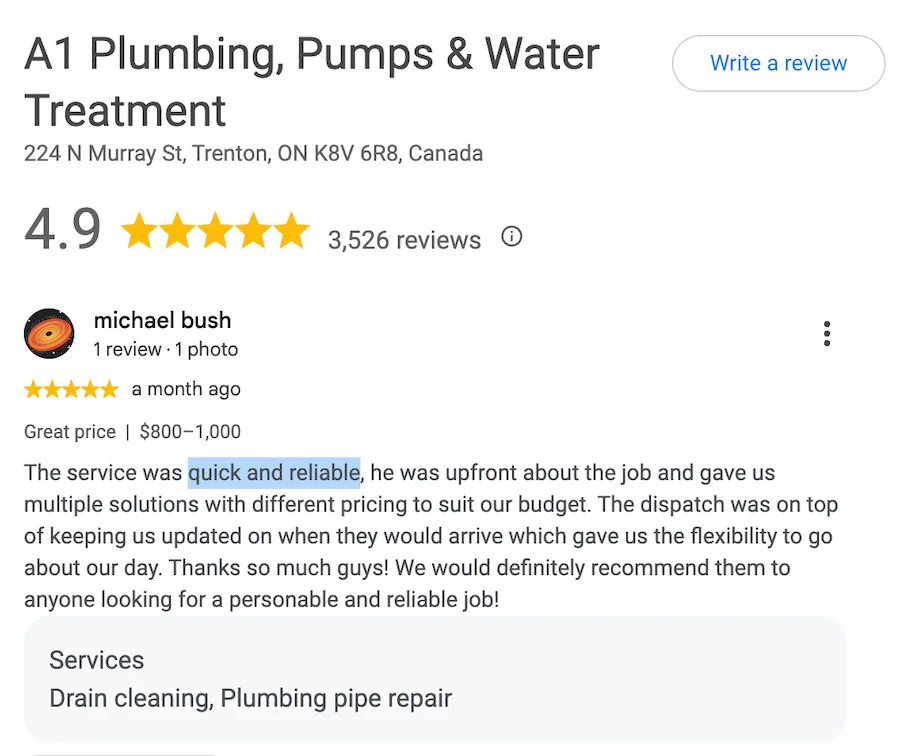
A lawn care company in Phoenix might find five reviews that all mention some version of “finally someone who didn’t kill my grass in the summer heat.” That’s a targeting insight and a headline waiting to happen.
⭐️ Get all the tips you need to collect more reviews in this free guide download >> How to Get More Reviews: 8 Tips to Boost Ranking, Reputation, & Revenue
Ask customers what the AI said
Every other method in this section is about inferring customer language from behavior. This one is about getting it directly.
When a prospect mentions they found the business through ChatGPT or Perplexity, ask them to share the conversation. Some businesses are offering a small incentive, a $25 or $50 gift card, in exchange for a screenshot. It takes the customer one click.
What comes back is more useful than any keyword tool or survey. The actual query they ran. The follow-up questions they asked inside the conversation. How the AI compared the business to competitors. What it said before the prospect ever picked up the phone.
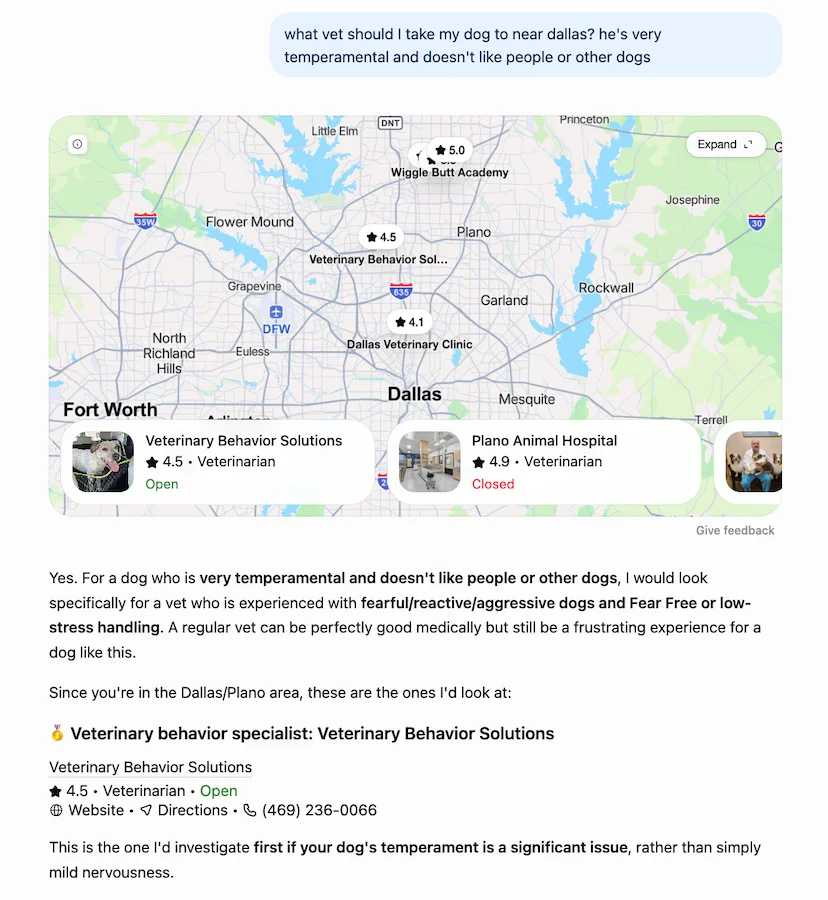
One approach worth noting: Many businesses have started doing this systematically with their sales teams, prompting the question any time a prospect mentions AI as a source. Within a few weeks, patterns emerge. Buyers aren’t searching “tell me about [business name].” They’re running deep comparison queries, asking about pricing, timelines, guarantees, and how the business stacks up against two or three specific competitors. In some cases, the AI is surfacing objections the sales team had never heard out loud.
No GEO tool replicates this. The synthetic prompts those tools generate are educated guesses about what customers might ask. This is the actual question, from a real person, in the moment they were deciding.
For a small business, even five or six of these conversations can reshape how the website is written, what the FAQ section covers, and which objections get addressed upfront.
Read your support tickets and emails
Support teams hear real customer language every single day, and almost no one on the marketing side pays attention to it. The questions that come in again and again, the words customers use to describe frustration, the things they say they were confused about before they called: All of it is free research.
If every third support email from a dental practice’s patients asks some version of “does this hurt?” that fear deserves an answer on the website, not just on the phone.
Listen to sales calls
Recorded sales calls are one of the most underused content research tools available to small businesses. Prospects say exactly what they’re worried about, what they’ve already tried, how they’d describe success, and what would make them walk away.
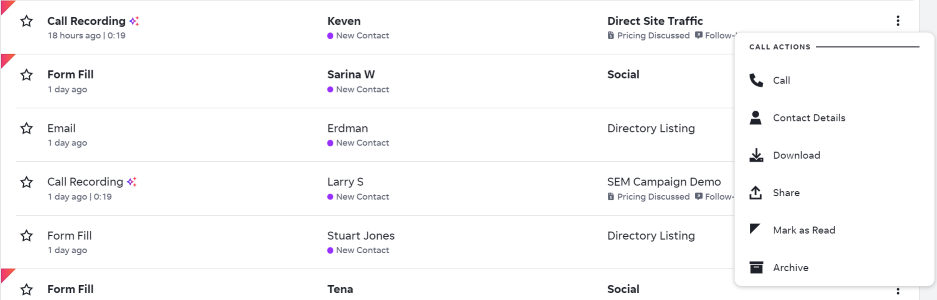
A roofing contractor whose sales team hears “I just want to know the price upfront; the last company wasted my time” has just been handed a headline: “Free Estimate in 24 Hours. No Pressure, No Surprises.”
Pull your Google Ads search query report
If the business is running paid search, the Search Terms report shows the exact phrases people typed before they clicked on an ad. Most advertisers only open it to find negative keywords. That’s leaving money on the table. Read it as a transcript of customer language.
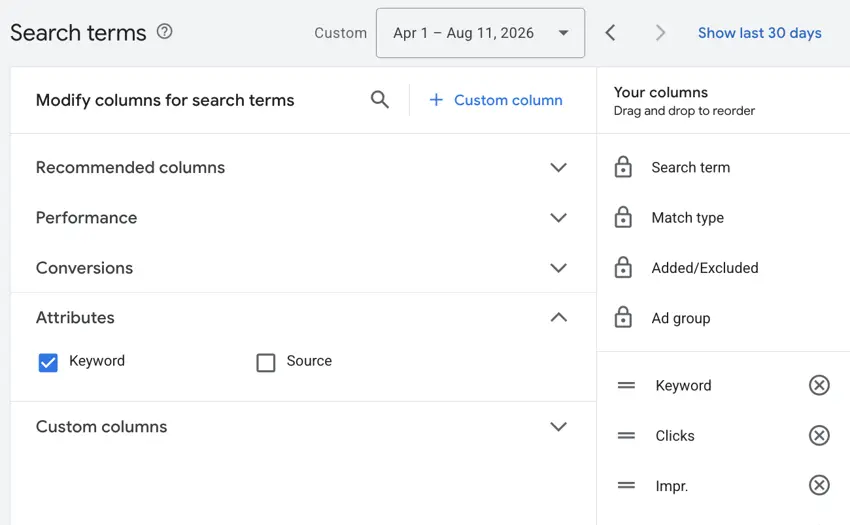
An auto shop that sees “how much does a brake job cost” appearing 80 times a month now knows exactly what to put on its landing page headline and what to bid on more aggressively.
🛑 Want to know how your Google Ads campaigns are doing right now? Find out with a free, instant audit >> Google Ads Performance Grader
Explore reddit, forums, and local community groups
Customers talk differently when no one is trying to sell them anything.
A thread in a local Facebook group asking “anyone know a good HVAC company that doesn’t overcharge?” will tell you more about what matters to that customer base than any survey could.
These conversations reveal the real buying triggers, the real objections, and the specific phrases that come up when people are just talking to their neighbors.
How to use customer language to improve your marketing
Let’s explore some of the ways you can use customer language to:
- Cut ad costs
- Improve conversion rates
- Boost SEO
- Increase AI visibility
How to use customer language to cut your ad costs
Most customer-language advice focuses on branding and SEO. The fastest financial payoff is usually in paid search, and it works through a mechanism most small businesses don’t fully understand.
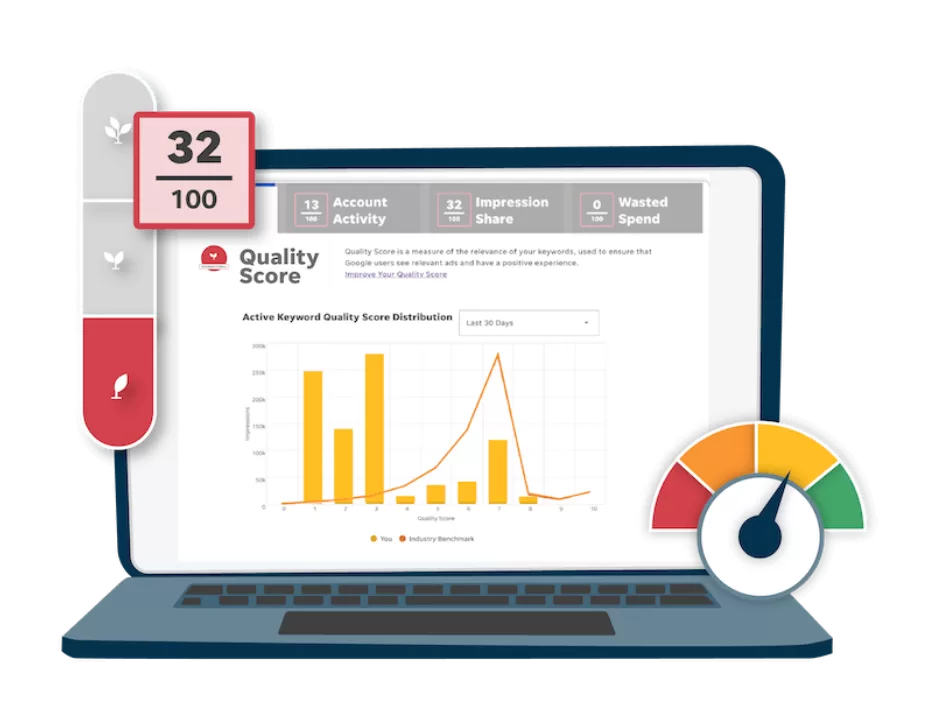
Google uses a Quality Score to evaluate how relevant an ad is to both the search query and the landing page it leads to. According to Google’s own Ads documentation, Quality Score is direct input into Ad Rank and the cost-per-click an advertiser pays for a given position. A higher score can mean paying less for the same placement than a competitor with a lower one.
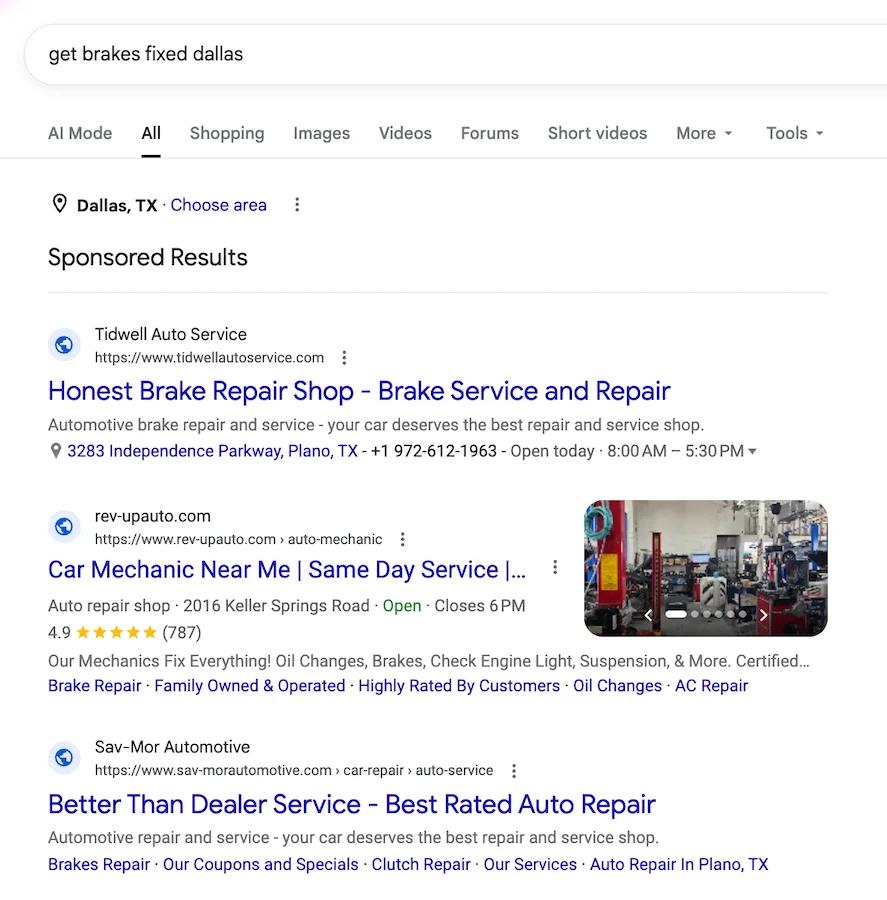
The language gap sits right at the center of that equation. Consider two auto repair shops bidding on the keyword “brake repair near me.” The first runs an ad that says “Professional Automotive Maintenance Services – ASE Certified Technicians.” The second runs an ad that says “Brake Repair Today – Most Jobs Done in Under 2 Hours.”
Both are targeting the same keyword, bidding similar amounts, and appearing in the same auction. But the second ad speaks the language of the search. It matches what the person typed and answers the unspoken question underneath it: how long is this going to take? That relevance earns a better Quality Score, which translates directly into a lower cost per click.
How to use customer language to improve conversion rates
Getting someone to click is only half the problem. What happens after the click depends almost entirely on whether the page they land on sounds like the answer they were looking for.
The highest-leverage place to apply customer language is in headlines, because that’s the first thing a visitor reads and the fastest way to signal that they’re in the right place. “Comprehensive Plumbing Solutions” tells a visitor nothing specific. “Need an Emergency Plumber? We’ll Be There Today” answers the question they had when they searched.
The closer the headline is to the customer’s actual words, the less work they have to do to decide whether to keep reading.
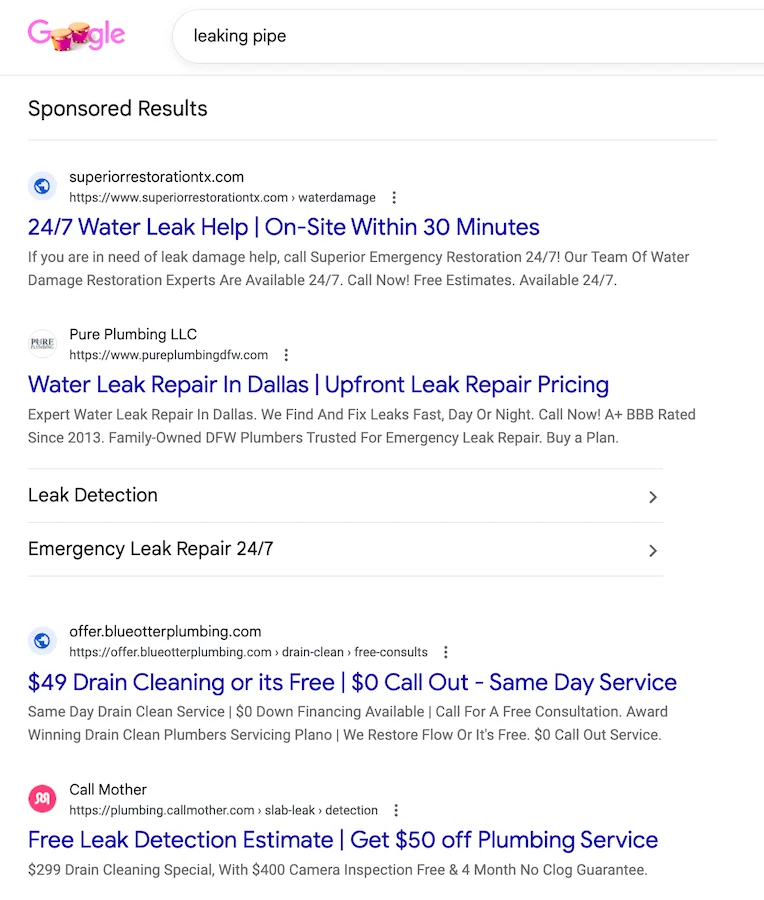
Service pages are where the language gap tends to do the most quiet damage. A page called “Our Services” is a menu. A page called “How Much Does Emergency Plumbing Cost in Chicago?” is an answer to a real question a real person typed. The second approach doesn’t just improve SEO. It also signals to the visitor that this business understands their situation, which builds enough trust to keep them on the page.
Calls to action follow the same pattern. “Contact Us” is a direction. “Get a Free Roof Inspection” is an offer. “See 3 Ways to Get More Leads This Month” is a promise tied to the exact outcome the prospect cares about. Small agencies that have tested variations of these consistently find that the more specific and customer-centric the CTA, the higher the conversion rate, because the customer can see exactly what they’re getting before they click.
The underlying principle is straightforward: the closer the language on the page is to the language in the customer’s head, the less friction stands between them and a decision.
🚀 Ready to quickly increase your conversions and win more customers? Download our guide: Super-Fast Ways to Boost Conversions >>
How to use customer language to improve SEO
Most businesses do keyword research backward. They start with a tool, find terms with decent search volume, and write content around those terms. The problem is that keyword tools surface what people search, not necessarily how they phrase the actual question. Customer language research fills that gap.
A dental practice doing standard keyword research might target “orthodontic treatment options.” A practice that’s been reading its reviews and listening to consultations knows that patients are actually searching “braces vs. Invisalign cost” and “does Invisalign hurt more than braces.” Those long-tail, conversational queries are often less competitive, more specific to buying intent, and far more aligned with what the practice’s prospective patients are actually thinking about.
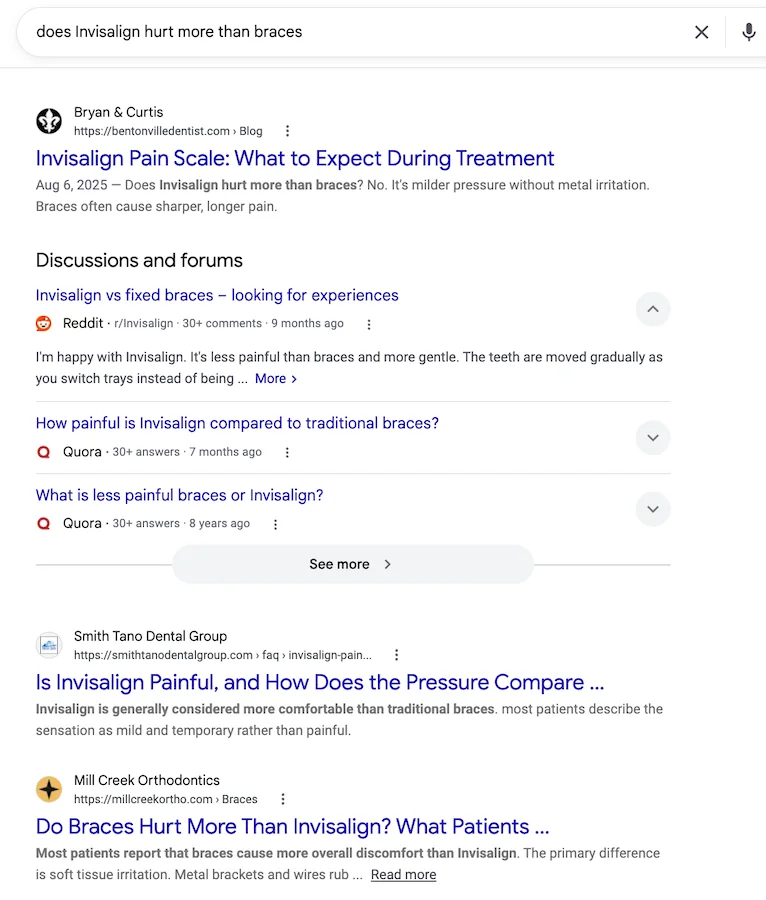
The same applies to content topics. Customer questions are content briefs in disguise. An HVAC company whose service team hears “should I repair my AC or just replace it?” three times a week has an article topic that is already validated by demand. A property management company whose inbox fills up every spring with “how do I get my security deposit back?” has a piece that will rank for a phrase thousands of people search every year.
None of this requires a content strategist. It requires listening to what customers are already asking and then writing the clearest possible answer.
How to use customer language to improve AI visibility
AI search doesn’t work the way keyword-based search does, and that changes what good optimization looks like.
When someone types a question into ChatGPT, Perplexity, or Google’s AI Overviews, they’re usually asking the way they’d ask a person. “Who’s the best pediatric dentist in Tampa for anxious kids?” “What should I do when my furnace stops working in the middle of winter?” “Is it worth getting a home warranty?” These are conversational queries, not keyword strings.
Content that’s written in that same conversational register is easier for AI systems to retrieve and surface as an answer, because it maps more naturally onto the question being asked.
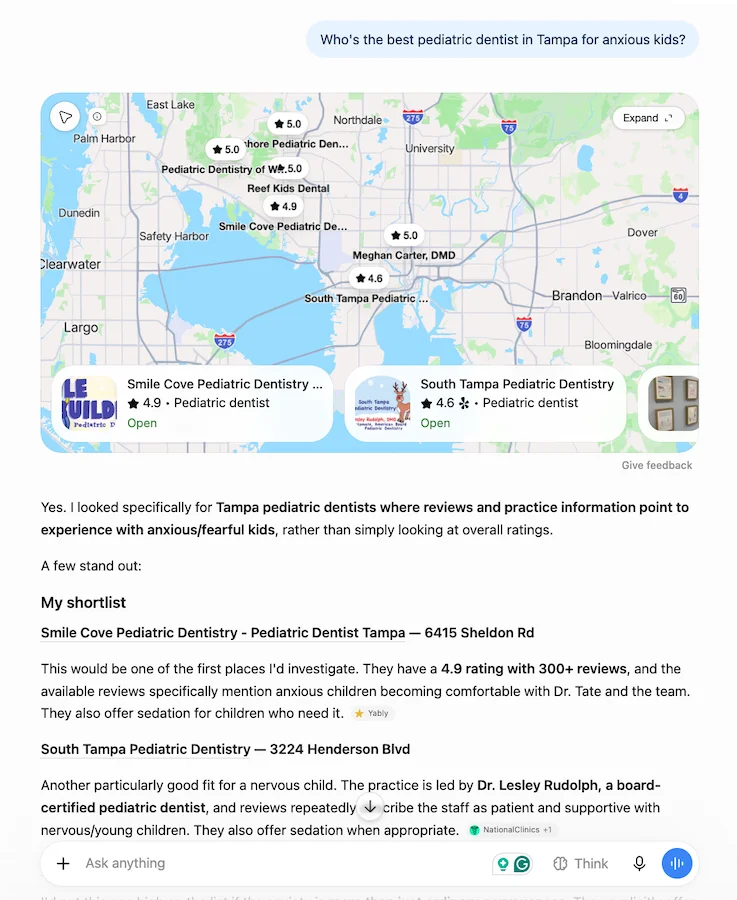
Reviews play a larger role in AI visibility than most businesses realize. AI systems don’t just index formal website content. They synthesize information from across the web, and reviews are part of that picture.
A review that says “They fixed our furnace the same day we called, right before a cold snap, and the technician explained exactly what went wrong” is useful to an AI system trying to answer “who’s a reliable HVAC company in [city]?”
A review that just says “great service, highly recommend” is not. Encouraging customers to write specific, detailed reviews is one of the most underused tactics for improving how a business shows up in AI-generated answers.
Common mistakes that keep businesses stuck
Understanding why businesses default to jargon makes it easier to stop doing it. Most of the time, it isn’t carelessness. It’s that the people writing the copy are too close to the product.
Writing for peers instead of customers is the most common pattern. Industry language sounds competent inside a business. It signals expertise to colleagues, impresses people at trade shows, and feels appropriate on a website that’s meant to represent a professional organization. The problem is that customers are not the business’s peers. A homeowner dealing with a burst pipe at midnight doesn’t want to evaluate credentials. She wants to know someone will show up.
Hiding simple answers behind complexity is related but slightly different. Some businesses bury the most useful information, prices, timelines, process, exactly what’s included, deep in their pages out of habit or a misguided sense that giving too much away loses the sale. In practice, the opposite is usually true.
A roofing company that puts “most residential roof replacements cost between $8,000 and $15,000 depending on size and material, and we’ll give you an exact quote within 24 hours” on its homepage will convert better than one that says “contact us for a personalized estimate,” because it answers the question before the customer has to ask.
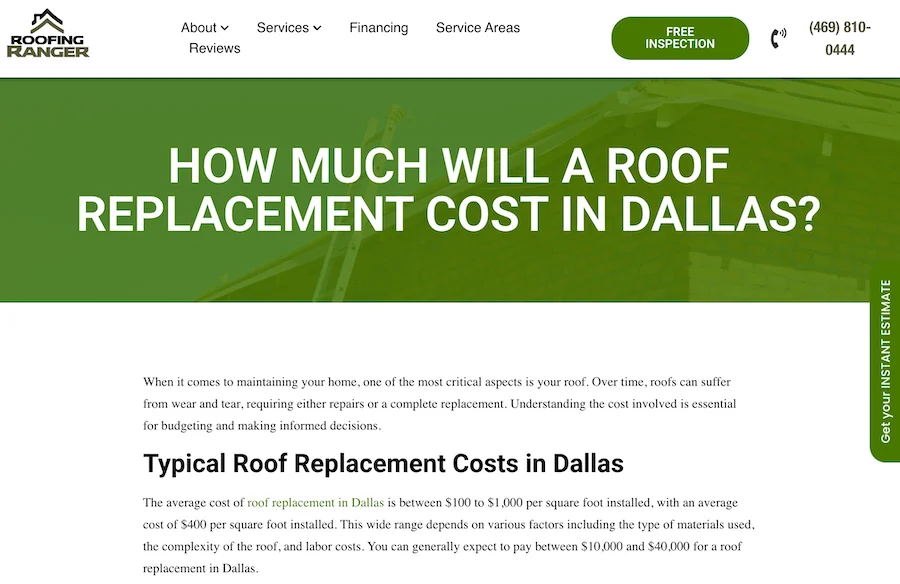
As Stephanie puts it: “The instinct to withhold pricing usually backfires. By the time a customer has to call to ask, half of them have already moved on.”
A simple customer language audit
Before running a full strategy overhaul, it’s worth doing a quick diagnostic on what’s already live. Open the homepage, a core service page, the best-performing blog post, and if the business runs paid search, the Google Ads search query report from the last 30 days.
Read through each one and ask a single question: Could I find these exact phrases in a customer review, a support email, or a sales call transcript?
If the answer is mostly no, there’s a gap. The audit doesn’t need to be exhaustive to be useful. Even identifying two or three places where the business is speaking past its customers is enough to get started.
Your customer language action plan
The goal here isn’t to rewrite everything at once. That’s how these projects stall. The goal is to make one targeted change, measure it, and build the habit from there.
This week, pull the raw material: 15 to 20 recent reviews, last month’s support tickets, and if the business advertises, the search query report from Google Ads. Read through all of it and tag every phrase that repeats more than twice. Those repeating phrases are the signal. They’re the things customers care about enough to keep saying in their own words.
Then rewrite three things, not the whole site. Pick one headline, one CTA, and one ad headline if applicable. Swap in the customer’s exact phrasing and leave everything else alone for now. Changing only three things makes the impact measurable. If the conversion rate on the service page goes up and the CPC on the ad goes down, you know the language change is doing something.
Check the numbers in 30 days, then make it a quarterly habit. Customer language isn’t static. New reviews come in, new search terms emerge, and the phrases that resonated last year start to drift. Businesses that treat this as ongoing research rather than a one-time project end up with marketing that stays aligned with how customers actually talk, which is the only way to make sure it keeps working.
About the WordStream Blog
We've been a trusted source of data, news, and strategy for over 15 years. All of our content is written and reviewed by real people: a dedicated team of professionals with decades of combined experience in marketing and advertising for businesses of all sizes.


Add us as a preferred source on Google


Meet The Author
Goran Mirkovic
Goran Mirković is a marketing leader with over a decade of experience in SaaS growth, SEO, content strategy, and demand creation, a freelance contributor for WordStream, and a 2x CMO. With a background spanning both agency and in-house leadership roles, he focuses on AI-era search, the evolution of content marketing, demand creation, and practical strategies that help businesses turn expertise into revenue. Outside of marketing, he is a dedicated cinephile with a particular obsession for horror films.
Recommended for you