About the Author


Most businesses didn’t lose their traffic because they misunderstood SEO. They lost traffic because they built content for a single purpose: ranking on Google.
For a long time, that approach worked. Content only needed to do three things:
- Appear in Google’s SERP in top positions for relevant business queries.
- Bring visitors to the site.
- Turn some of those visitors into leads or customers.
As long as Google delivered the visit, the system held together.
However, things quickly changed when AI Overviews, local packs, and tools like ChatGPT entered the picture.
Today, many searches end before anyone clicks. AI answers summarize the pages, local packs show the key details, and zero-click results solve the problem directly on the search page. AI Overviews alone now reduce clicks by 58%. (This phenomenon is often referred to as Google Zero.)
In those cases, the user gets what they need without ever visiting a website.
When visibility moves away from the site, search-only content stops contributing to it. It doesn’t get reused in conversations, and it doesn’t help explain the service elsewhere.
Once the visits disappear, the content just sits there doing nothing.
It’s important to note that this is not a quality problem. It is the result of designing content to work in one environment, under conditions that no longer exist.
In this article, I’ll explain how to design and create a content strategy so it continues to drive value for your business, even when rankings fluctuate and clicks disappear due to Google Zero.
Contents
- Why traffic is no longer the marker of content marketing success
- How to future-proof your content strategy against Google Zero
- Metrics that matter when traffic does not
- How to transition your content strategy without nuking existing SEO
Why traffic is no longer the marker of content marketing success
The most effective content strategy today doesn’t need traffic to prove its value. It still gets used even when nobody clicks.
In practice, that means the content works in more than one place. It can explain the service in an email. It can help sales answer common questions. AI can summarize it without twisting its meaning.
This kind of content has a few clear traits:
- It still makes sense when pulled out of the page.
- It can be reused without rewriting.
- It supports sales, support, and education.
- It still works when the click never happens.
Search still matters, but it’s just no longer the center of the system. It is one of several ways the content gets seen.
That matters because content rarely travels as full articles anymore. Nearly 60% of Google searches now end without users clicking through to any website.
People share fragments. Sales paste sections into emails, AI tools pull short summaries, and customers skim through what they need.
“If your content only works when read top to bottom, it breaks as soon as that context disappears,” said Stephanie Yoder, Director of Content at Rebrandly.
Basecamp Fitness explains how their classes work, who they are for, and what new members should expect. That explanation does not live on a single page.
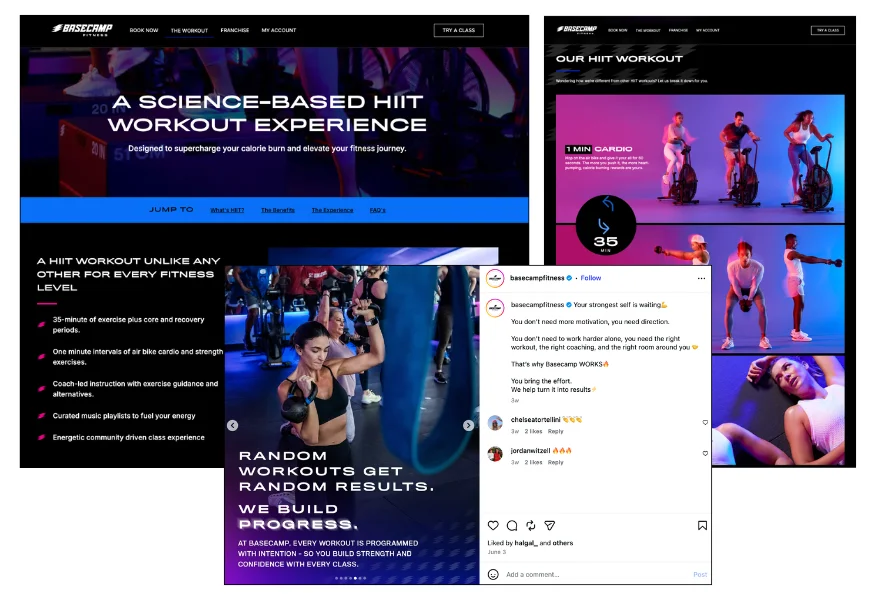
Staff use it in emails, it shows up in social posts answering common questions, and also in sales conversations with first-time visitors.
Traffic helps people find it. But the content does not rely on traffic to stay useful.
🔎 Get updated tips for your SEO strategy with our free guide >> How to Do SEO Right—Right Now!
How to create a future-proof content strategy
I’ll walk you through the steps you need to know to create content that continues driving results despite AI search impact, zero-clicks, and a changing search engine results environment.
Design content for reuse first, ranking second
This is the most important shift to understand. Most SEO content starts with keywords and builds outward. A future-proof content strategy works in the opposite direction. It starts by explaining the thing clearly and then gets optimized for search.
Keyword-first content assumes the reader arrives at the beginning and reads everything in order. That assumption no longer holds.
Reuse-first content assumes the reader may only see one section. That changes how you write.
It means you should:
- Explain the service before trying to attract attention.
- Write sections that still make sense on their own.
- Define terms early instead of building suspense.
- Assume context will be lost.
A simple test helps here: If a paragraph stops making sense when pasted into Slack or summarized by AI, it is fragile.
Hooks, suspense, and clever framing rely on buildup. Buildup disappears during reuse. Clear explanations are what stand the test of time.
Let’s look at Death Wish Coffee as an example. Their content explains caffeine levels, sourcing, and product differences in plain language. Those explanations still work when reduced to a few lines in an email or an AI summary.
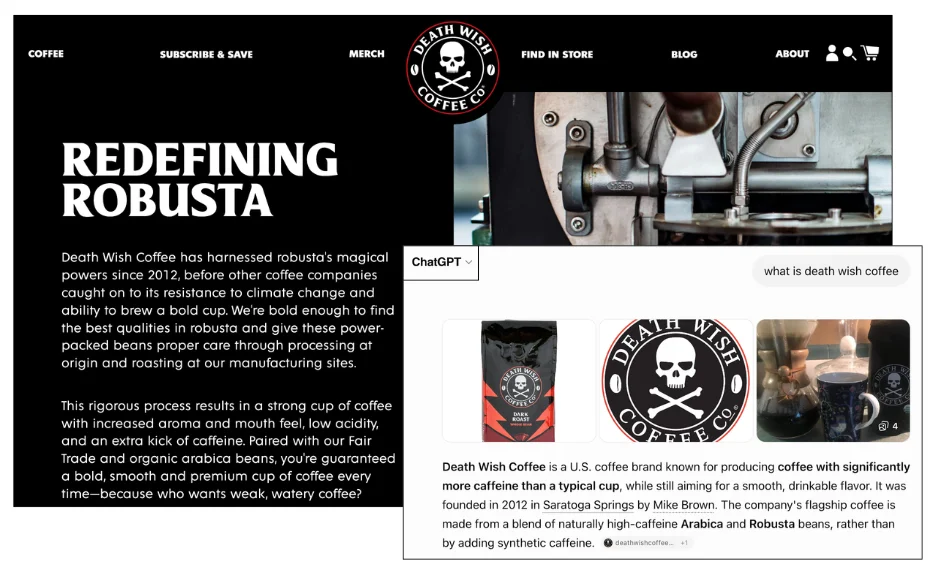
Nothing important gets lost because the meaning is clear from the start.
Build around core assets, not disposable blog posts
A more durable approach is to build around core assets. These are pages designed to support several parts of the business at the same time.
Core assets usually explain things customers already ask about, such as:
- Pricing and cost
- How the service works
- What the process looks like
- Who the service is for and who it is not for
These pages get reused naturally because they answer real questions.
Each core asset can support:
- Search visibility
- Sales conversations
- Onboarding emails
- AI summaries
“Disposable blog posts chase narrow queries. Core assets explain how the business actually operates,” said Stephanie.
Here’s an example: Morgan & Morgan publishes clear explanations of legal processes. They explain what happens after an accident, how claims move forward, and how long things usually take.
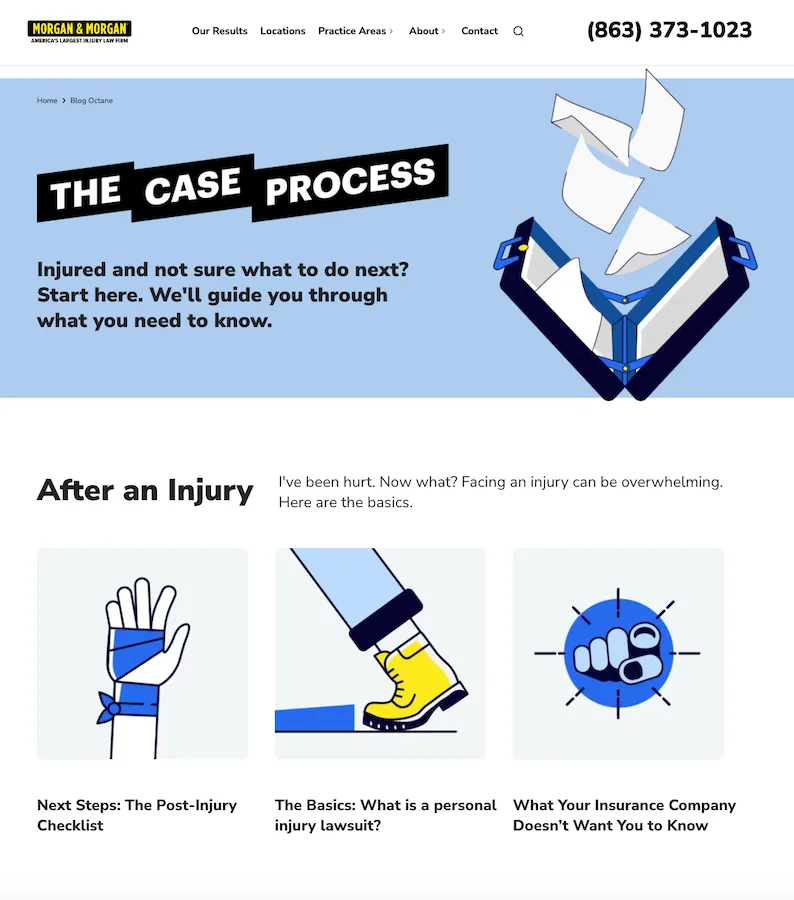
That content is reused in intake emails, consultation prep, and follow-ups. Even when traffic shifts, the explanations continue to support real client conversations.
🛠️ Get everything you need to know about showing up in AI search in our free guide: The AI Search Toolkit >>
Focus on distribution channels that keep value when search drops
When search traffic drops, content should not disappear with it. It should already be doing work in other channels that the business controls or actively uses.
That usually means email, social, video, and AI summaries. Each channel behaves differently, so content needs to be designed with those behaviors in mind.
Email: Where content turns into a relationship
Email is where content stops being “published” and starts being used.
Once content enters email, it becomes part of an ongoing relationship. It shows up in follow-ups, onboarding messages, and explanations sent one-to-one or one-to-many. This is why email rewards clarity more than volume.
A clear explanation can be reused for years. A trend-based post usually expires after one send.
Strong email-ready content:
- Explains one thing clearly
- Answers a real customer question
- Does not rely on context or buildup
When content works in email, it keeps working long after the publish date.
Take Brick Underground, for example. They write clear housing explainers. Those explanations regularly become newsletter content sent to renters and buyers.

Even when individual articles stop ranking, the explanations still reach the audience through email, where the relationship already exists.
Social: Where weak explanations get exposed
Social media is not where people go to read full articles. It is where ideas get tested. Social forces clarity because there is no patience for confusion. If an explanation is vague, it gets ignored. If it is clear, it gets saved, shared, or questioned.
This makes social a useful feedback channel.
It shows you:
- Which explanations people understand.
- Which ones create discussion.
- Which ones fall flat.
Content that survives social usually survives reuse elsewhere.
Let’s look at Industrious Frisco as an example. They share information about what makes them and their workouts different as captions, carousels, and short posts. The same ideas that live on the site also live on social.
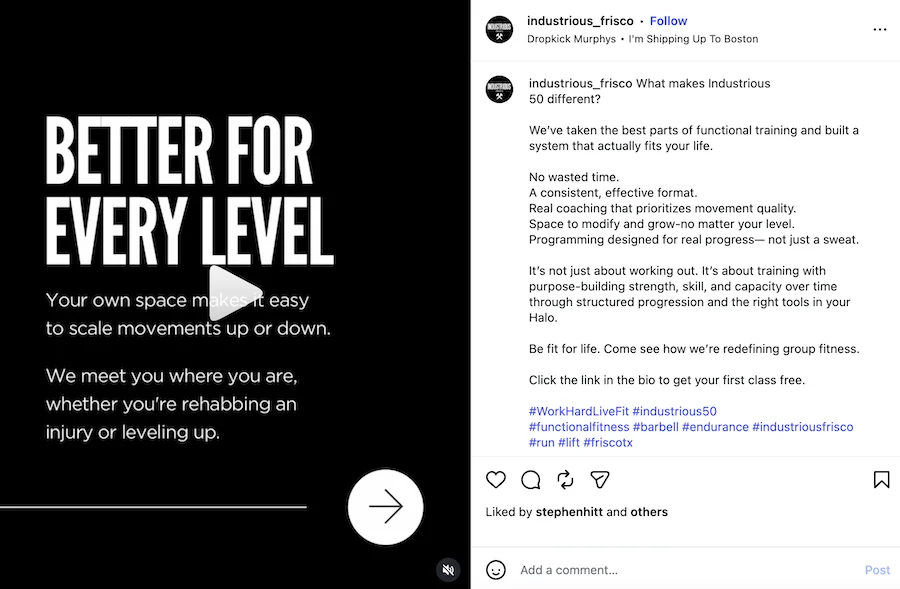
The website is not the only place the content works. Social becomes another surface where the explanation earns its keep.
🧨 Want social media ideas for every month of the year? Free guide >> The Mega Must-Have Marketing Calendar
Video: Where explanations get shorter and stickier
Video reduces the time it takes to explain something. A short video can do the work of a long paragraph, especially for first-time customers who want to understand what to expect.
Video also builds familiarity. Seeing and hearing someone explain a service builds trust faster than text alone.
What makes video valuable in a resilient content engine is reuse.
- Videos show up in search features
- AI tools pull from transcripts
- Clips get reused across platforms
The explanation stays consistent, even when the format changes. A clear explanation filmed on a phone beats a polished video that says very little.
Beardbrand Barbershop does a great job at this. Their grooming explainers exist as short videos, text, and transcripts. Even when people never click through to the site, the explanation stays accurate across formats.

The metrics that matter when traffic does not
When search traffic drops, many teams panic because their main scorecard disappears. That happens when traffic is treated as the outcome, instead of a signal.
In a future-proof content strategy, traffic is context. It helps explain what is happening, but it is not the only proof of value. More useful signals show whether content is being used, not just visited.
Assisted conversions
Assisted conversions show whether content played a role earlier in the decision, even if it was not the final click.
For example:
- A customer reads an explainer
- Leaves the site
- Comes back later through direct traffic or email
- Converts
The content helped, even if it did not get credit as the last click.
Email engagement
If content is reused in an email, engagement tells you whether it is useful. Replies, forwards, and click-throughs show whether explanations are helping people understand and decide.
Sales usage of content
One of the clearest signals is internal use.
If sales or support teams regularly send a page to customers, that content is doing real work. Views matter less than whether staff trusts it enough to reuse it.
Brand search growth
When explanations work, people remember the business. That often shows up as an increase in branded searches. People stop searching generically and start searching by name.
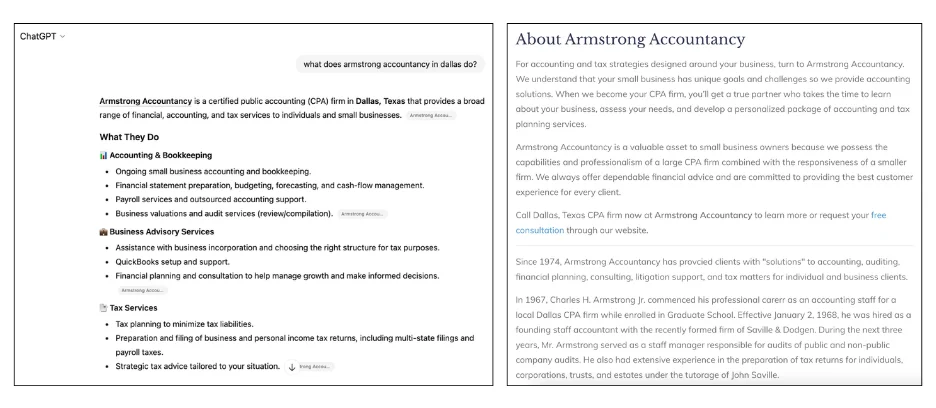
Accuracy of AI summaries
Checking how AI tools describe your service is another signal. When summaries are accurate and consistent, it usually means your content is clear and specific enough to be reused safely.
How to transition your content strategy without nuking existing SEO
Think of this as refactoring, not rebuilding.
Start with content that is already performing well
The easiest wins come from content that already moves beyond the website. Look for pages that:
- Sales teams send to prospects
- Support teams link in replies
- Customers mention or forward
If people already reuse a page, it is doing more than ranking. That is the content worth improving first. Do not start with your worst pages. Start with the ones that already have a job.
Rewrite intros for clarity, not attention
Many pages fail during reuse because the opening is vague. SEO intros often try to warm the reader up or set a mood. That works when someone reads the full page. It fails when only the first few lines get copied or summarized.
A clearer intro answers three questions right away:
- What does this page explain
- Who is it for
- What problem does it help solve
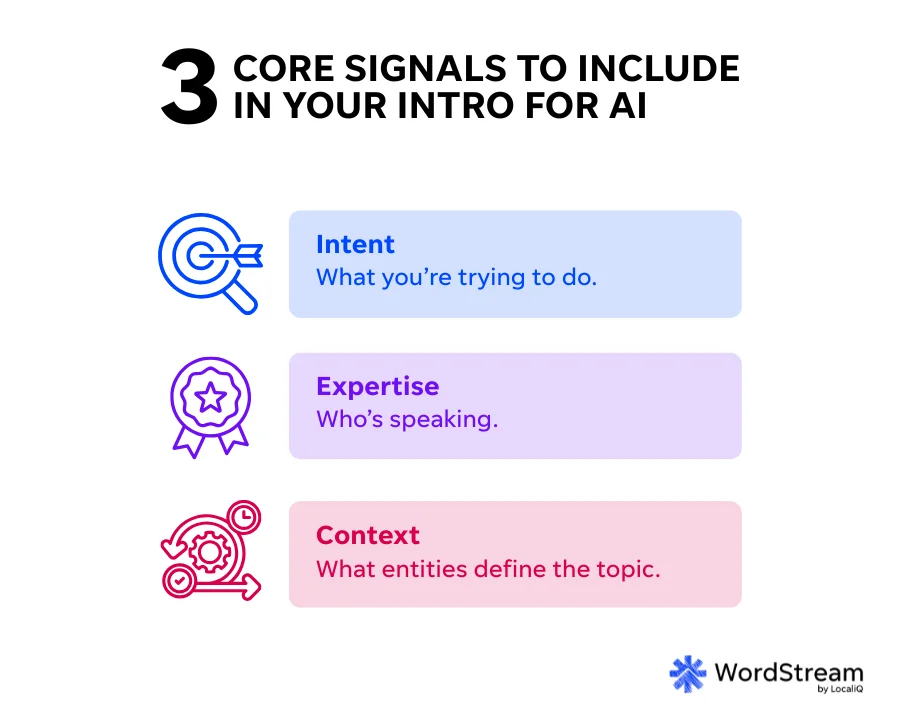
When that information is explicit, the page becomes easier to reuse in emails, sales replies, and AI summaries.
Add structure that supports extraction
Most content is written as a single flow. That makes it harder to reuse. Structure gives content natural breakpoints.
Clear headers, short sections, lists, and definitions allow:
- Sales to copy one section instead of the whole page.
- Email to reuse a paragraph without editing.
- AI tools to summarize accurately
You are not adding complexity. You are making meaning easier to extract.
Repurpose before publishing anything new
Before writing another blog post, reuse what already works.
Take one strong page and turn it into:
- A short email explanation
- A social post or carousel
- A short video or script
This forces clarity. If the explanation does not survive reuse, the problem shows up fast. Only publish new content after you know how it will be reused.
Build distribution into the workflow
Most content fails because distribution is an afterthought. If the plan is “publish first, share later,” reuse rarely happens. A better workflow asks one question before publishing: Where else will this explanation live?
If there is no clear answer, the content probably does not need to exist yet.
Let’s look at Nick’s Pizza & Pub as an example. Nick’s Pizza explains how their food is made, what they care about, and what customers should expect. That explanation shows up on the site, on social, in local press mentions, and in AI summaries.
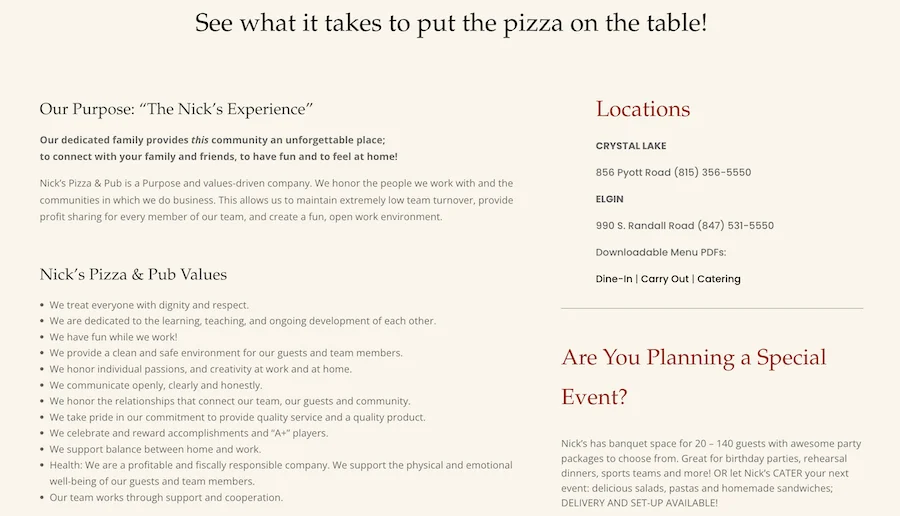
The content works because it is clear and practical, not because it was written to rank. No SEO tricks. Just explanations that travel.
Future-proof your content strategy for success despite AI-driven traffic volatility
Traffic volatility is not the real risk. Single-purpose content is. Businesses that create a future-proof content strategy built for reuse, clarity, and distribution build engines that keep working even when rankings shift and clicks disappear.
About the WordStream Blog
We've been a trusted source of data, news, and strategy for over 15 years. All of our content is written and reviewed by real people: a dedicated team of professionals with decades of combined experience in marketing and advertising for businesses of all sizes.


Add us as a preferred source on Google
Are you wasting money in Google Ads?

Meet The Author
Goran Mirkovic
Goran Mirković is a marketing leader with over a decade of experience in SaaS growth, SEO, content strategy, and demand creation, a freelance contributor for WordStream, and a 2x CMO. With a background spanning both agency and in-house leadership roles, he focuses on AI-era search, the evolution of content marketing, demand creation, and practical strategies that help businesses turn expertise into revenue. Outside of marketing, he is a dedicated cinephile with a particular obsession for horror films.
Recommended for you