We’ve been covering Google Marketing Live for the last eight years, and something stood out about the theme this year. Previously, Google announced features that worked in silos. Some made creative easier to produce, some made ads more dynamic, and others made metrics more abundant.
The big theme of Google Marketing Live 2026 was integrating disparate AI features to make working between Google properties more fluid.
During the GML 2026 keynote, Google pros announced agentic commerce tools that follow shoppers across Google surfaces, a universal analytics experience that generates actionable insights from wherever you generate data, and much more. It’s clear Google is working to connect its many surfaces under one AI umbrella.
Here are the biggest takeaways from this year’s event.
Contents
- New contextual ad formats for AI Mode
- New Gemini-powered ads for Search
- Expanded features for Direct Offers
- New UCP-powered Universal Cart
- Integrated YouTube creator partnerships in Demand Gen
- Asset Studio updates
- More ad creative control with AI Brief
- New Qualified Future Conversions (QFC) metric
- New campaign type attribution for Demand Gen
- Expanded Google Analytics 360 as a unified measurement hub
- New Ask Advisor agentic marketing intelligence
❓How do your Google Ads results stack up to your competitors? Find out in Google Ads Benchmarks 2026: Competitive Data & Insights for Your Industry
The 11 biggest announcements from Google Marketing Live 2026
Google introduced a range of new and expanded tools and features at GML this year. These are our top picks, along with some early reactions from PPC pros.
1. New contextual ad formats for AI mode
Google introduced two new Gemini-powered ad formats that will appear when searchers use AI Mode. Each is designed to make product discovery more contextual and conversational.
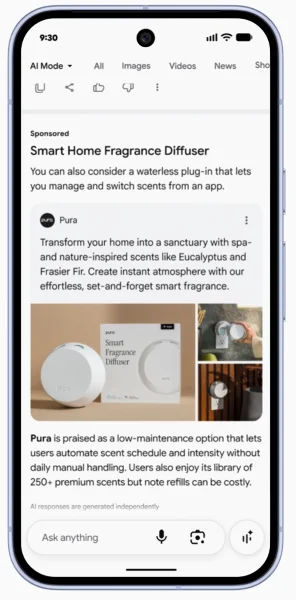
Conversational Discovery ads
These ads appear as a natural part of the AI Mode response, written to answer the user’s query rather than interrupt it. Google uses Gemini to match the ad to both the query and the AI-generated response surrounding it, so the ad feels relevant to the conversation already happening.
Say you ask for fragrances to make your house smell like a fancy spa. Gemini then builds ad creative and copy to answer that query while highlighting the relevant features of your product.
Highlighted answers
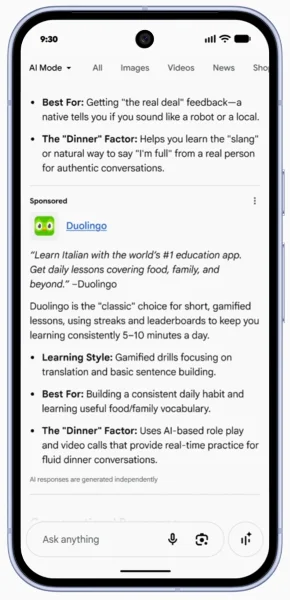
When someone searches for recommendations in AI Mode, like “best apps for learning Spanish before a trip,” Google now serves a curated list of suggestions. Now, if your product or service is a strong match, your ad can appear directly on that list as one of the recommended options, rather than in a separate ad slot above or below the results.
2. New Gemini-powered ads for Search
Google also announced a pair of search ad upgrades during GML this year.
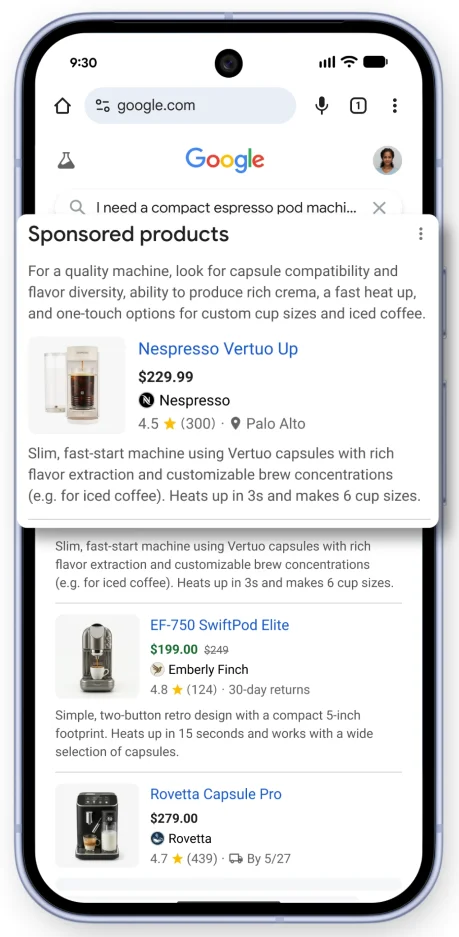
AI-powered Shopping ads
These are shopping ads with Gemini-written product descriptions that explain features in plain, helpful language based on what the user actually searched for.
Rather than showing a generic product title and price, the ad surfaces the specific attributes most relevant to that query. So if you’re searching for the perfect espresso machine, Gemini will instantly craft a custom write-up explaining the important features of each option and why it might be a good choice for you.
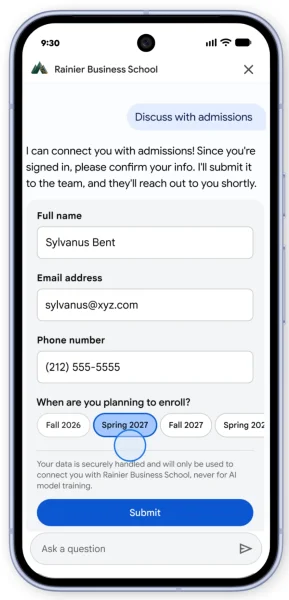
Business Agent for Leads
This new feature basically creates a custom AI agent within an ad. So a user can ask a question directly inside the ad and get a response pulled from the advertiser’s website. Then the user can submit a lead form that is pre-filled with their information.
By the time the lead reaches you, they have already engaged with your content and self-qualified to some degree. Google is currently testing this format in education, automotive, and real estate.
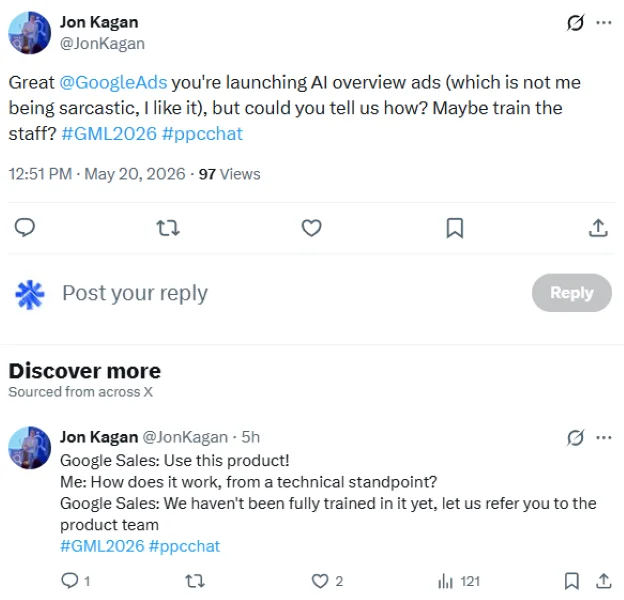
The general vibe is that these new ad formats can be a huge boon for marketers. But there’s some baggage from previous tech rollouts that weren’t fully supported. Adoption and acceptance will depend on how Google handles its advertisers in the coming months.
💡 Learn how your Google Ads are really performing. Get your Free Google Ads Grader report now!
3. Expanded features for Direct Offers
Google announced that it’ll be adding three upgrades to its Direct Offers pilot, which originally launched in January of 2026. Direct Offers highlight promotions at high-intent moments during a search session.
The expanded features let brands add more offer types and reduce friction for buyers:
- Promotion bundling: You can now upload a variety of promotions like discounts, giveaways, and local coupons, and Gemini will assemble the most relevant offer for each specific search.
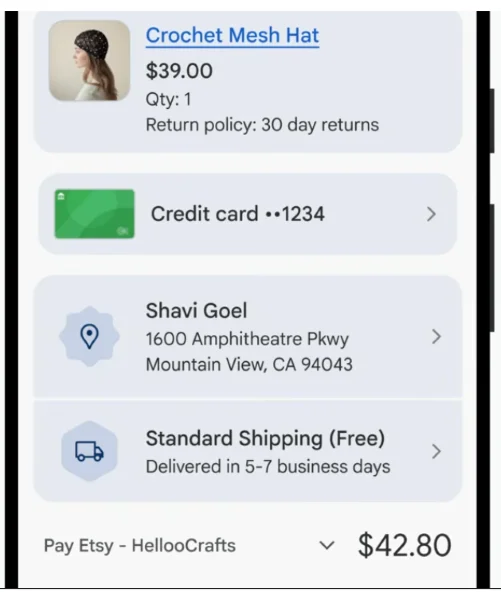
- Native checkout: Retailers connected to Google’s Universal Commerce Protocol can now let shoppers complete a purchase directly from the ad, without being sent to a separate page.
- Travel expansion: Travel partners like Booking.com and Expedia will soon be able to surface special offers within AI Mode trip-planning results. If someone is researching a trip and your offer matches their plans, it can appear as part of that planning experience rather than as a separate ad.4.
4. New UCP-powered Universal Cart
UCP (Universal Commerce Protocol) is an open industry standard that lets agents, merchants, and payment providers communicate without custom integrations. It allows data like your inventory levels, pricing, loyalty benefits, and account information to flow between Google applications and surfaces.
During Google Marketing Live 2026, Google announced its Universal Cart, a persistent shopping cart powered by UPC that works across Google Search, the Gemini app, YouTube, and Gmail.
With a Universal Cart, shoppers can add products from any of Google surfaces, and the cart automatically tracks price drops and back-in-stock alerts on their behalf. When they’re ready to buy, they can complete the purchase directly on Google or head to the retailer’s site.
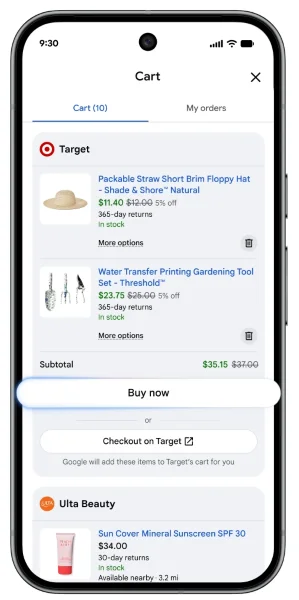
Google said the cart will integrate with Klarna and Affirm, giving shoppers a “Buy now, pay later” option.
In the coming months, Google says its direct buying capabilities will expand into hotel booking and local food delivery. So, users can book a room directly from AI Mode or order food from Google Maps.
5. Integrated YouTube creator partnerships in Demand Gen
When setting up Demand Gen campaigns, Google Ads will now surface relevant creator content that features your brand, including affiliate partnership videos. You can add that content directly into your campaign without leaving the platform.
Google’s data shows that adding creator assets to Demand Gen campaigns increases conversion lift by an average of 20%. For brands that have already worked with creators but haven’t connected those assets to paid campaigns, this makes that step much easier.
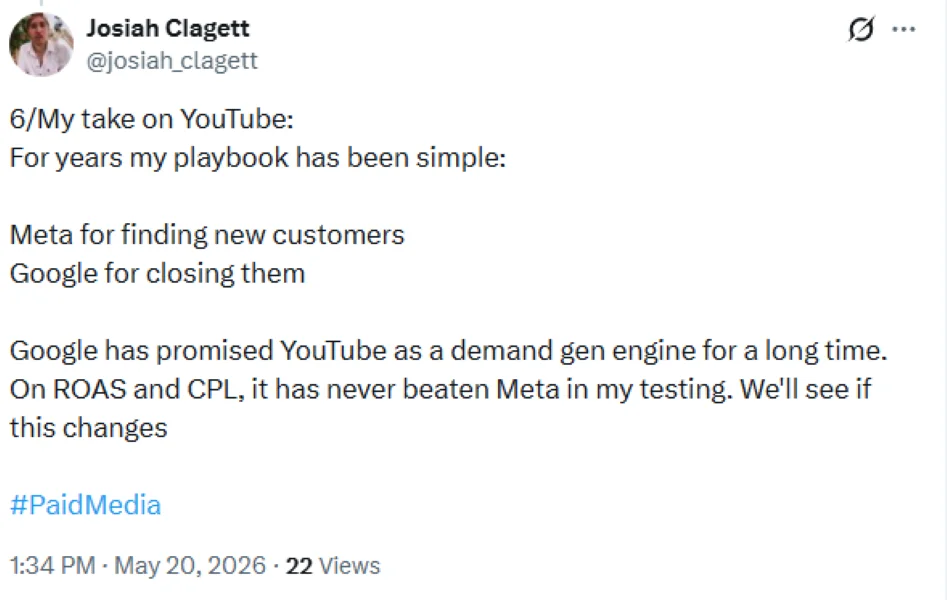
Google has been trying to sell YouTube as a conversion channel for a while now. Deeper Demand Gen integration and new features like Universal Cart may finally make it happen. It has a steep hill to climb with marketers, though.
6. Asset Studio updates
Asset Studio, Google’s creative hub inside Google Ads, now integrates Gemini, Veo (video), and the new Gemini Omni model. It connects directly to Adobe, Canva, YouTube Studio, and other tools, so your existing assets show up in one library.
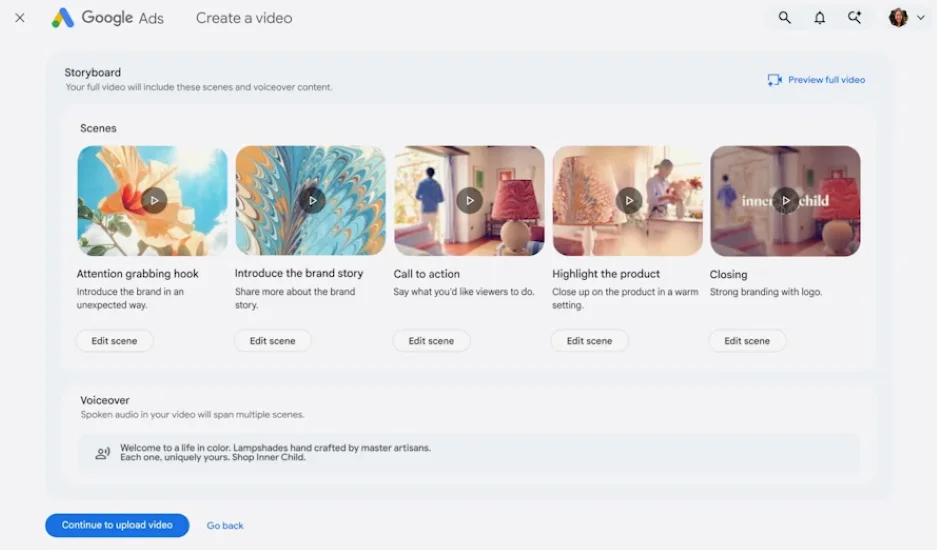
Another new feature for this year is built-in A/B testing that lets you swap creatives and measure incremental performance without duplicating campaigns.
For lean teams, this addresses a real production bottleneck. You can generate image and video variations, resize for different formats, and test what works, all without leaving Google Ads.
7. More ad creative control with AI Brief
AI Brief is a new feature that lets advertisers give Google’s AI a creative brief in plain language, including brand voice, target audiences, guardrails, and messaging guidelines. The AI interprets those inputs and generates ad guidelines, with previews you can review and refine before anything goes live.
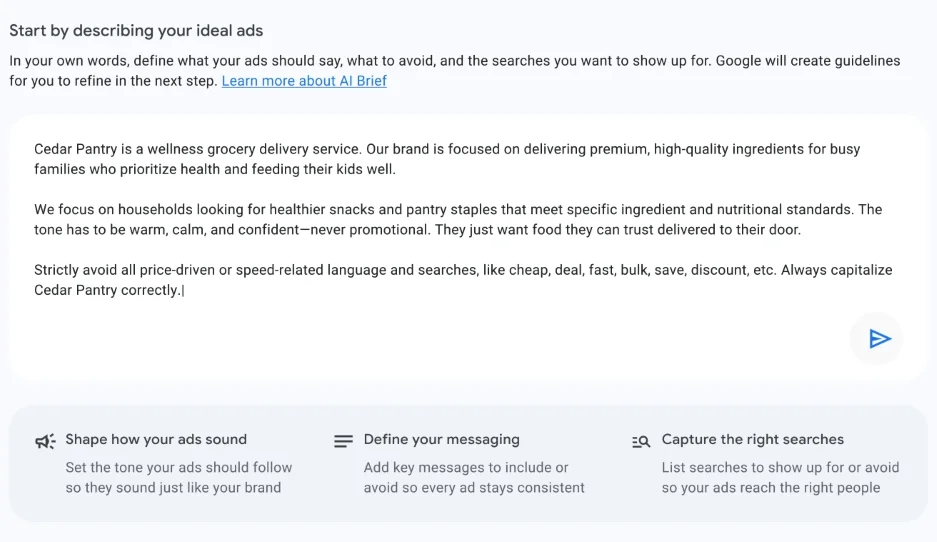
This was one of the most well-received announcements this year. It directly addresses the most common concern about AI-generated ads: loss of brand control. You’re not approving individual ads, but you are setting the rules the AI follows when creating them.
8. New Qualified future conversions (QFC) metric
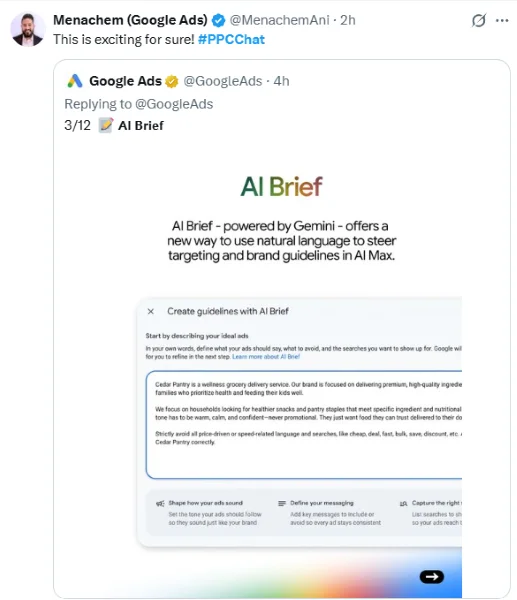
This is a new metric that looks at signals like branded searches, video views, and site visits after ad exposure to predict profitable conversions up to six months out. It joins attributed branded searches, which tracks near-term intent signals after ad exposure, as an always-on metric in the Google Ads UI.
Google positioned QFC as a way for businesses with longer sales cycles to defend YouTube ads and upper-funnel spend before the conversion actually happens.
There are some questions about how effective this metric will be.
9. New campaign type attribution for Demand Gen
Google is launching campaign type attribution, which shows the conversions that Demand Gen specifically contributed to, separately from other campaign types. Previously, Google de-duplicated conversions across campaigns, which made it hard to see what Demand Gen was actually doing.
This is the clearest apples-to-apples comparison tool Google has offered for Demand Gen performance. If you’ve been skeptical about Demand Gen ROI because the numbers felt blurry, this is what you’ve been waiting for.
10. Expanded Google Analytics 360 as a unified measurement hub
Google Analytics 360 is being rebuilt as a cross-channel measurement command center, powered by Meridian (Google’s open-source marketing mix model). It now includes performance data from TikTok, Pinterest, Snap, and other platforms in a single view, along with scenario-planning tools and conversational query support.
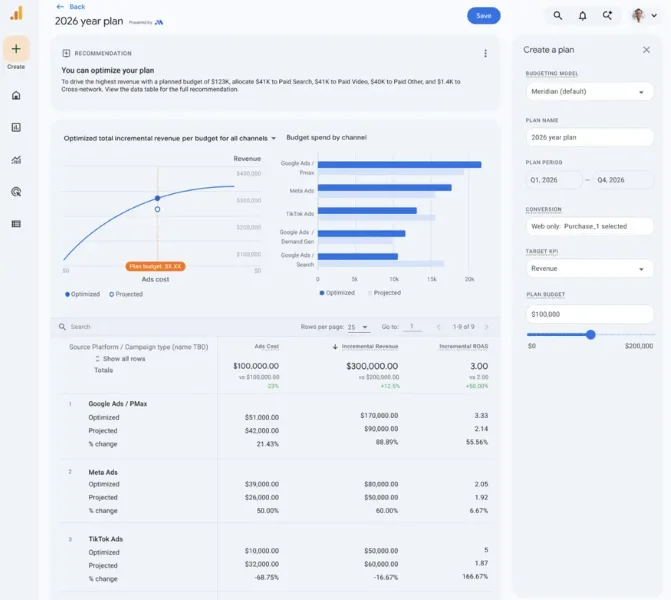
For marketers who currently juggle multiple dashboards, this is meant to consolidate cross-channel reporting into one place and connect it directly to budget planning.
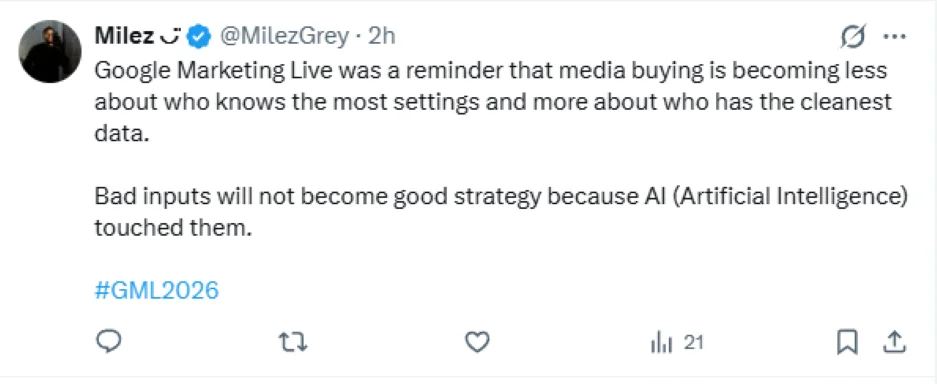
Google is intentionally removing the technical friction for marketers to use data for better strategy. Several PPC pros noted how that’ll reshuffle who succeeds.
11. Ask Advisor
Google is consolidating its various in-platform AI agents into one unified experience called Ask Advisor. It works across Google Ads, Merchant Center, Google Analytics, and Google Marketing Platform. The tool retains context across sessions and can take actions on your behalf, including launching campaigns, generating assets, and flagging optimization opportunities.
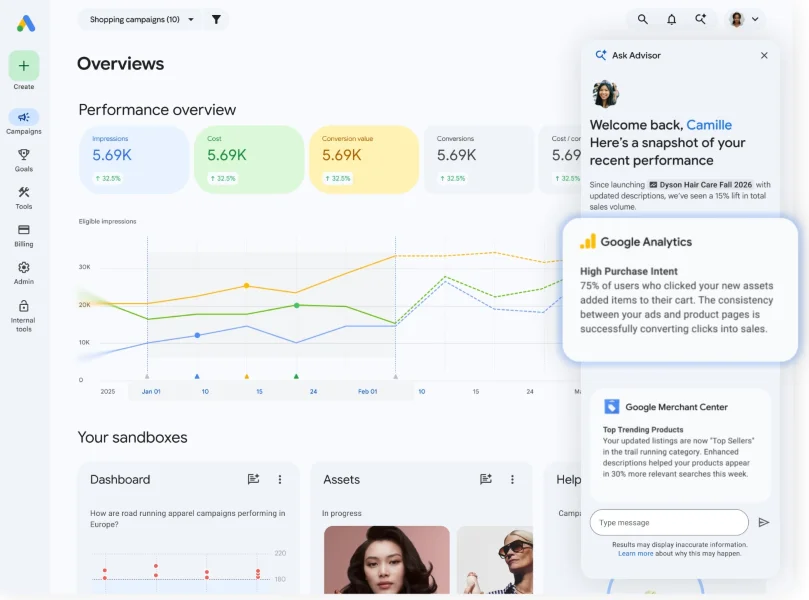
The practical benefit is reducing the number of tools you have to move between to manage a campaign. For small businesses without dedicated ops support, it functions as a persistent, knowledgeable assistant that can catch problems and surface opportunities you might not have time to find yourself.
AI wasn’t the biggest thing at GML 2026; it was the only thing
There wasn’t a single update that didn’t heavily incorporate agentic or generative AI during this year’s GML keynote speech. That’s not a surprise, but it is a reminder of where marketing is as an industry.
There’s a lot to be excited about. If Ask Advisor works as planned, it’ll make complex data more accessible and actionable for marketers who haven’t taken a four-week analytics course.
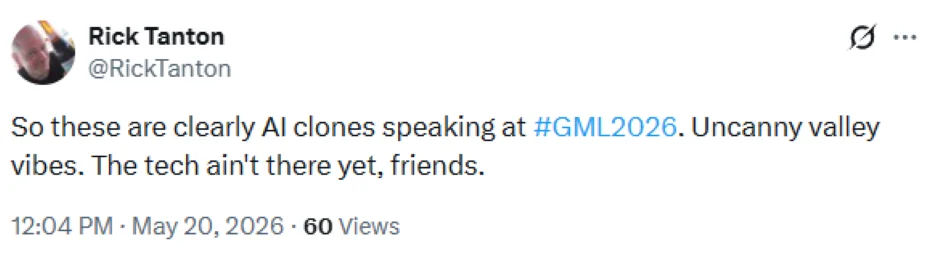
But there will be pushback, too. Consumers haven’t wholly embraced AI-generated creative yet. And many marketers are convinced that we’re not ready for 100% agent adoption.
Stay tuned as we dig deeper into the most important additions and expansions of AI in Google Ads.
About the WordStream Blog
We've been a trusted source of data, news, and strategy for over 15 years. All of our content is written and reviewed by real people: a dedicated team of professionals with decades of combined experience in marketing and advertising for businesses of all sizes.


Add us as a preferred source on Google
Are you wasting money in Google Ads?

Meet The Author
Rob Glover
Rob is the Senior Copywriter at WordStream and LocaliQ, with over 10 years of experience in paid and organic marketing—including SEO, social media, content marketing, and local search. He’s worked across dozens of industries, from SMBs to enterprise, and now specializes in helping businesses build sustainable growth strategies. His work has appeared in Search Engine Land, eMarketer, and more. Outside of marketing, he loves to travel, camp, and mountain bike with his wife and dog.