About the Author


Earlier this year at Google Marketing Live 2025, we got a new phrase: Power Pack. While it might sound like something you would take on a camping trip, it’s actually a combination of campaign types in Google Ads that Google believes will be the next great thing for advertisers.
I’m sure not all of you tuned in to GML this year. (Confession: I didn’t either.) But for those of you not fully focused on the changing landscapes within paid media, we wanted to put together a rundown of what the Power Pack is and how it’s intended to work so you can decide if it’s right for you.
Contents
- What is the Google Power Pack?
- The three campaign types that make up the Google Power Pack
- How the Google Power Pack works
- Considerations and best practices for the Google Power Pack
What is the Google Power Pack?
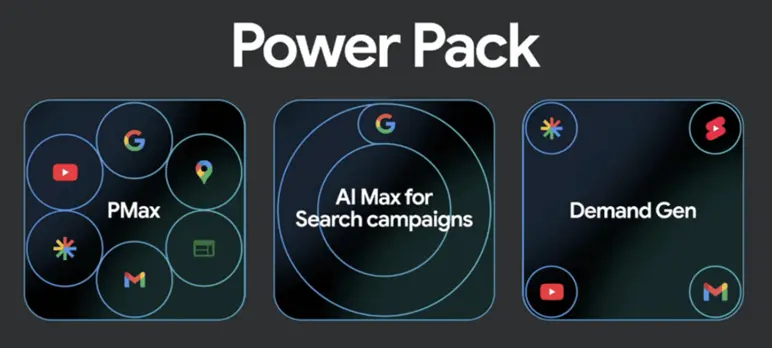
The Google Power Pack is a strategy to combine three different campaign types within Google Ads. Two of these are existing, Performance Max and Demand Gen, and one is continuing to roll out to advertisers, which is AI Max.
Before we can get into the Power Pack itself, let’s go over the campaign types that this strategy is founded on.
❓ Could your Google Ads strategy benefit from the Power Pack? Find out with a free, instant account report using our Google Ads Grader!
The three campaigns that make up the Google Power Pack
The Google Power Pack utilizes three campaigns that work in tandem to achieve your goals. Here are the three campaigns you’d have to have actively running at the same time to use the Google Power Pack strategy.
1. Demand Gen campaigns
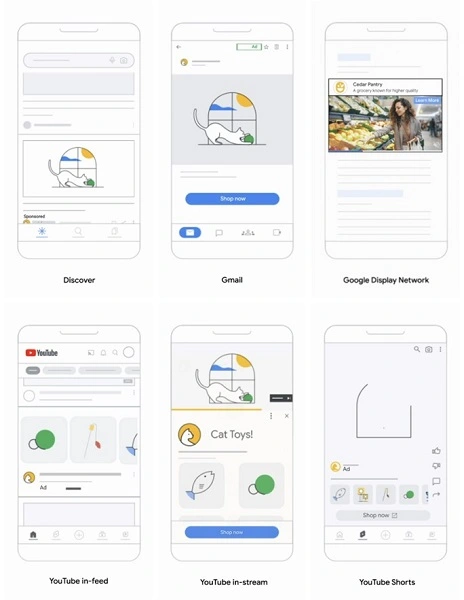
Demand Gen campaigns are designed to do just what their name suggests: generate demand for your business. These are an evolved version of Discovery campaigns and target users across YouTube, Gmail, and the Discover placements.
These campaigns use a combination of lookalikes, custom segments, and first-party data to find your target audience across the Google Network. These campaigns rely heavily on your creatives (video, images, or carousels) and are best for companies that are trying only to generate demand, not necessarily capture it. That will come with other campaign types, according to Google.
2. AI Max campaigns
AI Max is the newest release within Google Ads. Unlike the other two, it’s not really a campaign type. It’s actually a set of controls you can enable within search campaigns to leverage more Google automation and find your target customers.
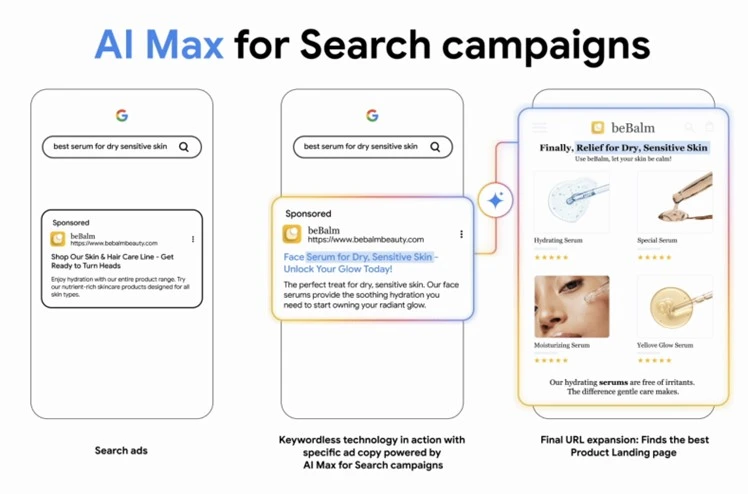
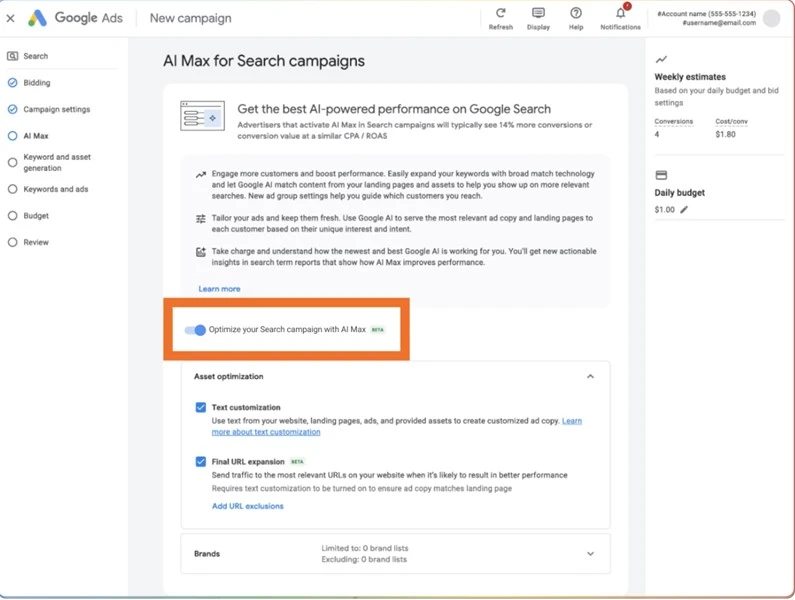
AI Max is (or will be) a simple toggle that lives in the settings for each search campaign in your account. By toggling it on, you’ll be opting into the following:
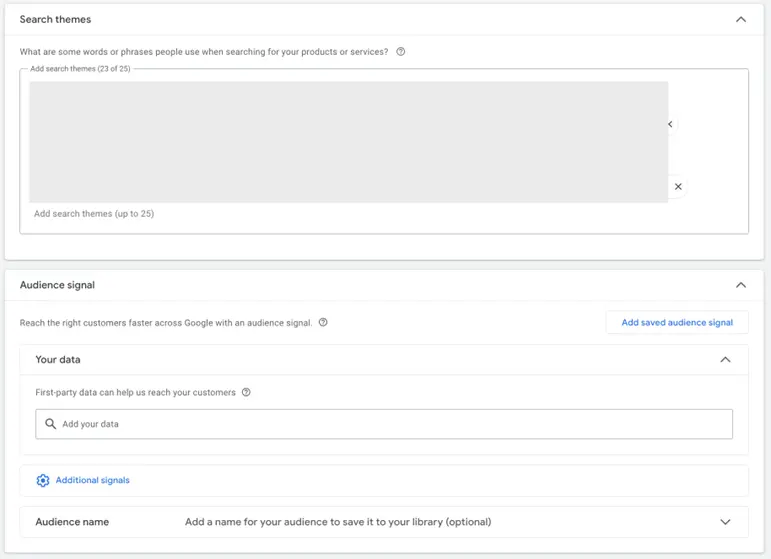
- Search term matching: A new type of expanded matching that combines elements of broad match keywords along with functionality for dynamic search ads, like taking cues from assets and landing page content.
- Final URL expansion: Allows Google to send users to different pages on your site if it deems it to be more relevant than your existing landing page. This is a functionality that lives in Performance Max campaigns.
- Text customization: Uses text from existing ads, landing page copy, and assets along with Google’s generative AI to come up with potentially more customized copy that could be more relevant to the user’s query.
- Locations of interest: Specifies certain locations (at the ad group level) that users might have an interest in, even with keywordless targeting.
Other features still exist in AI Max campaigns that are available in regular search campaigns, such as brand settings and URL inclusions and exclusions for URL expansion.
3. Performance Max Campaigns
Performance Max campaigns are powered by Google’s AI and are designed to reach your target audience across all networks in the Google family. Everything from search to YouTube to the Google Display Network is included.
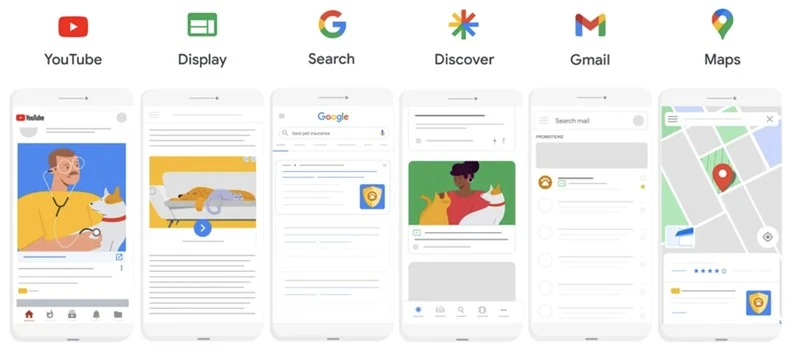
These campaigns are driven by a combination of audience signals, creative assets, and product feeds to deliver dynamic ad creatives to your target audience when Google thinks they’re likely to convert.
Performance Max campaigns are usually easiest to adopt for ecommerce accounts, but we’ve seen success with lead generation campaigns when you follow some simple best practices.
The main goal of Performance Max is to drive conversions for your account across all Google-owned properties, and they require conversion tracking to deliver those results.
How the Google Power Pack brings these three campaigns together
Here’s a quick recap of each campaign type’s objectives:
- Demand Gen creates awareness and interest in your business and products.
- AI Max engages users on Search to capture and convert their intent.
- Performance Max orchestrates full funnel performance at scale.
With each of these campaign types having its own goals, Google envisions them as the ideal complement to each other.
Demand Gen feeds AI Max and Performance Max by constantly generating more awareness and interest for your company. AI Max ensures you’re converting the bottom of funnel intent effectively, and Performance Max reinforces these results across all platforms, regularly engaging users and driving them to take action.
Considerations and best practices for the Google Power Pack
Now, while Google might be really keen on the new Power Pack, that doesn’t mean it’s going to work perfectly for all advertisers. It also doesn’t mean the setup will take care of itself. You, as the advertiser, need to do some work to try and give this machine the best chance of working.
Here are some things to consider, along with best practices for using Google’s Power Pack.
Conversion tracking is non-negotiable
While Demand Gen is designed to generate awareness and will only occasionally drive conversions, AI Max and Performance Max rely heavily on these success points to know when and where to target your customers.
Both campaign types will leverage the Smart Bidding strategies of Maximize Conversions, Maximize Conversion Value, Target CPA, or Target ROAS. Without conversion tracking in place (and ideally 30-50 conversions flowing through your account per month), you won’t be able to see the results you’re looking for with these campaign types.
💡 Improve your Google Ads strategy with our free, fool-proof guide to Smart Bidding to learn how to start using it ASAP!
Creatives are more important than ever
All of these campaign types rely heavily on compelling copy and creatives to entice and convert your customers. Without strong creatives, even with dynamic serving, Google will have a hard time getting returns.
Input on targeting is needed
While the successes from conversion tracking will help guide who Google serves your ads to, it’s still strongly recommended for you to take advantage of all targeting inputs you can. This could be first-party data in the form of uploads or third-party data based on your website pixels and Google Analytics 4 accounts.

You can’t set it and forget it
Just like everything else in advertising, the landscape is always changing, and you never know what strategies will and won’t work for you until you try them. Additionally, what works now will almost certainly not work forever, and even though it seems strange, tests that fail now could perform really well in the future. Keep your creatives fresh, add new audience inputs, leverage new features, and always keep your strategy adapting to the environment.
Start taking advantage of the Google Power Pack today
In Google’s new Power Pack, each campaign type has a role to play in developing a fully funnel marketing machine for your business. While each of these campaigns can perform well on its own, Google thinks the real power is in leveraging them together. Feed the automation well, and it could help drive your business and change your digital marketing approach. For more ways to take advantage of the Google Ads Power Pack and more, see how our solutions can help!
About the WordStream Blog
We've been a trusted source of data, news, and strategy for over 15 years. All of our content is written and reviewed by real people: a dedicated team of professionals with decades of combined experience in marketing and advertising for businesses of all sizes.


Add us as a preferred source on Google
Are you wasting money in Google Ads?

Meet The Author
Michelle Morgan
Michelle is the Co-Founder of Paid Media Pros. She has twelve years of experience in all aspects of PPC and brings a wealth of experience developing and executing campaigns across search, social, and display platforms in both agency and in-house settings. Her experience gives her an especially well-rounded and holistic view of the paid search landscape—one she shares regularly as an influencer, author, and industry speaker at events like SMX, HeroConf, and Pubcon, as well as the Paid Media Pros YouTube channel.