About the Author


Your business needs customers. Customers can’t buy from a business they’ve never heard of. Promotion is how you close that gap. The competition for attention is real: the SBA’s Office of Advocacy counts more than 36 million small businesses in the US as of its 2025 profile, most of them fighting for the same local eyeballs you are.
The options can feel endless (read: overwhelming). The good news is you don’t need all of them. In the businesses I’ve worked with, 5-8 tactics executed consistently beat 15 tactics executed halfway, every time.
In this article, I’ll cover the 30 most effective ways to promote your business, whether you have no budget, a limited budget, or some wiggle room. I’ve also included tools to help you pick the right tactics for your situation and a 30-day plan to get started.
Contents
- How to pick the right ways of promoting your business
- How to promote your business on Google
- How to promote your business using online directories
- How to promote your business on social media
- How to promote your business in your community
- Other effective ways of promoting your business
- How to promote your business in AI search results
- How to track which promotion tactics are working
- How long does it take to promote a business?
- Your first 30 days: where to start
- 8 common business promotion mistakes
- How to advertise your business: The full list
- FAQs
How to pick the right ways to promote your business
To pick the right ways to promote your business, match each tactic to your budget, your available time, your business type, and how fast you need results, then commit to 5 to 8 tactics for at least 90 days. Spreading a small budget across everything is the most reliable way to make nothing work.
A useful way to sort the options is effort versus expected impact. The high-impact, low-effort quadrant (your Google Business Profile, emailing your existing list, review collection) is where most small businesses should start. The high-impact, high-effort quadrant (Google Ads, SEO, email automation) is worth the work but needs real commitment.
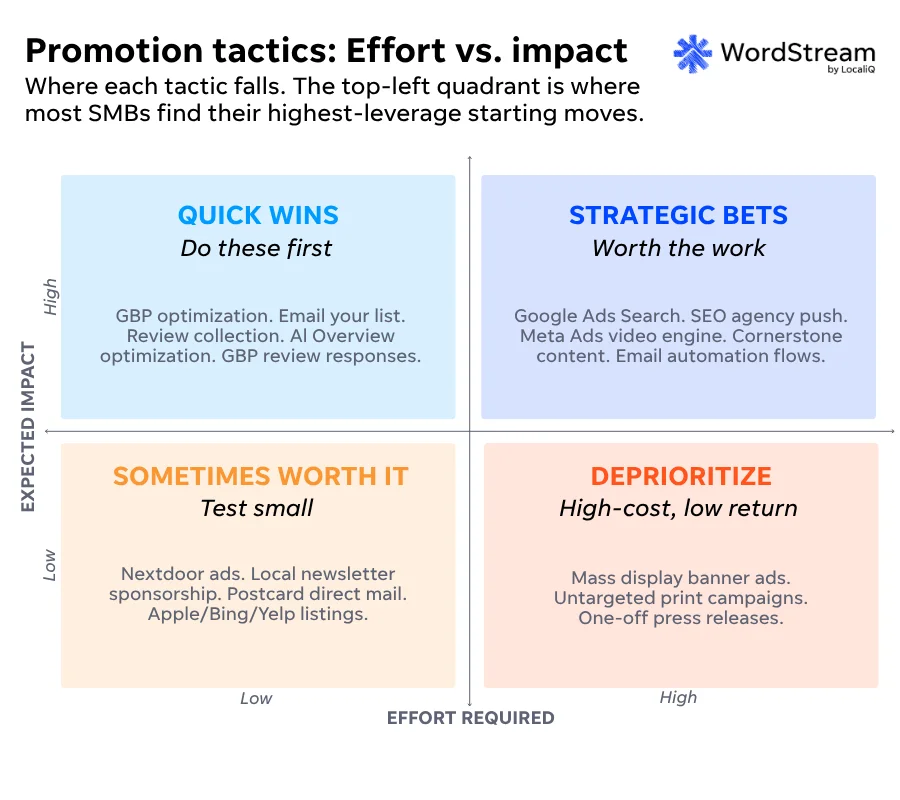
Answer four questions in the builder below, and it will rank the tactics that fit your situation:

Promotion Plan Builder
Answer four questions. Get a ranked shortlist of the promotion tactics that fit your budget, time and business.
Treat the output as a starting shortlist, not gospel. You know your market better than any scoring model does.
👀 Looking for more ways to promote your business? Download now >> 30+ Ways to Promote Your Business (On Any Budget!)
How to promote your business on Google
Not every business needs to do SEO and run Google Ads, but most businesses could benefit from some form of promotion through Google. StatCounter puts Google at roughly 90% of global search market share, which means it’s where your customers are already looking for solutions. Here are the best ways to use Google to get your name out there.
1. Create and verify your Google Business Profile
Your Google Business Profile (Google’s term for your Google listing) is what allows your business to show up in Google Maps results, the local section of Google Search results, and, when someone types in your business and location, the right-side Knowledge Panel in Search results. As Google keeps getting better at catering its results to the searcher’s location, this free listing should be a top priority.
The key to using your Business Profile to promote your business is to verify ownership of your listing through your free Google Business account. Once you have ownership, you can optimize your listing to show up higher in search results and for more relevant searches.
If you’re ranking on Google Maps or showing up in the Local Pack of regular results pages (this is very doable), your business is basically promoting itself 24/7. Even better, you can publish posts directly to your Google listing, putting attractive promotions in front of your audience at a time when they have high intent.
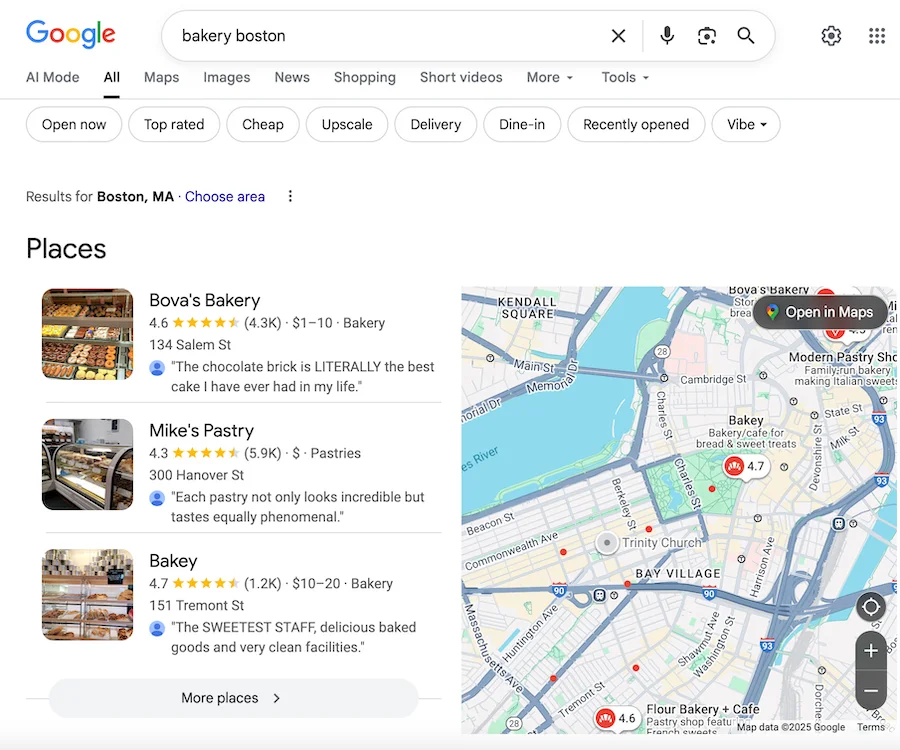
For a deeper dive into this very free, very effective method of promoting your business, visit our Google Business Profile optimization guide.
2. Get a website
A website is a must-have piece of marketing collateral no matter how old-fashioned your business or clients may be. Your website is the go-to for current and prospective customers. Even if they find you on social media or Google, they will want to go to your website and, like your Google listing, it serves to promote your business around the clock.

A good business website does two jobs. It tells the story of your business: what you offer, how to contact you, and what makes you different. And it’s the measurement hub for everything else.
When you run ads, you need landing pages, which live on your website. When you post on social media, the post should link back to your site. With all of your channels flowing into your website, analytics can show you which strategies are working best.
There are free ways to get a basic site up, but if you’re serious about promoting your business, you’ll almost inevitably want a professionally managed website including your own domain name, a clean and fresh look, and the ability to add features as you grow.
3. Implement search engine optimization
It’s one thing for you to promote your business; it’s another thing for Google to promote your business. SEO (search engine optimization) is the set of practices that align your site with how Google ranks results. And because Google’s systems have evolved to reward what actual searchers find useful, optimizing for search engines is mostly optimizing for searchers, particularly the ones looking for what you offer.
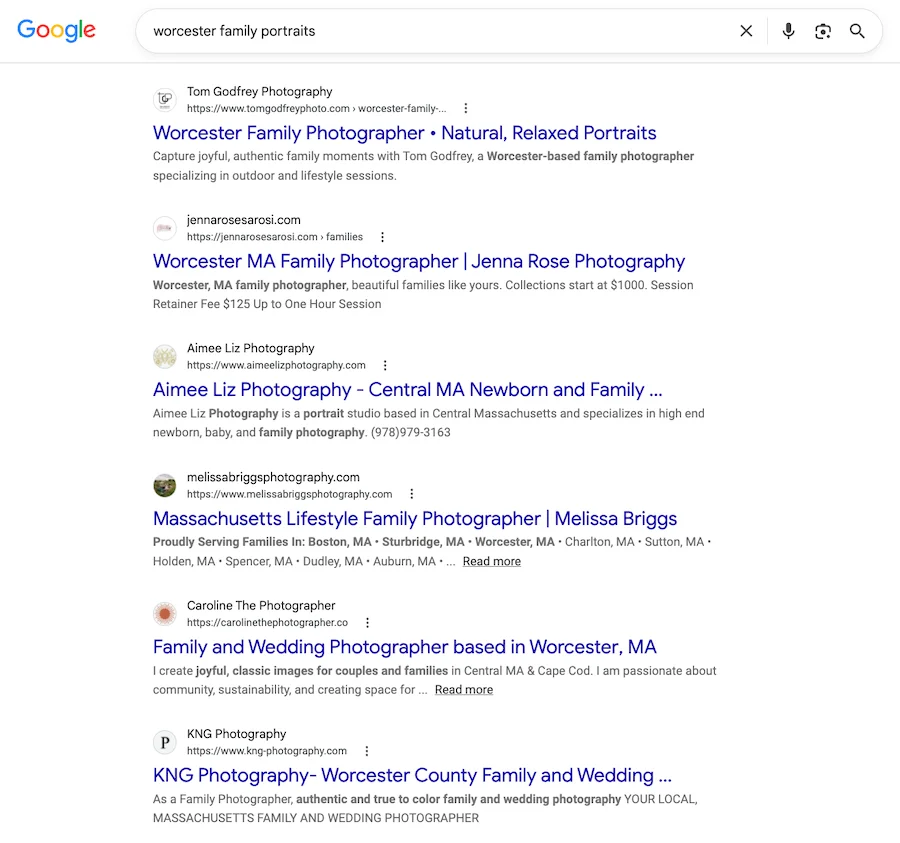
Every result here is for a local business website.
SEO isn’t one tactic but many that work together. Because Google’s location-based results are strong, a local business has a real shot at page one without spending a dime (aside from the website itself). SEO tactics include:
- Adding relevant keywords (industry- and location-based) to specific places on your website.
- Producing original, high-quality content regularly, with tagged images.
- Maintaining fast page loads and site security.
For more SEO tips, check out our post on the top Google ranking factors and how to optimize for them: The Most Important Google Ranking Factors (+How to Optimize for Them).
When your business ranks high in results, Google is promoting it for you to the exact people actively searching for what you sell. It doesn’t get much better than that.
🔎 Get updated tips for your SEO strategy with our free guide >> How to Do SEO Right—Right Now!
4. Create a business blog
Content is such an important driver of SEO that it deserves its own slot. A blog is not LiveJournal for businesses. You can post about milestones and events, but a lucrative business blog produces educational content, in your brand voice, around the questions and terms your ideal customers are typing into Google.
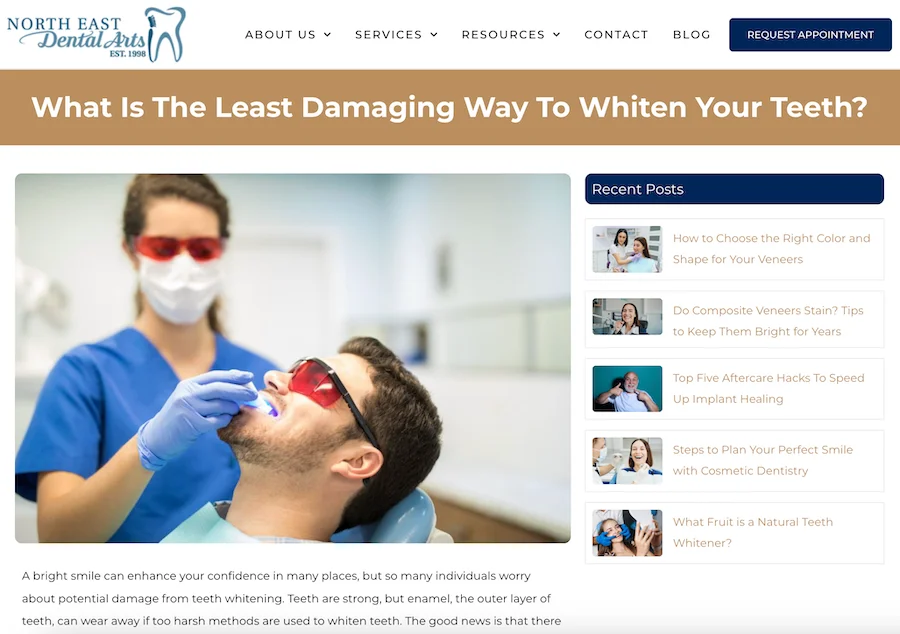
Those questions and terms are keywords. The more quality content you produce targeting them, the more chances your business has to show up in search results (and now in AI answers too, which I’ll get to later in this post). Great blog posts can be:
- How-tos and instructional posts
- Lists of strategies and resources
- Q&A or interview write-ups with an industry expert
- Thought leadership posts
- Example and template posts
- Guest posts
- Customer testimonials or case studies
- Seasonal posts
For help finding keywords and creating SEO-friendly blog posts, start with WordStream’s Free Keyword Tool, our guide to creating SEO content, and our SEO checklist.
5. Share your content
A blog that shows your expertise, approachability, and genuine desire to help your audience is the perfect promotional tool. So don’t just publish posts. Promote them on social media, in email newsletters, or as downloadable guides that collect leads. If you produce content with shareability in mind, other credible sites will mention and link to your content, promoting your business for you.
One technical note: the more traffic you get, the more page speed matters. For large or growing sites, a CDN (content delivery network) keeps load times down; Cloudflare’s free tier covers most small business sites.
6. Run Google Ads
SEO is one of the best long-term strategies, but it can take weeks or months to pay off. If you have the budget and want immediate exposure, Google Ads is the way to go. Google Ads appear at the very top of search results pages, above organic and local listings.
Google is the most popular place to run search ads, not just because it has the largest share of search traffic but because of its flexibility, ad-building features, and detailed performance reporting. Mastering it takes time and plenty of trial and error, but an optimized campaign is well worth the investment. You can run text ads on the Search Network or banner ads on the Display Network.
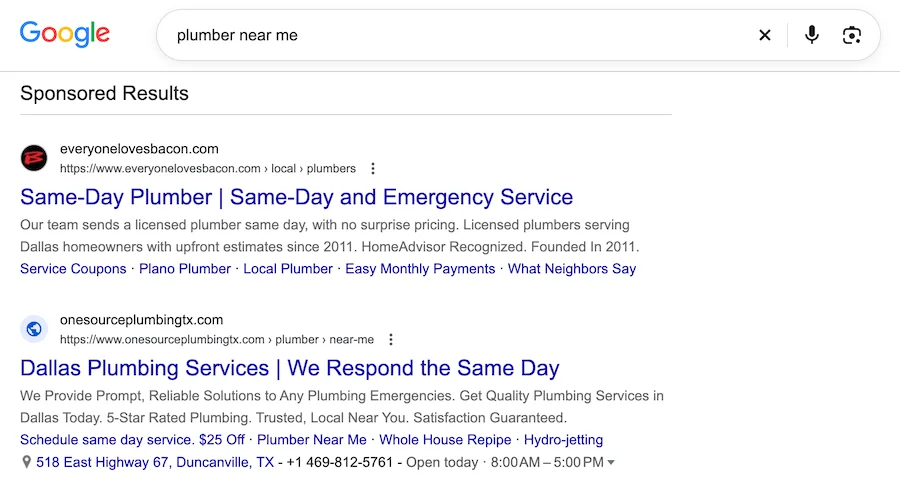
If you’re ready to get started, follow our step-by-step tutorial on how to run Google Ads. Already advertising on Google? See how your campaigns are really performing with our Free Google Ads Performance Grader.
How to promote your business using online directories
Consumers routinely visit online directories to search for and vet businesses. These sites tend to be high-traffic, long-standing domains, so your profile page can show up on page one of Google through them. Listings are quick to create and promote your business to nearby, high-intent customers.
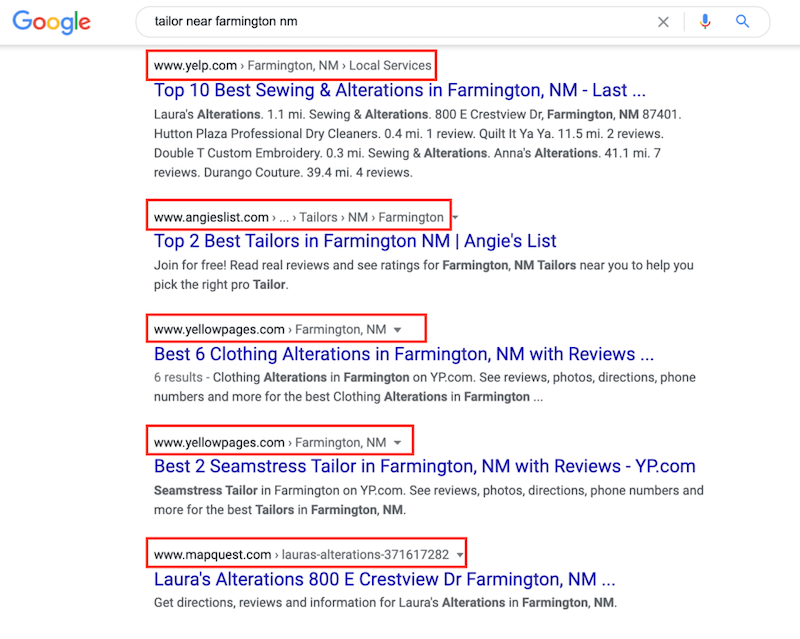
7. Create listings on the major directories
Smaller directory sites pull data from larger ones, so creating listings on the major sites means you’ll likely start showing up on smaller directories automatically. Begin with these; all are free with paid upgrades available:
- Google (see tactic #1)
- Yelp
- Applicable niche directories like TripAdvisor and Angi
- Better Business Bureau
- Glassdoor
- Foursquare (the consumer app is gone, but its Places data still feeds thousands of other platforms)
- Yellow/White Pages
- Bing
For a deeper dive, check out our post on the top free local listing sites.
8. Optimize your listings
It’s one thing to create a listing, but it’s another to optimize it. Fill out every field, add photos, and collect reviews to improve your appeal and rank above competitors in searches.
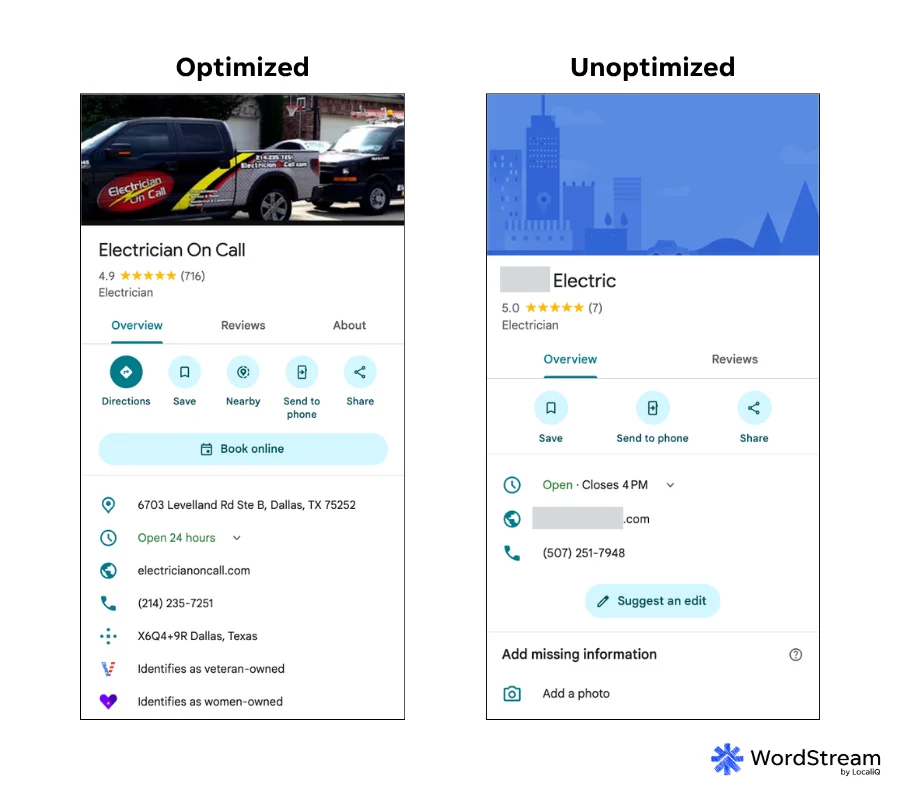
Make sure the information in all of your listings matches the information on your website; inconsistencies can cause the Goog to raise an eyebrow about your trustworthiness. And monitor your listings to fix inaccuracies, which creep in when listings auto-populate.
9. Get online customer reviews
Word of mouth is one of, perhaps the most, powerful way of promoting your business to the right people. Testimonials on your own website are great, but reviews on official platforms like Google, Facebook, and Yelp are even better.
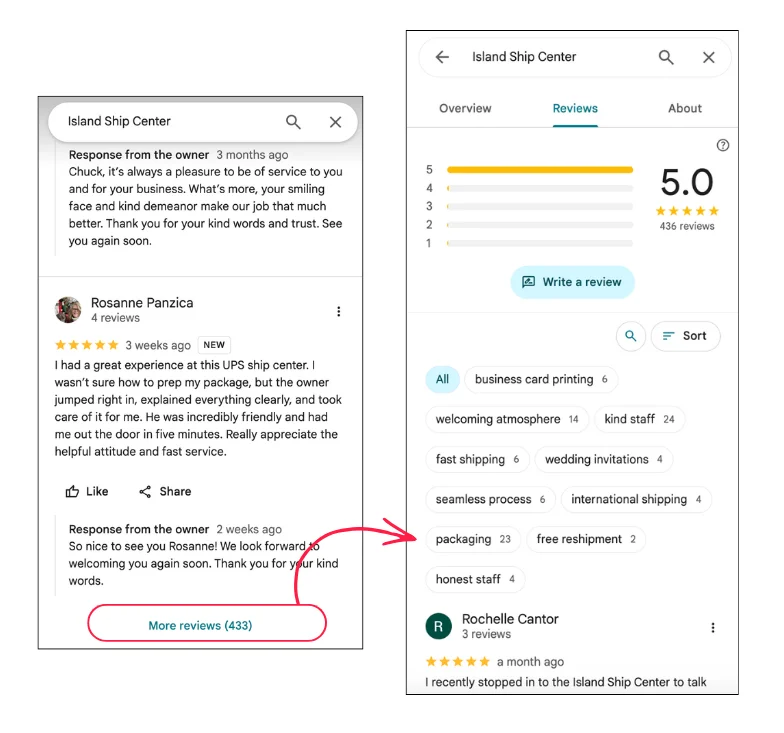
These platforms increase your exposure. And because they have measures in place to prevent fake or spam reviews, people trust reviews there more than anywhere else. Reviews are also a major ranking factor for local search results.
To get more reviews, start with our posts on how to ask for reviews and the tried-and-true tactics for getting more Google reviews.
10. Monitor and respond to reviews
Many directories let anyone add a listing, so your business may already be on a site collecting reviews without you. Claim your listings wherever possible and monitor them.
Responding to reviews is itself a promotion tactic: you can resolve (and sometimes reverse) negative reviews. The way you answer all reviews also shows potential customers what it’s like to do business with you.
⭐️ Get all the tips you need to collect more reviews in this free guide download >> How to Get More Reviews: 8 Tips to Boost Ranking, Reputation, & Revenue
How to promote your business on social media
Social media is another free way to get the word out. The most-used business platforms are Facebook, Instagram, LinkedIn and X. Niche platforms like Pinterest, Reddit and TikTok can matter more than the big ones depending on your audience.
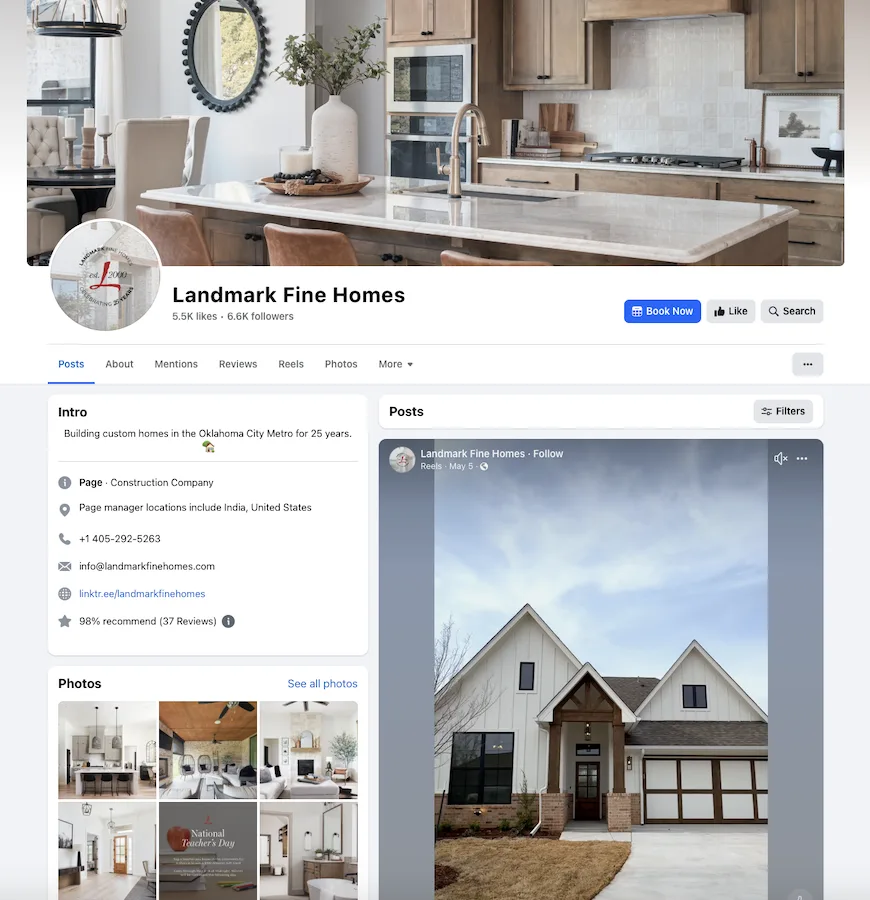
11. Prioritize Facebook
Facebook remains one of the two or three most-used social platforms on earth by any counting method, per DataReportal’s global social media data. It’s a solid way to keep in touch with existing customers and reach new ones. The basics:
- Create a Facebook business page with your contact information and a CTA (call to action).
- Use Facebook events to promote and maximize attendance to your events.
- Run Facebook live sessions of tutorials or behind-the-scenes sneak peeks.
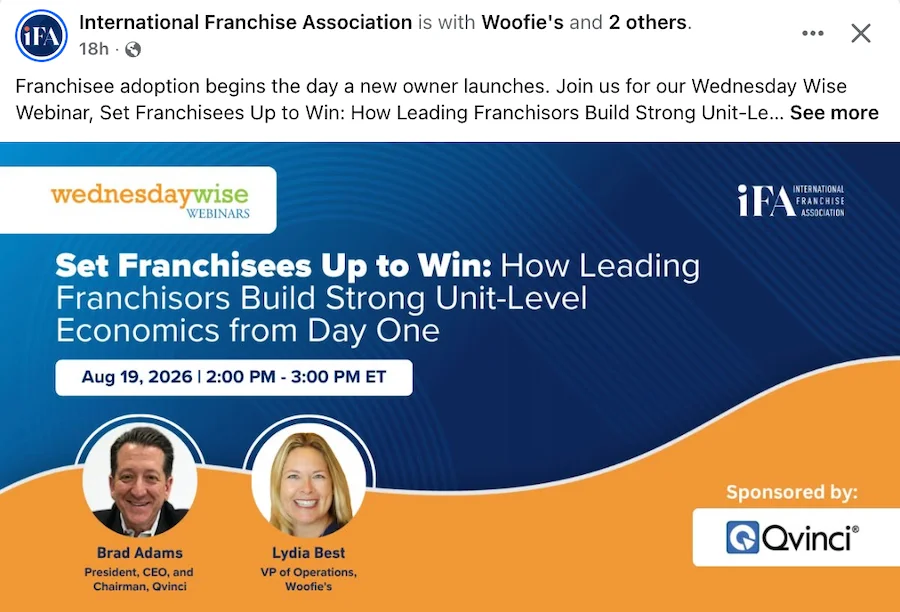
And don’t forget Facebook ads. Facebook advertising reaches highly specific audiences, since you can target by profile information like occupation and interests.
For more, see our Facebook marketing tips for small businesses and our roundup of free Facebook ads courses. Grade existing campaigns with the Free Facebook Ads Performance Grader.
12. Connect and contribute on LinkedIn
LinkedIn has become more than a place to post your resume. It’s a place to join group discussions, connect with potential customers, form partnerships, and do general online networking. Potential customers can check out you or your company before doing business with you.
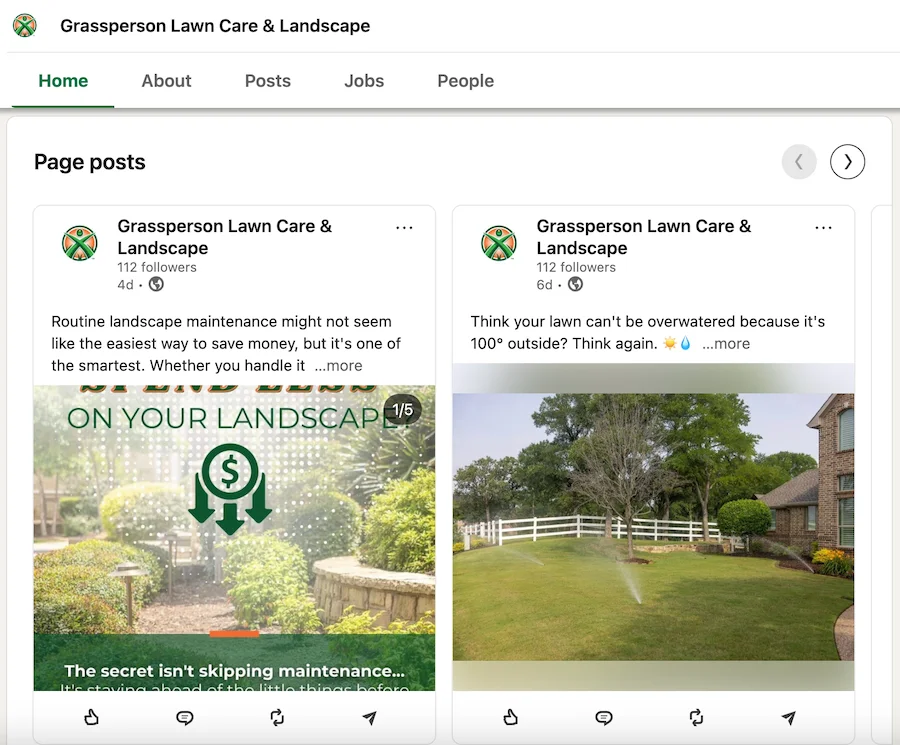
You can also promote your business indirectly by contributing perspectives in group discussions and linking to relevant content on your website. Just make sure you’re not always promoting your own content. The 80/20 rule applies: mostly help, occasionally pitch.
13. Upload videos to YouTube
Video marketing is a great way to promote your business. YouTube lets you do it for free. A quick overview video of your business gives you a sales tool for your homepage and prospect emails. Educational videos, tutorials, and how-tos get you discovered by people searching for what you offer. Videos often show up at the top of results for niche searches.
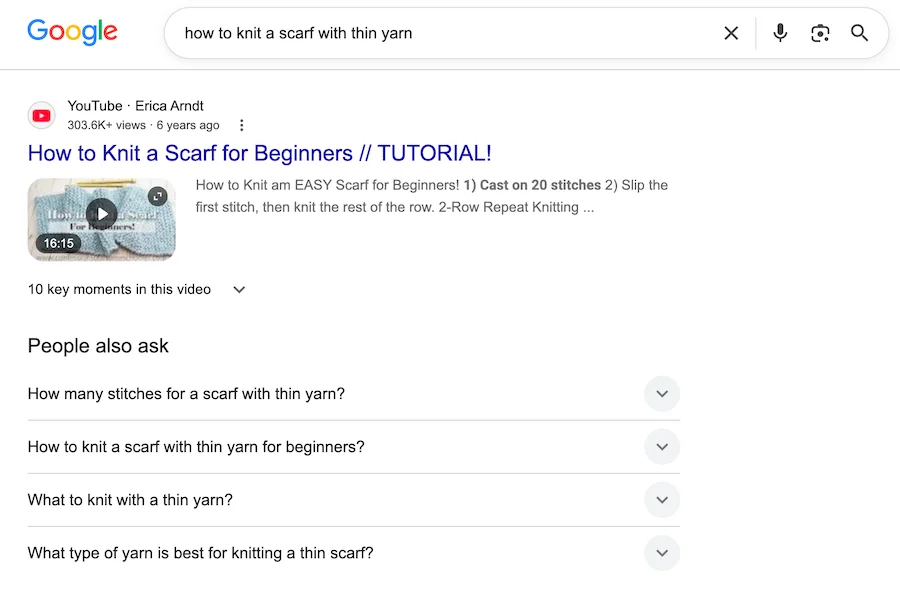
There are plenty of affordable options for making videos; check out our post on the best video editing software for beginners.
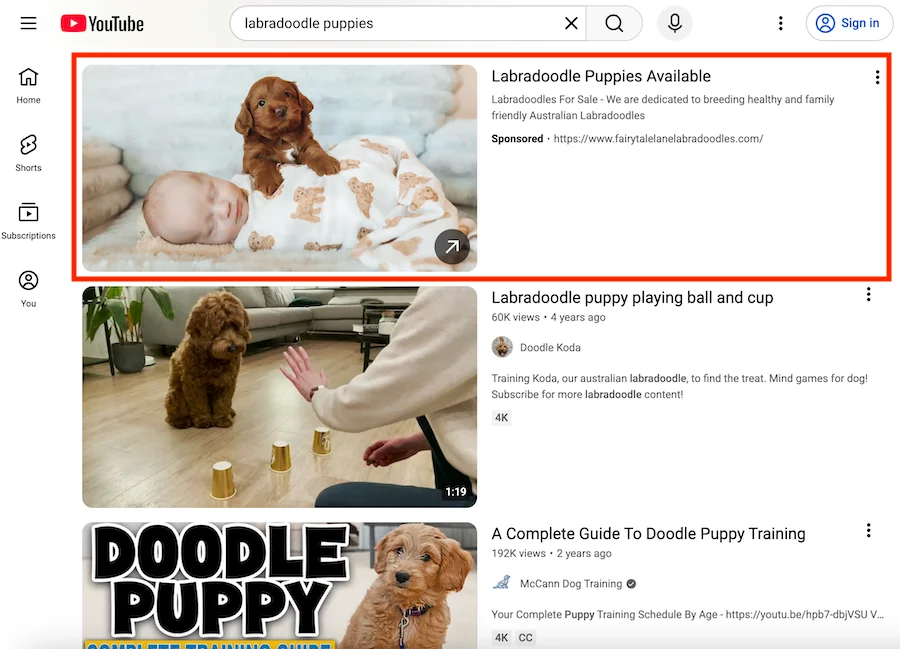
14. Advertise on YouTube
As with the other paid strategies in this post, YouTube advertising is an investment that pays off if it’s done right. You run video ads that play before videos in relevant categories or target high-intent searches in your category.
15. Engage your audience on Instagram
Instagram is one of the three or four most-used social platforms worldwide, depending on which count you use, per DataReportal. With its range of formats (feed posts, Reels, Stories, live sessions, Story Highlights), there are plenty of ways to engage your audience:
- Promote your sales and deals with hashtags to expand your reach.
- Run contests with a free or discounted product to generate buzz (and collect leads).
- Offer advice and tutorials to stand out as a go-to resource.
For more ways to promote your business on Instagram, check out our Instagram marketing tips.
16. Share on X (formerly Twitter)
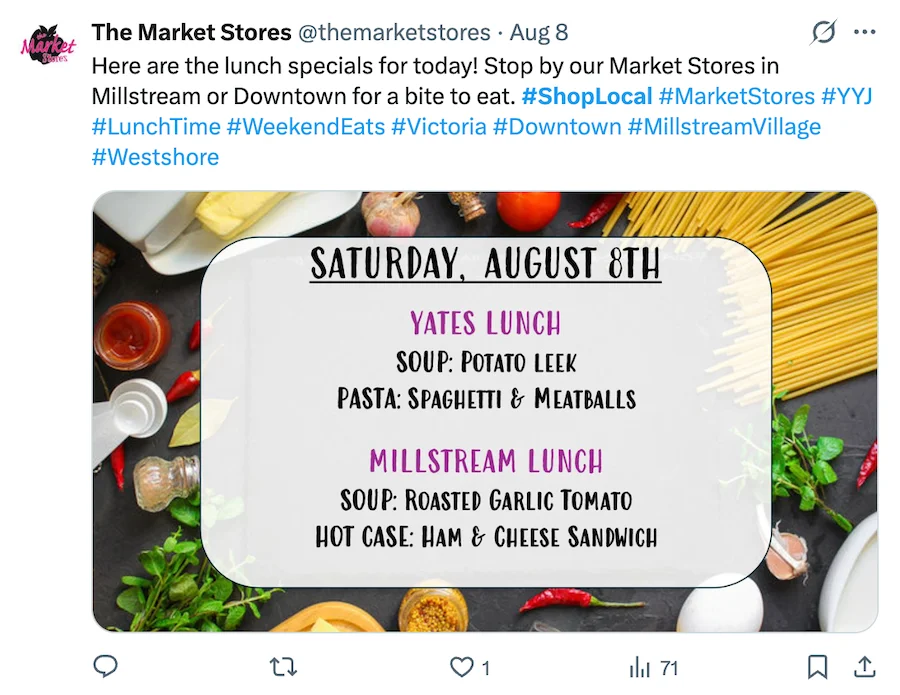
X can still work as a free promotion channel, mainly if your customers already spend time there: think media, tech, sports, finance and local news niches. It takes consistent activity to build an audience, but posting your products, deals and updates costs nothing. Local businesses can use it to invite nearby customers to stop in.
17. Give Pinterest a shot
Pinterest is fundamentally about sharing images, but the fact that your images link back to your website makes it a real traffic channel. It’s especially powerful for ecommerce businesses reaching a predominantly female audience. If that fits your profile, get active on Pinterest.
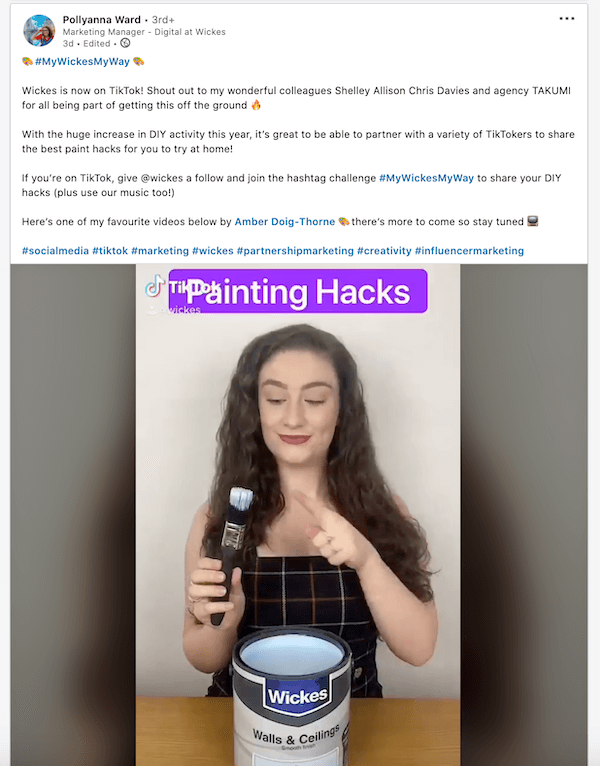
18. Try out TikTok
TikTok’s advertising tools reach an estimated 2.21 billion users, more than X, LinkedIn, Snapchat, or Pinterest, per DataReportal.
Its editing tools make compelling short videos easy. It’s no longer just a young person’s platform. Jump on to post how-tos, tutorials, or behind-the-scenes videos, then cross-promote your TikTok content on your other networks.
19. Join online communities
One of the best ways to get a leg up is to offer a hand up to others. Join communities relevant to your business on LinkedIn, Reddit, and Facebook. Offer good advice when people have problems or questions. (Make sure your profile points back to your business.)
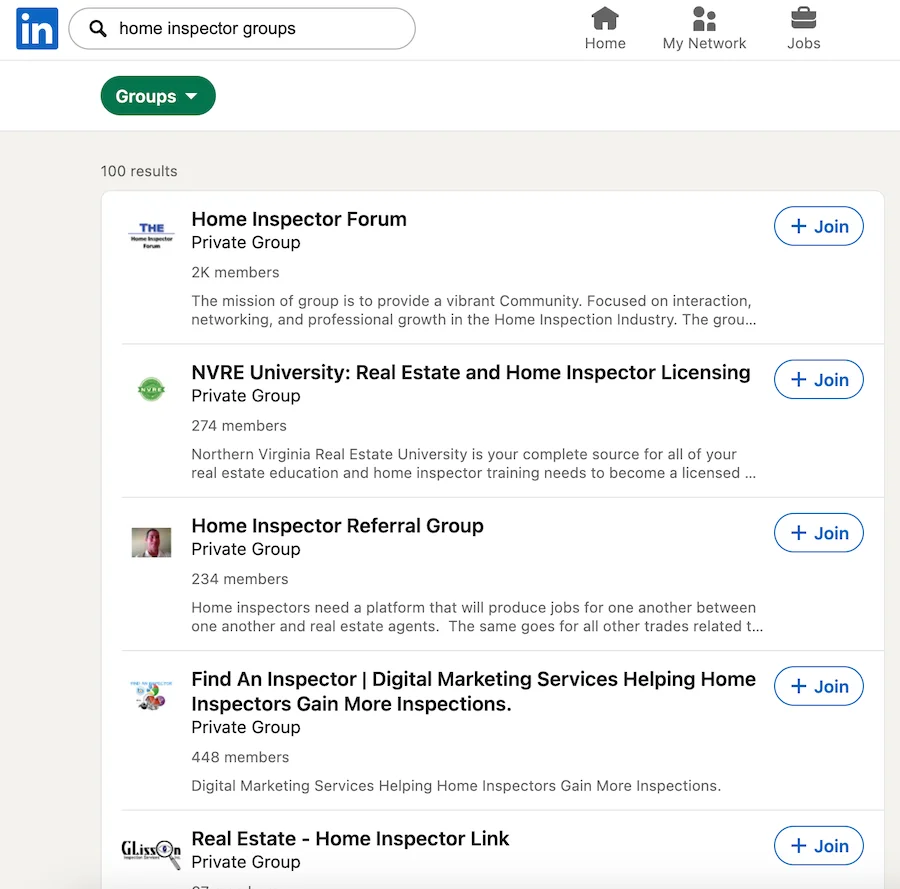
This builds genuine reputation and connections. And while you’re helping one person, a thousand silent others see your name and what you’re doing.
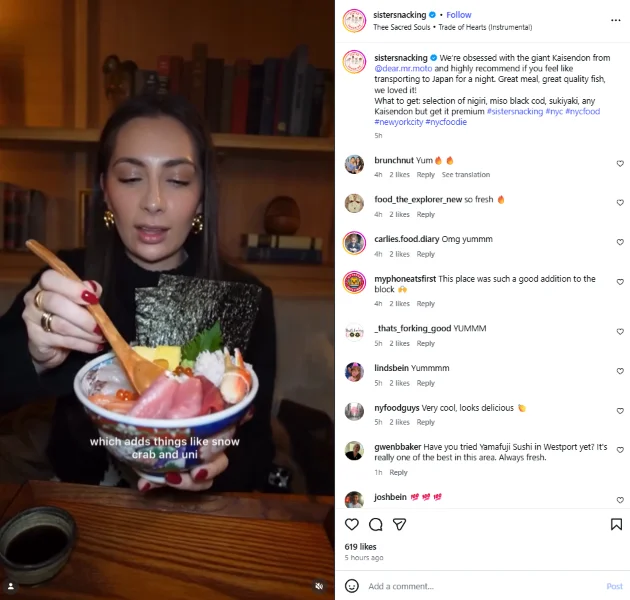
20. Try an influencer marketing collaboration
Influencers are celebrities within your niche: highly respected, widely followed, and deeply trusted. Getting mentioned or featured by one can promote your business to a large, relevant audience.
It’s a careful strategy, though. Before reaching out, familiarize yourself with their accounts across networks; comment on, like, and share their content; and approach with a specific ask plus something of equal value in exchange. You might offer a month of free classes in exchange for a review or write a high-quality guest post for their blog that benefits their audience and earns you a backlink.
21. Invest in social media advertising
Paid social puts your business in front of a precisely targeted audience. The pool is enormous: DataReportal counts 5.79 billion social media user identities worldwide as of April 2026. Done right, it delivers:
- Familiarity: Meet people on the channels they use most.
- Cost-effectiveness. Advanced targeting shows your ads to only the most relevant audience.
- Supporting content. Your organic posts back up your sponsored posts.
- Brand loyalty. More followers means community around your business.
- Analytics: Know what’s working so you can allocate your budget accordingly.
How to promote your business in your community
For local businesses, the community is a critical component of success. Retailers and restaurants understand this implicitly. Even businesses focused on a wider market have real attachment to the places where they operate. Here’s how to market your small business locally.
22. Strive to get local press
Pitching your business to the local press feels intimidating, but local blogs, newspapers, and online publications are always hunting for fresh content.
Reach out to local news sources and see if you can contribute an article: a thought leadership piece, a list of resources or a newsworthy update about your business. If your story is compelling enough, someone else may write the feature for you. You can also write about an event you’re hosting or invite a local writer to attend free in exchange for a recap.

With more budget, consider a PR partner or firm. With less, you can publish your own press releases through services like PRWeb; they sometimes get picked up by outlets and the links help your SEO. You can learn how to write a great press release in our guide
23. Form partnerships
Partnering with non-competitive businesses that serve the same clientele is a great way to promote your business in your local network. Once the relationship exists, cross-promote through each other’s email lists, in-store flyers, coupons, or social accounts. Get creative to maximize the promotional value.
24. Network, network, network
Attending local networking events raises your presence in your community. It works better for some businesses than others: if you serve other local businesses or consumers directly, networking pays off much faster than if you sell products online. But every kind of networking helps, even if it’s just trading ideas with other owners.
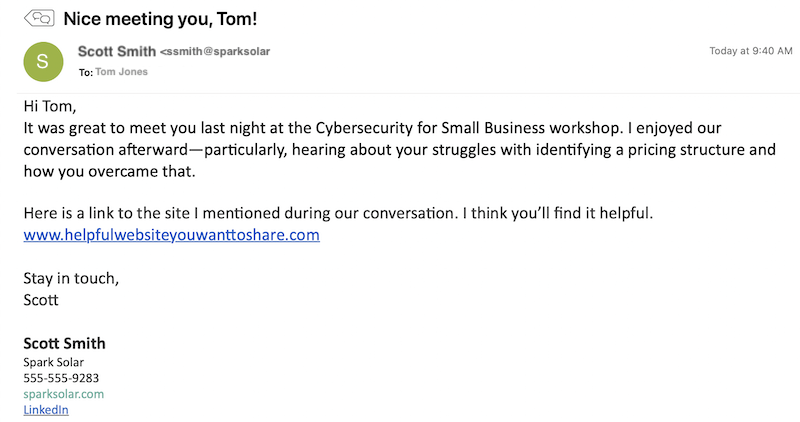
And if you do partake (I’m not trying to tell you how to live your life, but you should), do not miss out on our nine networking email templates, like the one below:
25. Attend, host, or sponsor local events
Even in an increasingly digital world, events in your community are a great way to promote your business while strengthening your connection with local customers.
Run a class at your location, teach one at a school or library, or simply host a fun seasonal or family-oriented event. Make the time do double duty: have a friend film you teaching, then put that video on your website and YouTube.
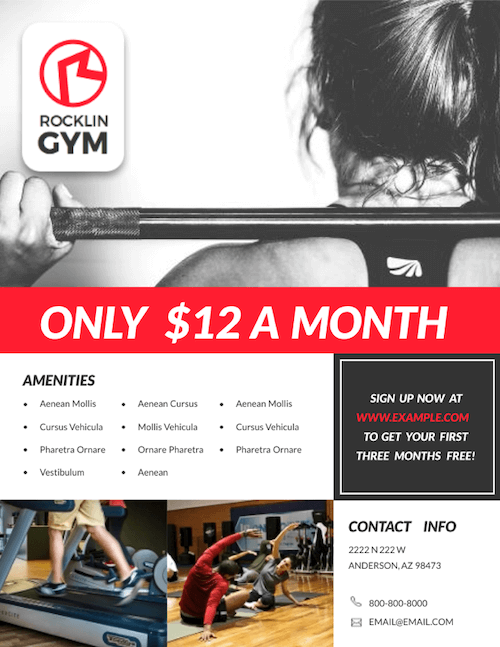
26. Try out direct mail
Despite digital’s dominance, postcards, flyers, and letters can still promote your business effectively to nearby customers. The challenge is targeting: you can’t narrow a mailing the way you narrow an ad audience, so volume matters. The benefit is repeatability; once a mailer works, it tends to keep working.
Also consider small gift packages for loyal customers during the holidays. They come back. And they talk.
27. Advertise locally and offline
Newspapers, magazines, radio, and even television remain traditional paid channels. If you go this route, the key is tracking: use a dedicated phone number or URL on every placement so you know what it produced. For more, head to our local advertising ideas for small businesses.
Other effective ways of promoting your business
These three are last but not least. They just didn’t fit neatly into the groups above.
28. Attend trade shows
If you target a national audience and sell to retailers, a big trade show might make sense. Unsure of the value? Attend as a visitor first. If you have a good relationship with a company already exhibiting, they may let you hang out in their booth, where you can observe, learn, and maybe even promote your business free of charge.
29. Run email marketing campaigns
Email marketing has been around for ages, and it remains the workhorse: Litmus pegs average email ROI at $36 for every $1 spent, the highest of any major channel. Email works because:
- People like to stay informed, and they check email constantly.
- Reporting is detailed. You know exactly who opened and clicked.
- Segmentation works. Targeted, personalized emails outperform blasts.
- The platforms are easy. Modern email tools handle the heavy lifting.
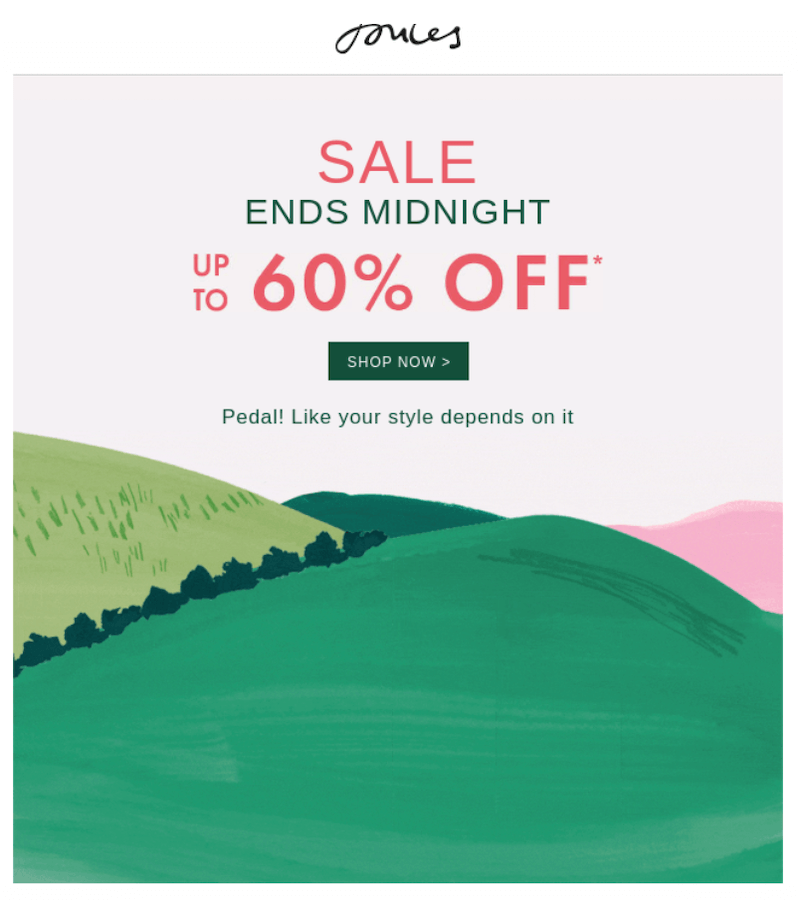
For more tips on using email marketing, check out our post on writing promotional emails people do not delete.
30. Make advocates out of your employees
Good leadership and proper treatment of your employees naturally turns them into advocates. Hold brainstorm sessions, encourage employee blog contributions, get them involved in local events, run family-and-friends promotions. Value them, and they’ll value the business they work for. Then equip them with news and tools to spread the word effortlessly.
How to promote your business in AI search results
To promote your business in AI search results, publish content that directly answers the specific questions your customers ask, keep your Google Business Profile and reviews current, and add FAQ (frequently asked questions) content with structured data, because tools like Google’s AI Overviews and ChatGPT assemble answers from retrievable passages and trusted business data.
This is the newest channel on this list, and it’s compounding fast. A few practical moves:
- Answer one question per page section. AI systems retrieve passages, not pages. A clear heading plus a direct 40-to-60-word answer is the retrievable unit.
- Keep your business data clean. AI assistants lean on the same listings and reviews covered in tactics 1 and 7 through 10. An unclaimed or inconsistent profile can’t be recommended.
- Show first-hand expertise. Named authors, real photos, and specific numbers get cited; generic summaries don’t.
AI answers are probabilistic, so treat this as a durability play rather than a faucet you can turn on. If you want to go deeper on how AI systems break a question into sub-queries and pick what to cite, I wrote up the mechanics in our query fan-out guide.
🛠️ Get everything you need to know about showing up in AI search in our free guide: The AI Search Toolkit >>
How to track which promotion tactics are working
To track which promotion tactics are working, set up conversion tracking before you spend, tag every campaign link with UTM parameters, and ask every new customer how they heard about you. If you can’t tell which tactic produced which customer, you can’t scale what works. Every dollar after that is guessing.
The minimum viable stack for most small businesses:
- Conversion tracking in Google Ads and GA4 (Google Analytics 4) for anything paid.
- UTM parameters on every link you place in an email, ad, listing, or sponsorship.
- A “how did you hear about us?” field on your forms and in your intake script. Low-tech, surprisingly accurate.
Then estimate what your chosen mix should produce, so you have a benchmark to judge it against:
Promotion Tactic ROI Estimator
Select 3 to 5 tactics, enter your average customer value and monthly goal, then see the projected effort, cost and customer acquisition for the mix.
SELECT TACTICS (3 TO 5 RECOMMENDED)
Review the numbers monthly. Cut the lowest performer, double down on the highest, and keep the mix at 5 to 8 tactics.
How long does it take to promote a business?
Business promotion pays off on three time horizons: quick wins like Google Business Profile optimization and emailing your list show results in 0-2 weeks, compounders like short-form video and email automation take 2 weeks to 3 months, and long bets like SEO and cornerstone content need 3 to 12+ months.
Build a mix across all three bands. Quick wins fund the patience to wait for the compounders and long bets.
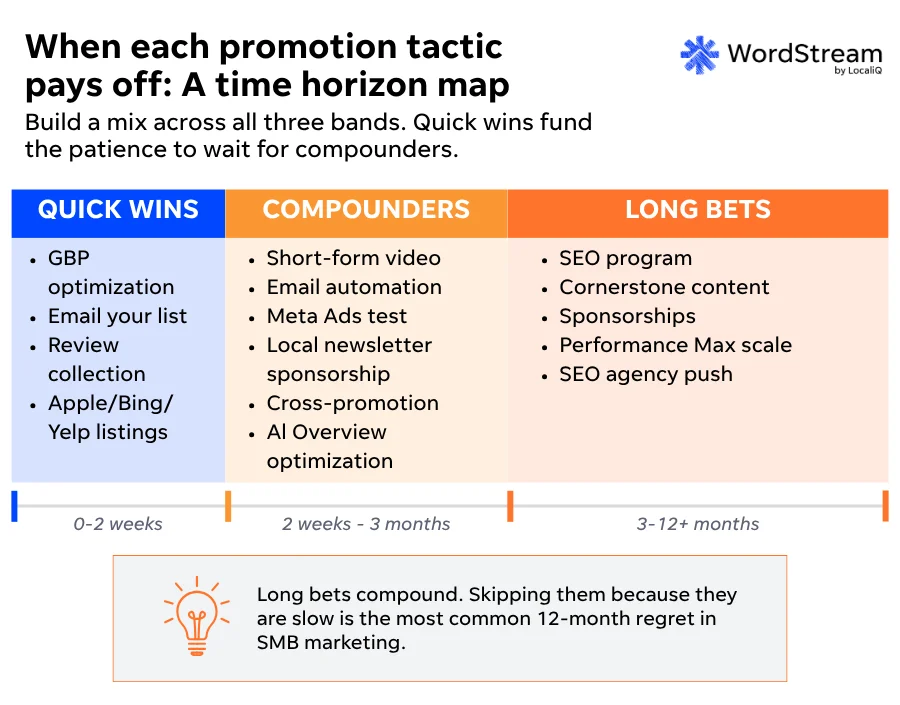
The most common 12-month regret I hear from small businesses is skipping the long bets because they’re slow. The second most common is quitting a tactic right before its payoff window. Match your commitment to the tactic’s timeline before you launch, not after the first slow week.
Your first 30 days: where to start
The best place to start promoting your business is a 4-week starter plan: claim your free foundations first in week 1, activate existing demand in week 2, test one new channel in week 3, and measure and decide in week 4. This ordering front-loads the free, high-impact moves before any money goes out the door.
Work through it here; your progress saves in your browser:
Your First 30 Days: Promotion Starter Plan
A sequenced week-by-week plan covering the highest-leverage starting moves. Check items as you complete them. Progress saves in your browser.
PROGRESS
0 of 0 complete
0%
At the end of the 30 days, you’ll know what produced leads, what didn’t, and what deserves the next 30.
8 common business promotion mistakes
The most common business promotion mistakes are trying every tactic at once, skipping the free foundations, quitting before a tactic’s payoff window, running without tracking, copying competitors blindly, treating promotion as a one-time effort, burying a vague offer, and ignoring existing customers.
I see the same patterns in almost every stalled account. The full breakdown, with what each mistake costs and the fastest fix:
Eight Common Promotion Mistakes
The patterns we see in SMB marketing audits. Each row maps the mistake to the cost it imposes and the fix that recovers performance fastest.
THE MISTAKE
WHY IT COSTS YOU
HOW TO FIX IT
THE MISTAKE
1. Trying all 30 tactics at once
WHY IT COSTS YOU
Splitting limited time and budget across 15 channels means none get enough attention to work. Effort dilutes to nothing.
HOW TO FIX IT
Pick 5 to 8 tactics. Commit for 90 days. Track each one's contribution. Cut what underperforms and scale what works.
THE MISTAKE
2. Skipping the free tactics
WHY IT COSTS YOU
Jumping straight to paid ads while leaving your Google Business Profile unclaimed, customers un-emailed and reviews unanswered ignores your highest-leverage starting moves.
HOW TO FIX IT
Do the free foundations first. Paid amplifies what is working. It cannot fix what is broken.
THE MISTAKE
3. Quitting too early
WHY IT COSTS YOU
SEO tends to need 6 to 12 months. Automated bidding needs weeks to learn. Email automation needs a month or two to show a pattern. Pulling the plug at week 3 wastes the setup investment.
HOW TO FIX IT
Match commitment to the tactic's timeline. Document your kill criteria before launching, not after the first slow week.
THE MISTAKE
4. No tracking, no decisions
WHY IT COSTS YOU
If you cannot tell which tactic produced which customer, you cannot scale what works. Every dollar after that is guessing.
HOW TO FIX IT
Set up conversion tracking before launching any paid tactic. Use UTM parameters religiously. Ask new customers how they heard about you.
THE MISTAKE
5. Copying competitors blindly
WHY IT COSTS YOU
Doing what your biggest competitor does, badly, with a smaller budget, produces predictable underperformance. Their tactics fit their economics, not yours.
HOW TO FIX IT
Match tactics to your specific business, budget and audience. Use the Plan Builder above to filter for your situation.
THE MISTAKE
6. Treating it as one-time
WHY IT COSTS YOU
Set-it-and-forget-it promotion fails. Channels decay, audiences shift, ads fatigue and content goes stale. Without ongoing attention, performance trends down.
HOW TO FIX IT
Block recurring weekly time for marketing review. Treat it like an operational function, not a project.
THE MISTAKE
7. No clear offer or CTA
WHY IT COSTS YOU
The fanciest channel tactic with a vague offer ("Visit our website!") underperforms a simple tactic with a clear offer ("Free quote in 24 hours, text us").
HOW TO FIX IT
Write the offer first. Test it on three friends. If it does not provoke an "I would actually click that" response, rewrite it before launching.
THE MISTAKE
8. Ignoring existing customers
WHY IT COSTS YOU
Your list already knows and trusts you, which makes them far cheaper to activate than strangers. Chasing new acquisition while skipping email and referrals is bad math.
HOW TO FIX IT
Allocate 30 to 40% of promotion effort to existing customers: email, referrals, review collection and retention offers.
If you only fix one: set up tracking. Every other mistake is survivable if you can see it happening.
How to advertise your business: The full list
There’s a long menu of options for promoting your business, no matter your budget. Here’s the full recap:
- Create and verify your Google Business Profile
- Get a website
- Implement SEO
- Start a business blog
- Share your content
- Run Google Ads
- Create listings on the major directories
- Optimize your listings
- Get online customer reviews
- Monitor and respond to reviews
- Prioritize Facebook
- Connect and contribute on LinkedIn
- Publish videos to YouTube
- Advertise on YouTube
- Engage your audience on Instagram
- Share on X
- Give Pinterest a shot
- Try out TikTok
- Join online communities
- Collaborate with an influencer
- Advertise on social media
- Seek local press
- Form partnerships
- Network, network, network
- Host, attend, or sponsor local events
- Send direct mail
- Try local offline advertising
- Attend trade shows
- Send marketing emails
- Turn employees into advocates
- Get found in AI search
Implementing these strategies pays off, especially if you review and revise the mix regularly.
FAQs about promoting your business
What is the best way to promote your business?
The best way to promote your business is usually the free foundations first: claim and optimize your Google Business Profile, email your existing customer list, and build a steady flow of Google reviews. These reach people with existing intent and cost only time, which makes them the highest-leverage starting moves for most small businesses.
How can I promote my business for free?
Free ways to promote your business include optimizing your Google Business Profile, listing on directories like Yelp and Angi, collecting and responding to reviews, emailing your customer list, posting organic content and short-form video, basic SEO, joining online communities, and pitching local press. Free means it costs time, so still pick a handful and commit.
What’s the fastest way to promote a business?
The fastest ways to promote a business are Google Business Profile optimization, an email to your existing list, and Google Ads on transactional keywords. The first two can produce results within days because they reach people who already know you or are already searching. Paid search adds immediate visibility while slower channels build.
How much does it cost to promote a business?
Promoting a business can cost nothing but time (Google Business Profile, reviews, organic social, SEO basics), under $500 a month (local ads tests, direct mail, email tools, sponsorships), or scale with budget (Google Ads, Meta ads, agencies). Most small businesses do best mixing tactics from at least two of those cost buckets.
How many marketing tactics should a small business use?
Most small businesses get the best results from 5 to 8 promotion tactics run consistently for at least 90 days. Spreading limited time and budget across 15 channels means none get enough attention to work, while relying on 1 or 2 leaves you exposed when a channel shifts.
How do I promote my business in AI search results?
To show up in AI search results, publish content that directly answers specific customer questions, keep your Google Business Profile and reviews accurate and current, use FAQ content with structured data, and demonstrate first-hand expertise with named authors. AI tools assemble answers from retrievable passages and trusted business data, so clean data and direct answers win citations.
How long does it take for business promotion to work?
It depends on the tactic. Google Business Profile optimization and email to your list can pay off in 0 to 2 weeks. Short-form video, email automation, and ad tests typically need 2 weeks to 3 months. SEO, cornerstone content, and sponsorships usually need 3 to 12+ months. Build a mix across all three horizons.
How do I know if my business promotion is working?
You know promotion is working when you can attribute customers to tactics: conversion tracking on paid channels, UTM parameters on every placed link, and a “how did you hear about us?” question at intake. Review monthly, cut the weakest tactic and reinvest in the strongest.
Where to go next
You don’t need all 30 of these ways to promote your business. Pick 5 to 8 that fit your budget, time, and business type, run them for 90 days with tracking in place, then prune and reinvest. The plan builder, ROI estimator, and 30-day checklist above exist to make those three decisions faster.
From here, it’s worth understanding who you’re up against with a proper competitive analysis. And if AI search is where your customers are heading, the query fan-out guide explains how to get your content cited there.
About the WordStream Blog
We've been a trusted source of data, news, and strategy for over 15 years. All of our content is written and reviewed by real people: a dedicated team of professionals with decades of combined experience in marketing and advertising for businesses of all sizes.


Add us as a preferred source on Google
Are you wasting money in Google Ads?

Meet The Author
Kristen McCormick
Kristen is the Head of Marketing at Hatch, a customer communication platform for service-based businesses. She was previously the Senior Managing Editor at WordStream. Her cat Arnold has double paws on every paw, and she finds life to be exponentially more delightful on a bicycle.